
Grilled vegetables, a healthy and delicious recipe for barbecues
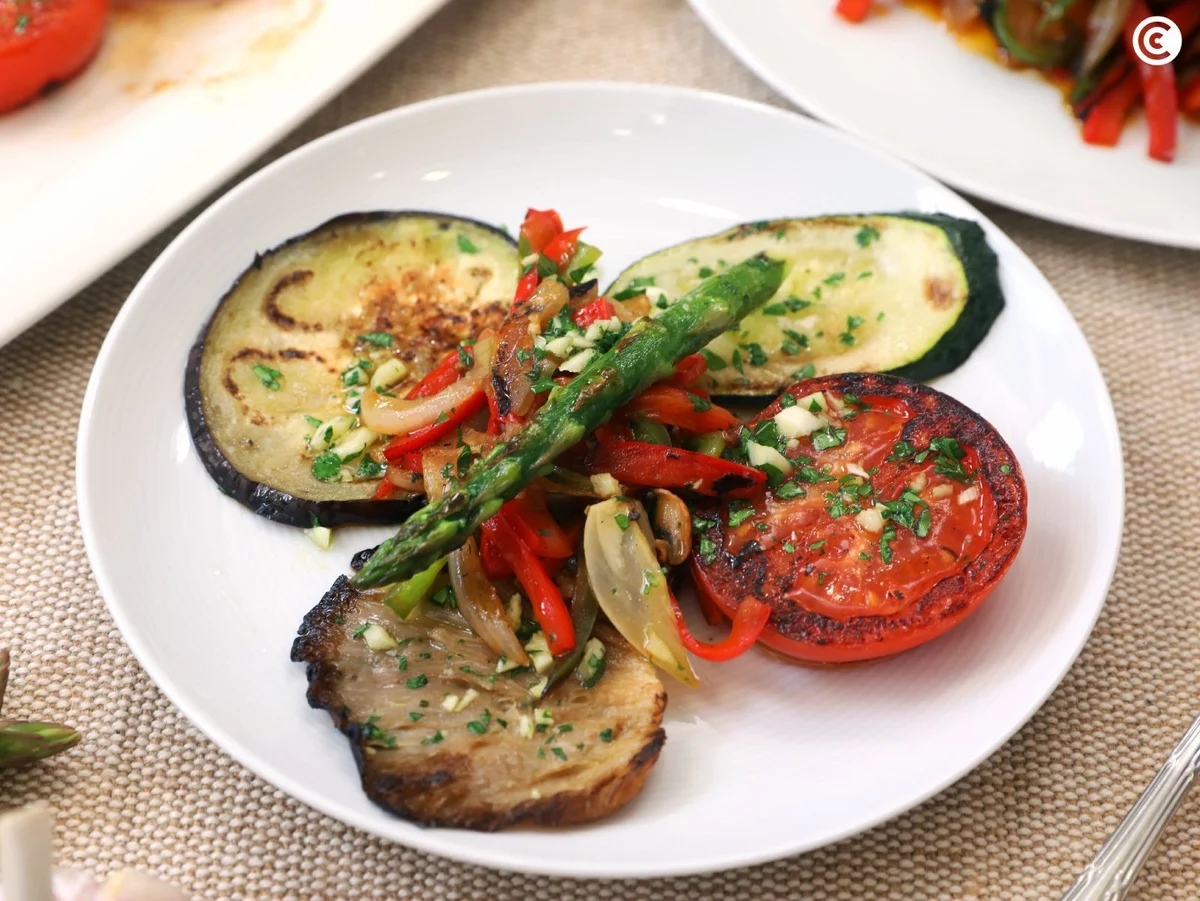
This Spanish-style grilled vegetable platter brings aubergine, courgette, peppers, mushrooms, tomatoes, asparagus and onions together with a fresh garlic and parsley oil. It makes a colourful barbecue side, or a simple meal served on its own.
Ingredients
- 1aubergine
- 1courgette
- 1/2red pepper
- 1green pepper
- 4green asparagus spears
- 4button mushrooms
- 4mushrooms
- 2vine tomatoes
- 2onions
- to tastecoarse salt
- to tasteextra-virgin olive oil
- 2 clovesgarlic
- to tastefresh parsley
- to tasteextra-virgin olive oil
Instructions
- 1
Salt the aubergine
Slice the aubergine and arrange the pieces on a tray. Sprinkle with salt and leave for 30 minutes. Press gently with a clean cloth to absorb the liquid they release.
- 2
Make the sauce
Finely chop the garlic and parsley and put them in a small bowl. Add plenty of olive oil, mix, and leave the sauce to stand for a few minutes.
- 3
Grill the courgette
Brown the courgette and aubergine on a griddle or barbecue grill. Season with salt and spoon the garlic and parsley sauce over them.
- 4
Cook tomatoes and asparagus
Brown the sliced tomatoes, asparagus and mushrooms on the grill. Season with salt and add the garlic and parsley sauce.
- 5
Grill peppers and onions
Cut the peppers into strips, slice the onion into thin strips, and slice the button mushrooms. Put them on the griddle or grill, season with salt and oil, and brown. Finish with the garlic and parsley sauce.
- 6
Serve the vegetables
Serve the grilled vegetables on their own or as a side dish with meat or fish.
What is a Spanish grilled vegetable platter?
Grilled vegetables are a familiar feature of Spanish home cooking and outdoor meals: seasonal produce is cooked over direct heat and served simply, often with olive oil. This version combines several vegetables and finishes them with a quick garlic and parsley sauce.
The mix works because each vegetable brings a different texture, from aubergine and courgette to firm asparagus and juicy tomatoes. Cooking them in batches helps each piece brown without crowding the grill.
Nutrition and macros by portion
The nutrition label shows one serving as written: 169 calories, 4g protein, 14g carbs, 11g fat.
| Portion | Adjustment | kcal | Protein | Carbs | Fat |
|---|---|---|---|---|---|
| Lighter | Use less olive oil | 118 kcal | 3g | 10g | 7g |
| This serving | As written | 169 kcal | 4g | 14g | 11g |
| Hungry | Serve with bread and beans | 254 kcal | 6g | 21g | 16g |
The vegetables provide most of the carbohydrates, while the olive oil contributes most of the fat; the vegetables and mushrooms supply some protein. Pair a portion with a protein-rich food such as grilled fish, or serve with beans and bread for a more filling plate.
Why salt the aubergine?
Aubergine first rests with salt for 30 minutes, then gets gently pressed dry. This draws out released liquid and helps keep the slices from carrying excess moisture onto the hot cooking surface.
Dry the slices carefully rather than squeezing them hard, so they stay intact and are easier to turn.
Make a simple garlic and parsley oil
Garlic and parsley: finely chop both so their flavour spreads through the oil and clings to the vegetables. Letting the mixture stand for a few minutes gives the flavours a little time to mingle.
Olive oil: the recipe calls for a generous amount, but add it gradually until the herbs and garlic are coated. Keep some sauce aside to finish the vegetables after grilling.
Cook each vegetable for its texture
Aubergine and courgette: brown these first, as directed, and turn them once the side against the grill has colour and releases readily. The slices should be tender without falling apart.
Tomatoes and asparagus: cook until the tomatoes are warmed through and marked, and the asparagus is tender with a little bite. Mushrooms should soften and brown rather than steam.
Peppers, onions and button mushrooms: spread them across the cooking surface so they make good contact with the heat. Turn or stir as needed for even browning.
Use a hot, uncrowded grill
Give the grill or griddle time to heat before adding the vegetables; a hot surface helps them brown instead of slowly releasing moisture. Cook in batches if the surface is small.
The recipe does not specify exact cooking times, so use colour and tenderness as your cues. Thicker pieces will take longer than thin slices.
Serve it as a side or a main
The platter can be served on its own or alongside grilled meat or fish, as the recipe suggests. It also pairs well with bread or a grain-based side if you want a more substantial meal.
Add the herb oil while the vegetables are warm so it coats them easily. Keep a little extra at the table for anyone who wants more.
Recipe notes & tips
- Cut the vegetables into pieces of similar thickness so they cook more evenly.
- Wipe the grill clean between batches if herbs or vegetable juices begin to burn.
- Use tongs or a wide spatula to turn the aubergine and tomato slices without breaking them.
- Brush or spoon on the garlic oil after cooking to keep the chopped garlic from scorching on the grill.
- Season gradually, especially if the aubergine has already been salted.
Variations
- Add courgette flowers: grill them briefly and serve with the vegetables if available.
- Use lemon: squeeze a little over the platter just before serving for a fresh finish.
- Add chilli: stir a pinch of chilli flakes into the garlic and parsley oil.
- Try different mushrooms: use whichever firm, fresh mushrooms are available and slice them to a similar thickness.
- Add rosemary: mix a little finely chopped rosemary into the oil for a more aromatic finish.
Common mistakes to avoid
- Crowding the grill: the vegetables can steam instead of brown, so cook them in batches.
- Skipping the aubergine rest: allow the full 30 minutes, then press away the released liquid with a clean cloth.
- Using a cool cooking surface: wait until the grill or griddle is hot before adding the vegetables.
- Chopping garlic too coarsely: mince it finely so it distributes through the oil and is less likely to burn in large pieces.
- Leaving vegetables unattended: check them as they brown and turn them before they become too soft.
How to store
Refrigerate leftover vegetables in a covered container and use within 3 days. Reheat gently in a frying pan or on a griddle until warmed through; add fresh sauce or a little olive oil after reheating.
Frequently asked questions
Can I make this on a barbecue?
Yes. Cook the vegetables on a clean, hot barbecue grill, using a grill basket or tray for smaller pieces such as sliced mushrooms and onions.
Can I use a griddle pan instead?
Yes. A hot griddle pan works well; cook in batches so the vegetables have room to brown.
Do I have to salt the aubergine for 30 minutes?
That is the method given for this recipe. The rest also gives you time to prepare the other vegetables and sauce.
How can I tell when the vegetables are done?
Look for browned patches and check that thicker pieces are tender when pierced, while still holding their shape. Asparagus should retain a little bite.
Can I prepare the vegetables ahead?
You can slice and arrange them ahead, keeping them covered in the fridge. Make the garlic and parsley oil shortly before cooking so its flavour stays fresh.
What should I serve with grilled vegetables?
Serve them alone, as the recipe suggests, or alongside grilled meat or fish. Bread or beans can make the meal more substantial.
Cook it from the original
This recipe comes from cocinatis.com. Their page has the author’s own photos, notes and tips — the best place to cook it from.
Open the recipe on cocinatis.com