
Veg Dalcha | Dalcha Recipe
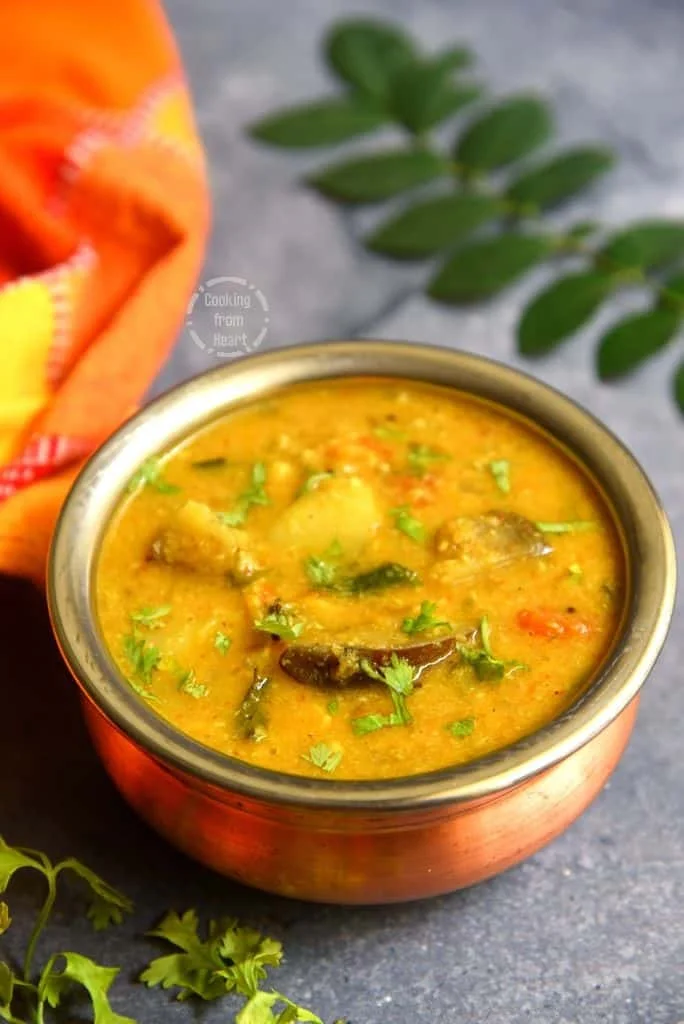
Veg dalcha is a gently spiced Tamil Nadu lentil and vegetable curry, often served alongside biryani, ghee rice or pulao. Two dals, brinjals, potato and coconut make it hearty enough to stand up to a fragrant rice dish.
Ingredients
- 50 g (¼ cup)toor dal
- 50 g (¼ cup)chana dal
- 1onion, chopped
- 1tomato, chopped
- 1 largeonion, finely chopped
- 3brinjals, chopped
- 1potato, chopped
- 2green chillies
- 30 g (⅓ cup)fresh coconut, chopped or grated
- 15 ml (1 tbsp)oil
- 2cloves
- 2cardamom pods
- 1cinnamon stick
- 1.25 ml (¼ tsp)mustard seeds
- 1.25 ml (¼ tsp)cumin seeds
- 1.25 ml (¼ tsp)asafoetida (hing)
- 5 ml (1 tsp)ginger-garlic paste
- 2.5 ml (½ tsp)turmeric powder
- 2.5 ml (½ tsp)red chilli powder
- 1.25 ml (¼ tsp)garam masala powder
- 5 ml (1 tsp)tamarind extract
- To tastesalt
- As neededwater
- A fewfresh curry leaves
- 2–3 stalksfresh coriander
Instructions
- 1
Combine the dals
Put the toor dal, chana dal, chopped onion and tomato in a bowl with enough water.
- 2
Pressure cook
Pressure cook for 4–5 whistles, until the dals are soft. Mash the mixture and set it aside.
- 3
Temper the spices
Heat 15 ml (1 tbsp) oil in a heavy-based pan. Add the mustard seeds, cumin seeds, cloves, cardamom and cinnamon. When they start to splutter, add the asafoetida, green chillies halved and a few curry leaves. Fry for 1 minute.
- 4
Soften the onion
Add the finely chopped large onion and fry over a low heat until translucent.
- 5
Cook the paste
Stir in the ginger-garlic paste and cook for 2–3 minutes, until its raw smell has gone.
- 6
Add the vegetables
Add the chopped brinjals and potato.
- 7
Season and fry
Add the turmeric and salt to taste. Fry the vegetables over a low heat for 4–5 minutes.
- 8
Cook the vegetables
Add about 240–360 ml (1–1½ cups) water. Cover and cook for 4–5 minutes.
- 9
Add the spices
Add 2.5–5 ml (½–1 tsp) red chilli powder and the garam masala.
- 10
Add the dal
Cook for 3–4 minutes, then add the cooked dal mixture.
- 11
Combine the curry
Mix well and continue cooking over a low heat.
- 12
Grind the coconut
Meanwhile, grind the coconut with a little water to make a smooth paste.
- 13
Stir in coconut
Add the coconut paste and tamarind extract to the dalcha as it boils.
- 14
Simmer covered
When the curry starts to boil, cover the pan and cook over a low heat for 12–14 minutes.
- 15
Finish with herbs
Once the curry has come together, add the roughly chopped coriander stalks and a few chopped curry leaves. Remove from the heat.
- 16
Serve with rice
Serve hot with biryani, kuska, ghee rice or pulao.
What is veg dalcha?
Dalcha is a South Indian lentil curry commonly served as a side for biryani and other rice dishes. This Tamil Nadu-style version combines toor dal and chana dal with brinjals, potato, coconut and tamarind.
Two dals give the curry body, while the coconut paste rounds out the spice and tang. The result is a substantial accompaniment that can also be eaten with plain rice.
Nutrition and macros by portion
The nutrition label shows one serving as written: 230 calories, 10g protein, 34g carbs, 7g fat.
| Portion | Adjustment | kcal | Protein | Carbs | Fat |
|---|---|---|---|---|---|
| Lighter | Use less oil and coconut | 161 kcal | 7g | 24g | 5g |
| This serving | As written | 230 kcal | 10g | 34g | 7g |
| Hungry | Serve with extra rice | 345 kcal | 15g | 51g | 11g |
The lentils and potato supply most of the carbohydrates, while the two dals also provide much of the protein. Oil and coconut contribute most of the fat; serve a moderate portion with rice and add a fresh vegetable side to balance the plate.
Why use two dals?
Toor dal: it cooks down into a soft, smooth base that helps the curry cling to rice.
Chana dal: it adds a slightly firmer, more substantial texture. Pressure cook both until thoroughly soft before mashing them together.
Build flavour in stages
Whole spices: let the mustard and cumin seeds begin to splutter in the oil before adding the cloves, cardamom and cinnamon. Keep the heat controlled so they release their aroma without scorching.
Onion and paste: cook the large onion until translucent, then give the ginger-garlic paste 2–3 minutes to lose its raw smell before adding the vegetables.
Get the vegetables tender
Brinjals and potato: fry them with the turmeric and salt for 4–5 minutes, then cover with water and cook for another 4–5 minutes. The pieces should start softening before the dal goes in.
Check the potato with a fork before the final simmer. It should be tender rather than firm, but the brinjal can soften further as the curry cooks.
Balance the coconut and tamarind
Coconut: grind it with just enough water to make a smooth paste. A smooth consistency blends into the dalcha more evenly than coarse pieces.
Tamarind: add the extract with the coconut, then let the curry simmer for 12–14 minutes. This gives the flavours time to come together; taste at the end and adjust salt if needed.
Allow time for the final simmer
The recipe takes about 50 minutes in total, including pressure cooking the dals and simmering the finished curry. The final covered cook is important for bringing the vegetables, lentils and coconut together.
Keep the heat low once the dal is added and stir occasionally so the thickening mixture does not catch on the bottom of the pan.
What to serve with dalcha
Biryani, kuska, ghee rice and pulao are all suggested pairings. Their aromatic rice complements the curry's gentle heat, soft vegetables and tangy finish.
For a simpler meal, serve it with plain rice and a fresh vegetable side. Add the chopped coriander and curry leaves just before taking the pan off the heat.
Recipe notes & tips
- Rinse the dals before cooking and pressure cook them until they mash easily.
- Cut the brinjals and potato into similarly sized pieces so they cook at a similar pace.
- Keep the heat low when frying the spices and onion to prevent them from burning.
- Add water gradually if the curry becomes thicker than you prefer.
- Grind the coconut paste smoothly so it blends into the dalcha.
- Taste for salt after the final simmer, when the flavours have had time to combine.
Variations
- Adjust the heat: use the lower amount of red chilli powder for a milder curry.
- Add more brinjal: increase the vegetable proportion while keeping the same cooking sequence.
- Change the texture: mash the cooked dals thoroughly for a smoother dalcha, or leave them slightly chunky.
- Use a thicker coconut paste: add less grinding water for a richer, more pronounced coconut texture.
- Serve as a main: pair the dalcha with plain rice instead of serving it only as a biryani side.
Common mistakes to avoid
- Undercooked dals: pressure cook until both dals are soft enough to mash.
- Burnt spices: add them to hot oil briefly and lower the heat if they darken too quickly.
- Raw-tasting ginger-garlic paste: cook it for the full 2–3 minutes before adding the vegetables.
- Hard potato: check that the pieces are tender before moving on to the final simmer.
- Lumpy coconut: grind with a little water until the paste is smooth.
- Skipping the final simmer: keep the curry covered on low for 12–14 minutes so its flavours can meld.
How to store
Cool leftovers promptly and refrigerate in a covered container for up to 3 days. Reheat gently in a pan until steaming hot, adding a splash of water if the dalcha has thickened; stir often to prevent it catching.
Frequently asked questions
Can I make veg dalcha without a pressure cooker?
Yes. Cook the dals in a saucepan with water until very soft, then mash them before adding them to the vegetables. The cooking time will depend on the dals and pan.
How thick should dalcha be?
It should be spoonable, with a soft lentil base and tender vegetable pieces. Add a little water if it becomes too thick during cooking.
Can I use only one type of dal?
The recipe uses both toor dal and chana dal for its particular texture. You can use one in place of the other, but the finished consistency will differ.
How can I make it less spicy?
Use the lower amount of red chilli powder and remove the seeds from the green chillies, or use fewer chillies.
What can I serve with veg dalcha?
Serve it hot with biryani, kuska, ghee rice or pulao. Plain rice also works well.
Can I prepare any part ahead?
You can cook and mash the dals ahead of time, then refrigerate them until needed. Reheat them as they are added to the curry.
Cook it from the original
This recipe comes from cookingfromheart.com. Their page has the author’s own photos, notes and tips — the best place to cook it from.
Open the recipe on cookingfromheart.com