
Asparagus risotto
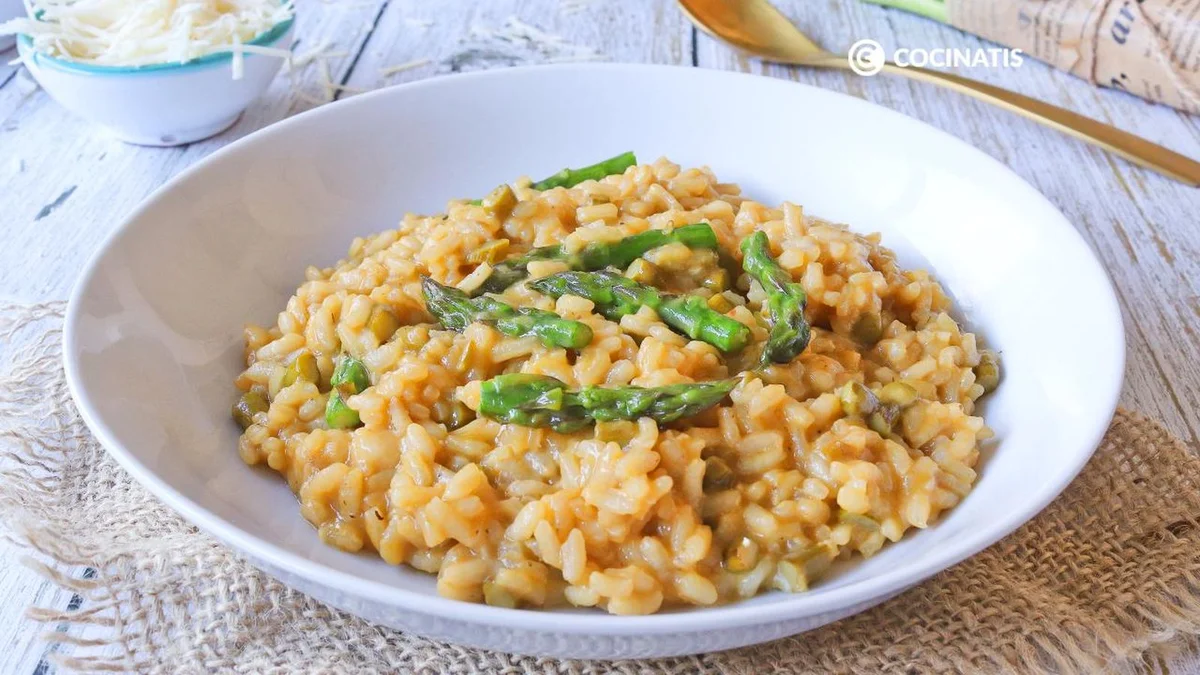
This Italian-style asparagus risotto pairs tender rice with green asparagus, white wine, butter and Parmesan. Stirring in hot stock gradually helps create its creamy texture, making it a comforting meal for two.
Ingredients
- 200 grisotto rice
- 20green asparagus spears
- 1spring onion
- 800 mlvegetable stock
- 100 mlwhite wine
- 40 gbutter
- 60 gParmesan
- 2 tablespoonsextra-virgin olive oil
- to tasteground black pepper
- to tastesalt
Instructions
- 1
Prepare asparagus
Cut 1–3 cm from the tips of the asparagus and set the tips aside. Slice the remaining stalks into small rounds, then fry them in a casserole with a little oil. Remove and reserve.
- 2
Toast the rice
In the same casserole, gently cook the chopped spring onion with salt and oil. Add the asparagus stalks, keeping the tips back, and the rice. Toast for 2 minutes over a low heat.
- 3
Add the wine
Pour in the white wine and cook until the alcohol has evaporated.
- 4
Cook with stock
Add the hot stock gradually, a ladleful at a time, stirring as the rice absorbs it.
- 5
Finish the risotto
Take the casserole off the heat and add the butter and Parmesan. Stir until they are well incorporated.
- 6
Serve with tips
Serve the asparagus risotto freshly made, topped with the reserved asparagus tips.
What is asparagus risotto?
Risotto is an Italian rice dish, especially associated with the north of the country, where short-grain rice is cooked gradually with liquid. This version brings green asparagus into the rice and finishes it with butter and Parmesan.
Stirring in hot stock a little at a time helps the rice release starch, giving the dish its characteristic creamy consistency without needing cream.
Nutrition and macros by portion
The nutrition label shows one serving as written: 688 calories, 27g protein, 96g carbs, 20g fat.
| Portion | Adjustment | kcal | Protein | Carbs | Fat |
|---|---|---|---|---|---|
| Lighter | Use less butter and Parmesan | 482 kcal | 19g | 67g | 14g |
| This serving | As written | 688 kcal | 27g | 96g | 20g |
| Hungry | Serve a larger portion | 1032 kcal | 40g | 144g | 31g |
The rice provides most of the carbohydrates, while the olive oil, butter and Parmesan contribute much of the fat; the Parmesan also supplies protein, along with the rice and asparagus. Balance a serving with a crisp salad or another portion of vegetables.
Choose the right rice
Risotto rice: Use a short-grain variety intended for risotto, such as Arborio or carnaroli, if available. Its starch helps form the creamy sauce while the grains retain some bite.
Stock: Heat the vegetable stock before adding it. Warm liquid keeps the cooking steady as the rice absorbs each addition.
Prepare the asparagus
Stalks: Cut the asparagus tips off first and reserve them for the finish. Slice the remaining stalks into small pieces so they cook alongside the rice.
Tips: The recipe fries the stalk pieces first and uses the tips as a topping. Keep the tips separate so they remain a distinct part of the finished dish.
Build the flavour
Spring onion: Soften the chopped onion gently in the same casserole used for the asparagus. Keeping the heat low helps it cook without rushing the rice stage.
Wine: Add the white wine after toasting the rice, then let it cook until the alcohol has evaporated before adding stock.
Stir in the stock gradually
One ladle at a time: Add hot stock in small amounts and stir as the rice absorbs it. Avoid pouring in all the stock at once; the recipe relies on adding more as needed.
Texture cue: The rice should be creamy but not soupy, with the grains still holding their shape. Keep tasting as it cooks to judge when it is ready.
Finish off the heat
Butter and Parmesan: Take the casserole off the heat before stirring these in. Mixing them through at the end gives the risotto a rich, cohesive finish.
Serve promptly: Risotto continues to thicken as it stands, so bring it to the table soon after finishing it and add the asparagus tips just before serving.
What to serve alongside
For a simple meal, serve the risotto on its own or with a crisp green salad. The fresh leaves provide a contrast to the creamy rice.
If serving it as part of a larger meal, keep accompaniments light so the asparagus, Parmesan and rice remain the focus.
Recipe notes & tips
- Keep the stock hot while you cook the rice.
- Add stock gradually, waiting for the rice to absorb each addition.
- Use the same casserole for the asparagus and onion to carry flavour through the dish.
- Reserve the asparagus tips separately to use as a topping.
- Stir the butter and Parmesan in after taking the casserole off the heat.
- Serve soon after finishing, before the risotto thickens further.
Variations
- Lemon zest: Add a little finely grated zest at the end for a fresh citrus note.
- Fresh herbs: Finish with chopped parsley for a green, aromatic touch.
- Extra vegetables: Stir in peas near the end of cooking for another tender green element.
- Stock choice: Use a well-seasoned vegetable stock to deepen the savoury flavour.
- Cheese swap: Replace some of the Parmesan with another hard Italian-style cheese for a slightly different finish.
Common mistakes to avoid
- Adding cold stock: It can interrupt the cooking; heat the stock before ladling it in.
- Pouring in all the stock: The rice may cook unevenly; add it gradually as it is absorbed.
- Skipping the rice toast: Toast the rice with the onion and asparagus stalks for the full 2 minutes over low heat.
- Cooking the tips with the rice: Keep them aside as directed so they can top the finished dish.
- Adding the cheese over the heat: Take the casserole off the heat first, then stir in the butter and Parmesan.
- Letting it stand too long: Risotto thickens as it rests, so serve it freshly made.
How to store
Cool leftovers promptly, store them in a covered container in the fridge and eat within 2 days. Reheat gently in a pan with a splash of water or stock, stirring until hot throughout.
Frequently asked questions
Can I use another type of rice?
Risotto rice is best for the creamy texture. Arborio or carnaroli are suitable choices if you do not have the type specified.
Do I need to heat the stock first?
Yes. The method calls for hot stock added gradually, so warm it before you start adding it to the rice.
How do I know when the risotto is ready?
Taste the rice as it cooks; it should be tender with a little bite, surrounded by a creamy consistency. Add stock gradually as the rice absorbs it.
Can I make the risotto ahead?
It is best served freshly made because it thickens as it stands. If you need to prepare it ahead, refrigerate leftovers promptly and reheat gently with a splash of water or stock.
Can I use frozen asparagus?
Fresh asparagus is the best fit for keeping the tips as a separate topping. Frozen asparagus may soften more, so take care when handling the tips.
What can I serve with asparagus risotto?
A crisp green salad or extra vegetables make a simple accompaniment without competing with the creamy rice.
Cook it from the original
This recipe comes from cocinatis.com. Their page has the author’s own photos, notes and tips — the best place to cook it from.
Open the recipe on cocinatis.com