
Thai and Lao Som Pak Recipe - Pickled Cabbage
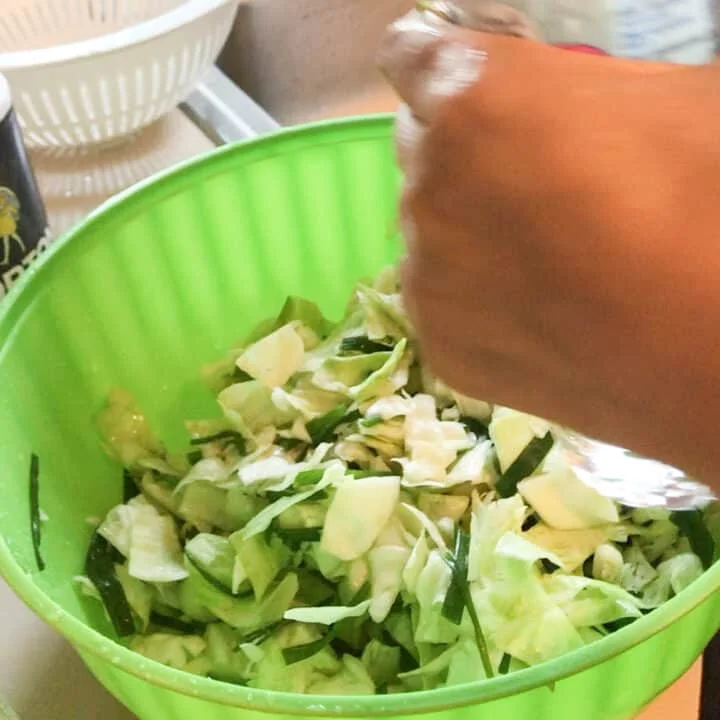
Som pak is a Lao fermented cabbage pickle with green onion, known in some kitchens as Laotian kimchi. Make a batch to serve alongside sticky rice, grilled fish or meat, and other savoury dishes.
Ingredients
- 1 largecabbage
- 10, cut into 5 cm lengths; green stems only, with the white bulbs removedspring onions
- 473 ml (16 fl oz)drinking water
- 30 ml (2 tablespoons)salt
Instructions
- 1
Chop the cabbage
Cut the cabbage into pieces about 2.5 cm across.
- 2
Wash the cabbage
Put the cabbage in a large bowl, cover with cold water, wash it, then drain. Repeat this washing and draining process three times.
- 3
Make the brine
Pour the bottle of drinking water into a clean container and stir in the salt.
- 4
Add the vegetables
Add the cabbage and green onion stems to the salt water.
- 5
Pack the container
Press the mixture firmly into the container. Lay plastic wrap over the top of the vegetables to help keep air away.
- 6
Seal the lid
Close the container securely, making sure the lid is tight.
- 7
Ferment and taste
Leave the container on the kitchen counter at room temperature for at least 24 hours. Taste it after that; if you want it more sour, leave it for another 12–24 hours, up to 72 hours in total.
- 8
Chill the pickle
When it has reached your preferred sourness, put it in the refrigerator to stop the fermentation.
- 9
Serve the som pak
Serve with sticky rice, grilled fish or meat, sausage, and larb.
What is som pak?
Som pak is a Lao fermented cabbage pickle made with salt and green onion stems. It is a familiar home-style accompaniment in Laos, and its sour, savoury character is why it is sometimes compared with kimchi.
This version keeps the ingredient list simple and lets fermentation develop the tang. Serve it as a sharp contrast to grilled or braised foods.
Nutrition and macros by portion
The nutrition label shows one serving as written: 8 calories, 0g protein, 2g carbs, 0g fat.
| Portion | Adjustment | kcal | Protein | Carbs | Fat |
|---|---|---|---|---|---|
| Lighter | Smaller side portion | 6 kcal | 0g | 1g | 0g |
| This serving | As written | 8 kcal | 0g | 2g | 0g |
| Hungry | Larger side portion | 12 kcal | 0g | 3g | 0g |
The cabbage supplies most of the small amount of carbohydrate in a serving, while the salt contributes sodium; protein and fat are negligible. Pair a serving with a source of protein, such as grilled fish, and sticky rice for a more complete plate.
The cabbage and onions
Cabbage: Cut it into roughly 2.5 cm pieces so the pieces are easy to pack and serve. The recipe calls for washing and draining it three times before adding the brine.
Green onion: Use the green stems only, with the white bulbs removed, as specified. Cut them into 5 cm lengths so they can be mixed through the cabbage.
Mixing the brine
Salt water: Dissolve the salt in the measured drinking water in a clean container before adding the vegetables. This lets the salt distribute through the liquid rather than sitting in one spot.
Packing: Press the cabbage mixture in firmly, then cover its surface with plastic wrap and secure the lid. Follow the recipe's instruction to keep air away from the packed vegetables.
Choosing the sourness
First taste: Leave the container at room temperature for at least 24 hours before tasting. Fermentation time depends on how sour you like the result, so use the taste check rather than expecting one exact finish.
More tang: If it is not sour enough, leave it for another 12–24 hours, checking again as needed. The recipe gives 72 hours as the maximum fermentation time before chilling.
Serving som pak
With a meal: The description pairs it with sticky rice, grilled fish and meats, braised pork and eggs, minced meat salad, and papaya salad. The method also suggests sausage and larb.
On the plate: Use the pickle as a tangy side alongside richer or grilled dishes. Its sourness brings contrast without needing an additional dressing.
Keeping the texture
Clean handling: Use a clean container for the brine and pack the vegetables tightly as directed. Keep the lid securely closed during the counter fermentation.
Chilling: Once the flavour is where you want it, refrigerate the container to stop the fermentation process. Serve the cabbage cold or at room temperature, according to preference.
Recipe notes & tips
- Use the green onion stems only, removing the white bulbs before cutting.
- Wash and drain the cabbage three times, as the method specifies.
- Dissolve the salt in the drinking water before adding the vegetables.
- Press the cabbage mixture firmly into the container.
- Taste after the first 24 hours and continue fermenting only if you want more sourness.
- Refrigerate the som pak once it reaches your preferred taste.
Variations
- More sour: Let it ferment for another 12–24 hours after the first taste, staying within the 72-hour maximum.
- Grilled pairing: Serve it with grilled fish or meat for the combination suggested in the recipe.
- With sausage: Add som pak as a side to sausage, as suggested by the serving method.
- Larb plate: Serve it alongside larb for a meal with contrasting flavours.
- Sticky rice: Pair it with sticky rice, as in the recipe description.
Common mistakes to avoid
- Uneven pieces: Cut the cabbage into roughly 2.5 cm pieces so it is easy to pack and serve.
- Skipping the rinses: Wash and drain the cabbage three times before adding it to the brine.
- Salt not dispersed: Stir the salt into the drinking water before adding the cabbage.
- Loose packing: Press the mixture firmly into the container, as directed.
- Guessing the finish: Taste after 24 hours and use further 12–24-hour intervals to reach your preferred sourness.
- Leaving it out too long: Keep the fermentation within the stated maximum of 72 hours, then refrigerate.
How to store
Once the som pak reaches your preferred sourness, keep it covered in the refrigerator and use a clean utensil to serve it. The recipe does not specify a storage life, so follow reliable food-safety guidance for fermented vegetables and discard it if its appearance, smell or texture seems wrong.
Frequently asked questions
How long does som pak ferment?
Leave it at room temperature for at least 24 hours, then taste it. If you want it more sour, allow another 12–24 hours, up to 72 hours in total.
How do I know when it is sour enough?
Taste it after the first 24 hours and stop when it suits your preference. Put it in the refrigerator at that point.
Can I use the white parts of the spring onions?
This recipe calls for green stems only, with the white bulbs removed.
What should I serve with som pak?
Try it with sticky rice, grilled fish or meat, sausage, or larb. The description also suggests braised pork and eggs, minced meat salad, and papaya salad.
Should som pak be served hot or cold?
The recipe gives no reheating step; it is served as a pickle after refrigeration. Serve it cold or let a portion stand briefly at room temperature.
Cook it from the original
This recipe comes from cookingwithlane.com. Their page has the author’s own photos, notes and tips — the best place to cook it from.
Open the recipe on cookingwithlane.com