
Ada Pradhaman | Kerala Special Ada Payasam
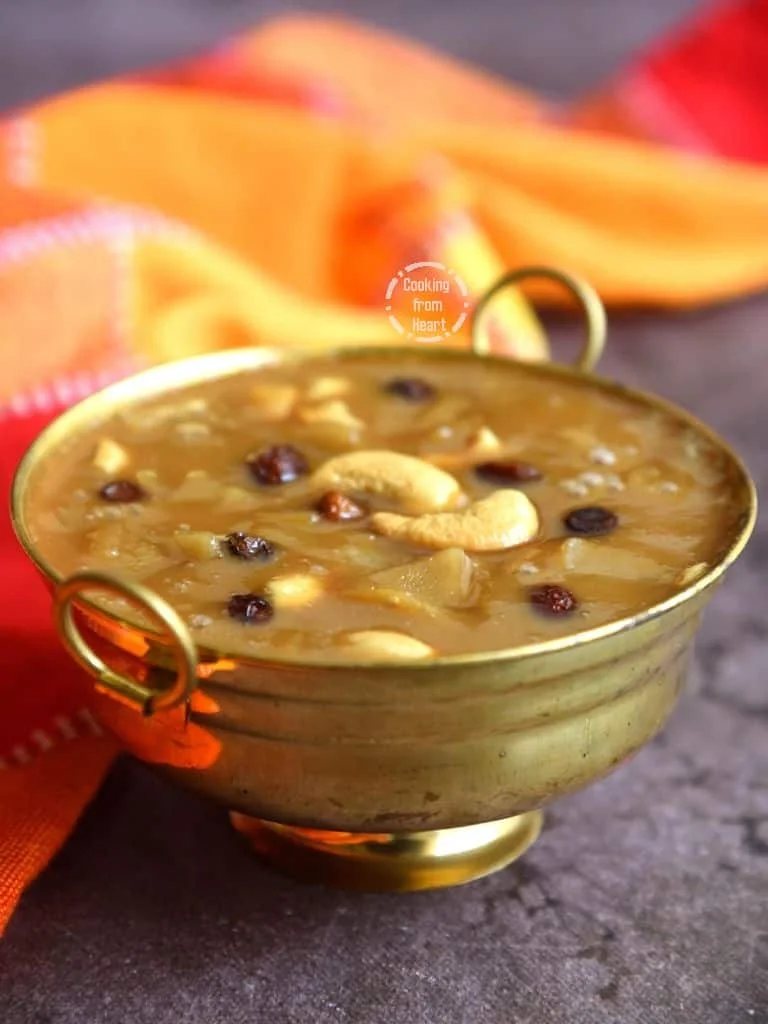
Ada pradhaman is a rich Kerala payasam made with rice ada, jaggery and coconut milk, finished with cardamom, cashews and raisins. Its mix of chewy rice pieces and fragrant, creamy syrup makes it a special-occasion dessert that can be served warm or chilled.
Ingredients
- ½ cup (about 80 g)rice ada, broken into small pieces
- ½ cup (about 100 g)powdered jaggery
- 1 cup (240 ml)thin coconut milk
- ½ cup (120 ml)thick coconut milk
- ¼ tsp (1.25 ml)ground cardamom
- 1 tsp (5 ml)ghee
- 10cashews
- 10–15raisins
- 2¼ cups (540 ml)water
Instructions
- 1
Measure the ada
Break the rice ada into small pieces, then measure out ½ cup.
- 2
Boil the water
Bring about 2 cups of water to the boil in a pot. Add the broken ada promptly and stir well.
- 3
Cook until soft
Stir occasionally to stop the ada sticking to the bottom. Cook over medium heat for about 8–9 minutes, until soft.
- 4
Drain the ada
Strain the cooked ada and rinse it under cold water. Leave it to drain.
- 5
Roast the garnish
Heat 1 tsp ghee in a pan and roast the 10 cashews and 10–15 raisins. Take them out and set aside.
- 6
Add jaggery
Put ½ cup powdered jaggery and ¼ cup water into the pan.
- 7
Melt the jaggery
Stir well and cook over low heat until the jaggery has completely melted.
- 8
Add the ada
Stir the cooked, drained rice ada into the jaggery syrup.
- 9
Cook in syrup
Cook over low heat for 3–4 minutes.
- 10
Add thin milk
Pour in 1 cup thin coconut milk and add ¼ tsp ground cardamom. Mix well.
- 11
Heat gently
Cook over low heat for 3–4 minutes, until the mixture begins to boil gently.
- 12
Pour in thick milk
Add ½ cup thick coconut milk.
- 13
Finish the payasam
Mix well, then remove the pan from the heat.
- 14
Garnish and serve
Scatter the roasted cashews and raisins over the payasam. Serve hot or cold as a dessert.
What is ada pradhaman?
Ada pradhaman is a Kerala payasam, a sweet pudding traditionally made for festive meals. Rice ada gives it distinct, tender pieces, while jaggery and coconut milk make the dessert dark, fragrant and creamy.
This version cooks the ada separately before simmering it in jaggery syrup and coconut milk. That helps the pieces soften without losing their shape.
Nutrition and macros by portion
The nutrition label shows one serving as written: 330 calories, 4g protein, 48g carbs, 14g fat.
| Portion | Adjustment | kcal | Protein | Carbs | Fat |
|---|---|---|---|---|---|
| Lighter | Use less jaggery | 231 kcal | 3g | 34g | 10g |
| This serving | As written | 330 kcal | 4g | 48g | 14g |
| Hungry | Serve a larger bowl | 495 kcal | 6g | 72g | 21g |
The ada and jaggery provide most of the carbohydrates, while coconut milk and ghee contribute much of the fat. Cashews add some protein and fat, though this dessert is not a substantial protein source; balance the meal with a protein-rich savoury dish and vegetables.
The key ingredients
Rice ada: Use broken ada, or break larger pieces before measuring. Rinsing it after cooking removes excess starch and helps keep the finished payasam from becoming overly sticky.
Jaggery: Powdered jaggery melts readily with a little water and gives the syrup its characteristic caramel-like flavour. Stir it over low heat so it dissolves without scorching.
Coconut milk: Thin milk goes in first and thick milk is added at the end. The two stages build a creamy base while keeping the richer milk from being boiled for too long.
Getting the ada tender
Keep the ada moving now and then as it cooks in boiling water, paying particular attention to the bottom of the pot. Begin checking around 8 minutes; it should be soft to bite, not hard in the centre.
Rinse the cooked ada with cold water and let it drain well. This halts the cooking and helps it stay separate when stirred into the syrup.
Making the jaggery syrup
Low heat: Melt the jaggery with the measured water, stirring until no pieces remain. A gentle heat gives you time to dissolve it evenly.
Coating: Once the ada is added, give it 3–4 minutes in the syrup so the pieces take on the jaggery flavour before the coconut milk goes in.
Adding the coconut milk
Thin milk: After adding it with the cardamom, cook for 3–4 minutes over low heat. Look for the first gentle bubbles rather than a vigorous boil.
Thick milk: Stir it in after taking the pan off the heat. The residual warmth combines it with the payasam without prolonged boiling.
Cashews, raisins and texture
Roast the cashews and raisins in ghee until the nuts are lightly golden and the raisins plump. Remove them from the pan before making the syrup so they keep their texture.
The payasam thickens as it stands, and chilled payasam will be firmer than freshly made. Serve it warm for a looser consistency or cold for a denser pudding.
Serving ideas
Serve ada pradhaman in small bowls as the sweet course after a Kerala-style meal. It is rich, so a modest portion pairs well with a meal that includes savoury dishes and vegetables.
The recipe works both warm and chilled. If making it ahead, allow for thickening and stir in a little coconut milk when reheating if you prefer a looser texture.
Recipe notes & tips
- Break the ada into similar-sized pieces so they cook at roughly the same rate.
- Stir the ada occasionally while it boils to prevent it catching on the base of the pot.
- Drain the rinsed ada well before adding it to the jaggery syrup.
- Keep the jaggery mixture over low heat and stir until fully dissolved.
- Add the thick coconut milk only after removing the pan from the heat.
- Choose warm or chilled serving according to the consistency you prefer.
Variations
- Adjust the sweetness: Use less jaggery for a less sweet payasam.
- Add more cardamom: Increase the ground cardamom slightly for a stronger aroma.
- Boost the garnish: Roast extra cashews and raisins in ghee for more topping.
- Serve chilled: Refrigerate the finished payasam for a firmer, cool dessert.
- Loosen the texture: Stir in a little coconut milk if the payasam thickens more than you like.
Common mistakes to avoid
- Skipping the stirring: Ada can stick to the pot; stir it occasionally as it cooks.
- Overcooking the ada: It can turn too soft; start checking for tenderness at about 8 minutes.
- Leaving the ada wet: Excess rinse water can dilute the syrup; drain it before adding.
- Scorching the jaggery: High heat can catch the syrup; melt it gently over low heat.
- Boiling the thick coconut milk: It can affect the creamy finish; add it off the heat.
- Expecting it to stay runny: Payasam thickens as it stands; loosen it with a little coconut milk if needed.
How to store
Refrigerate leftovers in a covered container and use within 2–3 days. Reheat gently on the hob, stirring often; add a little coconut milk if it has thickened, or serve it cold.
Frequently asked questions
Can I serve ada pradhaman cold?
Yes. Serve it warm or chill it before serving; it will become thicker as it cools.
How do I know when the rice ada is cooked?
It should be soft when bitten, without a hard centre. Begin checking after about 8 minutes of cooking.
Why rinse the ada after cooking?
Rinsing with cold water stops it cooking further and washes away excess starch. Drain it well before continuing.
Can I use ready-broken rice ada?
Yes. Measure out ½ cup of small broken pieces; there is no need to break them further if they are already a suitable size.
Why add the thick coconut milk off the heat?
The recipe adds it after removing the pan from the heat, avoiding a prolonged boil and helping preserve a creamy finish.
What should I do if the payasam becomes too thick?
Stir in a little coconut milk until it reaches the consistency you like. It naturally thickens as it cools and stands.
Cook it from the original
This recipe comes from cookingfromheart.com. Their page has the author’s own photos, notes and tips — the best place to cook it from.
Open the recipe on cookingfromheart.com