
Homemade guava preserve
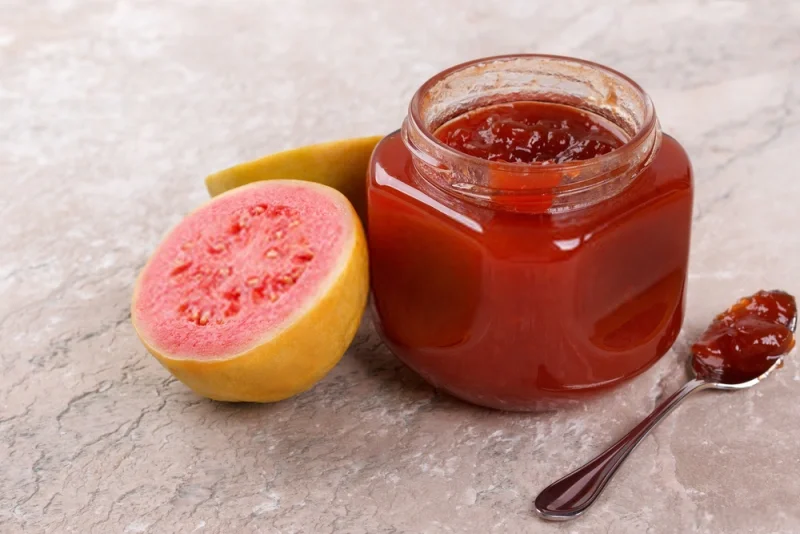
This Paraguayan-style guava preserve cooks ripe fruit and sugar into a thick, sliceable sweet. Serve it alongside desserts or enjoy a small piece on its own.
Ingredients
- 1 kgripe guavas
- 500 gsugar
- 240 ml (1 cup)water
- 5 ml (1 teaspoon)lemon juice
- 1 stickcinnamon (optional)
Instructions
- 1
Prepare the guavas
Wash the guavas well, halve them and remove the seeds. There is no need to peel them.
- 2
Cook the fruit
Put the guavas in a saucepan with the water and the cinnamon stick, if using. Cook over a medium heat until tender, about 15–20 minutes.
- 3
Make the purée
Remove the cinnamon once the guavas are cooked. Blend or process the fruit until smooth.
- 4
Cook until thick
Return the guava purée to the saucepan and stir in the sugar and lemon juice. Cook over a low heat, stirring constantly, for about 40 minutes, until thick and paste-like.
- 5
Cool and serve
Pour the preserve into a greased mould or container. Leave it to cool completely before cutting into portions.
What is guava preserve?
Guava preserve is a cooked fruit sweet that sets into a thick, firm paste once cooled. Guava sweets are enjoyed in Paraguay and elsewhere in Latin America, though recipes and serving styles vary.
This version cooks the fruit first, then blends it with sugar and lemon juice for a smooth, sliceable result. Cinnamon is optional, adding a warm aroma without taking over the guava flavour.
Nutrition and macros by portion
The nutrition label shows one serving as written: 180 calories, 0g protein, 0g carbs, 0g fat.
| Portion | Adjustment | kcal | Protein | Carbs | Fat |
|---|---|---|---|---|---|
| Lighter | Serve a smaller slice | 126 kcal | 0g | 0g | 0g |
| This serving | As written | 180 kcal | 0g | 0g | 0g |
| Hungry | Serve a larger portion | 270 kcal | 0g | 0g | 0g |
The guavas provide most of the fruit carbohydrates, while the added sugar contributes much of the sweetness and carbohydrate content; this recipe contains very little fat or protein. Serve a modest slice with plain yoghurt or alongside fresh fruit for a more balanced plate.
Choosing and preparing the fruit
Ripe guavas: Choose fruit that gives slightly when pressed and smells fragrant. The recipe leaves the skins on, so wash them well before cutting.
Removing seeds: Halve the guavas and take out the seeds before cooking. This keeps the finished purée smooth without needing to strain it.
Getting a smooth purée
Cook until tender: Simmer the guavas with water for 15–20 minutes, until a fork can pierce the flesh easily. If they are still firm, give them a little longer before blending.
Blend carefully: Remove the cinnamon stick first, then process the cooked fruit until smooth. Let the mixture cool a little if needed, and follow your blender’s guidance for hot ingredients.
The slow final cook
Low heat: Once the purée, sugar and lemon juice are combined, cook gently for about 40 minutes. Stir constantly so the thickening fruit does not catch on the bottom of the pan.
Thick texture: The mixture should become dense and paste-like before you pour it into the greased container. It will firm further as it cools, so allow it to cool completely before cutting.
Serving and timing
Cooling time: The stated 75 minutes covers the cooking and preparation, but the preserve also needs time to cool fully before slicing. Plan for that cooling time when serving it in neat portions.
Serving ideas: Offer small slices on their own or alongside desserts. Its concentrated fruit sweetness also pairs well with a less-sweet accompaniment.
Sugar, lemon and cinnamon
Sugar: The 500 g helps create the preserve’s dense, sweet texture. Stir it in after blending so it dissolves as the purée cooks down.
Lemon and cinnamon: Lemon juice brings a little sharpness to balance the sweetness. The cinnamon stick is optional; remove it before blending so the flavour stays subtle.
Recipe notes & tips
- Use ripe, fragrant guavas for a fuller fruit flavour.
- Remove the seeds before cooking so the finished purée is smooth.
- Take out the cinnamon stick before blending the guavas.
- Stir continuously during the final cook to prevent sticking.
- Grease the mould or container before pouring in the hot preserve.
- Wait until the preserve is completely cool before cutting it.
Variations
- Keep it plain: Leave out the cinnamon for a clean guava flavour.
- Add citrus: Use a little extra lemon juice for a sharper finish.
- Make it rustic: Blend the cooked fruit briefly rather than processing it completely smooth.
- Serve with cheese: Pair a slice with a mild cheese for a sweet-and-savoury snack.
Common mistakes to avoid
- Using firm fruit: The guavas may take longer to soften; cook until easily pierced before blending.
- Leaving in the seeds: They can affect the texture; remove them when halving the fruit.
- Skipping the stirring: The thick purée can catch on the pan; stir constantly during the final cook.
- Cooking over high heat: The mixture may scorch before thickening; keep the heat low.
- Cutting too soon: Warm preserve may not hold its shape; cool it completely first.
How to store
Once completely cool, cover the preserve and refrigerate it; use within about a week. Keep it chilled between servings and cut only what you need.
Frequently asked questions
Do I need to peel the guavas?
No. The recipe leaves the skins on, but wash the fruit well before cutting and cooking.
Can I leave out the cinnamon?
Yes. It is optional, and the preserve will still work without it.
How do I know when the guavas are tender enough to blend?
They should be soft enough for a fork to pierce easily after simmering. If they are still firm, continue cooking until tender.
Why does the preserve need to cool before cutting?
It firms as it cools, making it easier to cut into portions. Let it cool completely in the mould or container.
Can I make this without a blender?
The method calls for a blender or food processor to make a smooth purée. Without one, the texture will be less smooth if you mash the fruit by hand.
Cook it from the original
This recipe comes from comidasparaguayas.com. Their page has the author’s own photos, notes and tips — the best place to cook it from.
Open the recipe on comidasparaguayas.com