
Semiya Upma | Vermicelli Upma
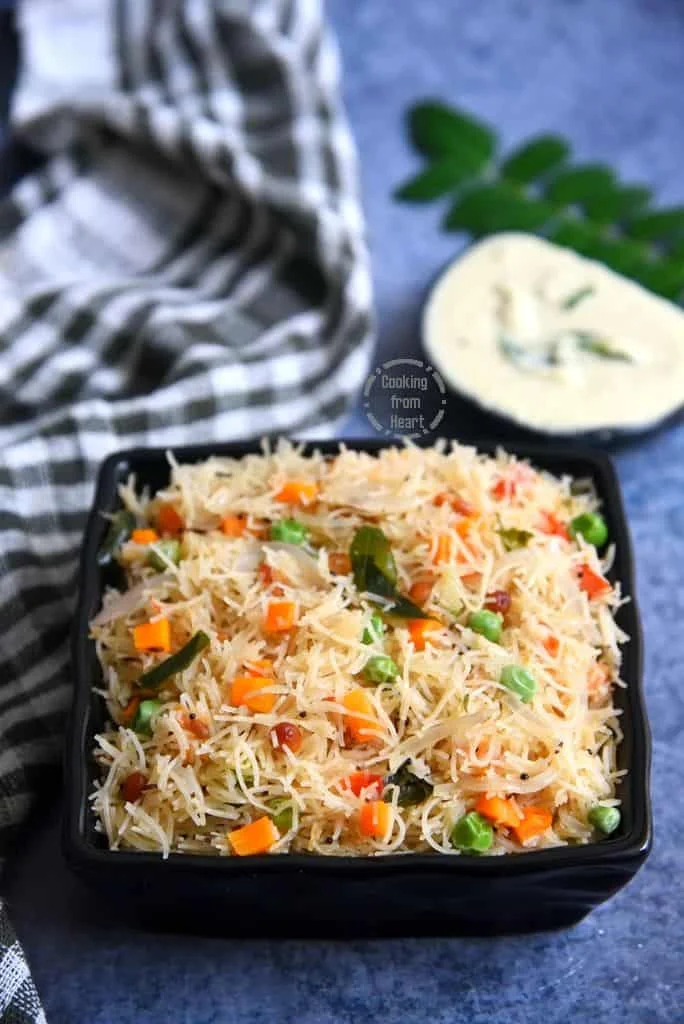
Semiya upma is a South Indian savoury dish of roasted vermicelli cooked with vegetables and a spiced tempering. It makes a quick breakfast or dinner, with a covered rest helping the strands turn out soft and separate.
Ingredients
- 200 g (2 cups)thin roasted vermicelli
- 360 ml (1.5 cups)water
- 1 largeonion, finely sliced
- 1 smalltomato, finely chopped
- 40 g (1/4 cup)carrots, finely chopped
- 40 g (1/4 cup)fresh green peas
- 1green chilli, chopped
- 10–12fresh curry leaves
- 15 ml (3 tsp)oil
- 1/2 tspmustard seeds
- 1/2 tspcumin seeds
- 1 tspurad dal
- 1 tspchana dal
- 1/4 tspasafoetida
- as neededsalt
Instructions
- 1
Temper the spices
Heat 15 ml (3 tsp) oil in a heavy pan. Add the mustard seeds, cumin seeds, urad dal and chana dal. When they begin to splutter, stir in the asafoetida, curry leaves and chopped green chilli; fry for a few seconds.
- 2
Soften the onion
Add the sliced onion and cook over a low heat until soft.
- 3
Cook the tomato
Keep the onion from browning or burning, then add the chopped tomato. Cook over a low heat until it turns mushy.
- 4
Fry the carrots
Add the finely chopped carrots and stir-fry over a low heat for 3–4 minutes.
- 5
Cover the vegetables
Cover the pan and cook over a low heat for a further 4–5 minutes, until the carrots are soft.
- 6
Boil the water
Pour in 360 ml (1.5 cups) water, season with salt as needed and add the fresh green peas. Bring the water to the boil.
- 7
Add the vermicelli
Add 200 g (2 cups) roasted thin vermicelli to the pan.
- 8
Mix it quickly
Mix everything together quickly. The water should look just sufficient for the vermicelli.
- 9
Cook until dry
Cover and cook over a low heat for 5–6 minutes, until no water or moisture remains in the pan. Remove from the heat.
- 10
Rest before serving
Leave the upma to rest for 5–6 minutes before mixing it through.
- 11
Serve it hot
Serve hot with coconut chutney, roasted peanut chutney or sugar.
What is semiya upma?
Semiya upma is a South Indian, Tamil-style dish made by cooking vermicelli with vegetables and a savoury spiced tempering. It is often served for breakfast, though its quick cooking also suits a simple dinner.
Roasted vermicelli, a measured amount of water and a brief covered rest are central to this version. Together, they help the strands cook through without turning into a sticky mass.
Nutrition and macros by portion
The nutrition label shows one serving as written: 344 calories, 6g protein, 64g carbs, 7g fat.
| Portion | Adjustment | kcal | Protein | Carbs | Fat |
|---|---|---|---|---|---|
| Lighter | Use less oil | 241 kcal | 4g | 45g | 5g |
| This serving | As written | 344 kcal | 6g | 64g | 7g |
| Hungry | Serve a larger portion | 516 kcal | 9g | 96g | 11g |
Most of the carbohydrates come from the vermicelli, while the oil supplies most of the fat. The dals and vegetables contribute some protein, but the dish is still mainly a carbohydrate-based meal; serve it with a protein-rich side such as yoghurt or an egg to balance the plate.
The flavour base
Tempering: mustard and cumin seeds, urad dal and chana dal go into the hot oil first. Asafoetida, curry leaves and green chilli follow, bringing a fragrant, savoury base to the dish.
Vegetables: the onion softens gently, then the tomato cooks down before the carrots and peas are added. Keep the heat low so the onion does not brown while the vegetables cook.
Why roasted vermicelli matters
Roasted vermicelli is ready to use and gives the dish its characteristic toasted note. If your vermicelli is not roasted, this method does not include a separate roasting step, so use the thin roasted kind listed in the ingredients.
Add it once the water is boiling, then mix promptly so the strands are distributed through the vegetables and liquid.
Getting the water right
Water level: the recipe uses 360 ml for 200 g vermicelli. After mixing, the liquid should look just sufficient to cook the strands rather than leave them swimming.
Low heat: covering the pan for 5–6 minutes lets the vermicelli absorb the liquid. Keep the heat low and check that the pan is dry before taking it off the hob.
Resting and texture
Rest: leave the pan off the heat for 5–6 minutes before mixing the upma through. This pause helps the remaining moisture settle into the vermicelli.
Doneness: the finished upma should have no visible water in the pan, while the vermicelli is cooked and the vegetables are soft. Mix gently after resting to loosen the strands.
How to serve it
Serve the upma hot, with coconut chutney or roasted peanut chutney as suggested in the recipe. Sugar is another traditional-style accompaniment offered here.
For a more complete plate, add a source of protein alongside it, such as yoghurt or an egg, if that suits your meal.
Recipe notes & tips
- Use a heavy-based pan to help the vegetables cook gently without scorching.
- Keep the onion pale and soft rather than letting it brown.
- Have the vegetables and seasonings ready before you begin tempering the spices.
- Add the vermicelli promptly once the water boils, then mix it through without delay.
- Let the pan stand for the full 5–6 minutes before loosening the upma.
Variations
- More vegetables: Add extra chopped vegetables while keeping an eye on the liquid.
- Adjust the chilli: Use less green chilli for a milder version or more for extra heat.
- Coconut finish: Scatter fresh grated coconut over the cooked upma before serving.
- Lemon: Add a squeeze of lemon at the table for a brighter finish.
- Chutney pairing: Serve with coconut chutney or roasted peanut chutney as suggested.
Common mistakes to avoid
- Browning the onion: Keep the heat low and stop cooking once it is soft.
- Burning the tempering: Add the asafoetida, curry leaves and chilli as soon as the seeds and dals splutter, then fry only briefly.
- Adding vermicelli before the boil: Wait until the water is boiling so it cooks as directed.
- Overcooking the vegetables: Cover the carrots for the stated 4–5 minutes and check that they are soft.
- Skipping the rest: Leave the cooked upma covered off the heat for 5–6 minutes before mixing.
How to store
Cool leftovers promptly, then store in an airtight container in the fridge for up to 2 days. Reheat gently in a pan or microwave with a small splash of water, stirring until hot throughout.
Frequently asked questions
Can I use unroasted vermicelli?
The recipe calls for thin, roasted vermicelli and does not include a separate roasting step. For the stated method and timing, use roasted vermicelli.
How do I keep semiya upma from becoming sticky?
Measure the water, mix the vermicelli in quickly once the water boils and cook covered over a low heat. Rest it for 5–6 minutes before mixing again.
Can I use frozen peas?
The recipe specifies fresh green peas. Frozen peas can be used as a practical substitute; add them at the same point and cook until hot.
How can I tell when the upma is ready?
After 5–6 minutes covered on low heat, there should be no water or moisture left in the pan. The vermicelli should be cooked through.
What can I serve with semiya upma?
The recipe suggests coconut chutney, roasted peanut chutney or sugar. For a more balanced meal, you could also serve a protein-rich side.
Cook it from the original
This recipe comes from cookingfromheart.com. Their page has the author’s own photos, notes and tips — the best place to cook it from.
Open the recipe on cookingfromheart.com