
Pappardelle with mushrooms and caramelised onions
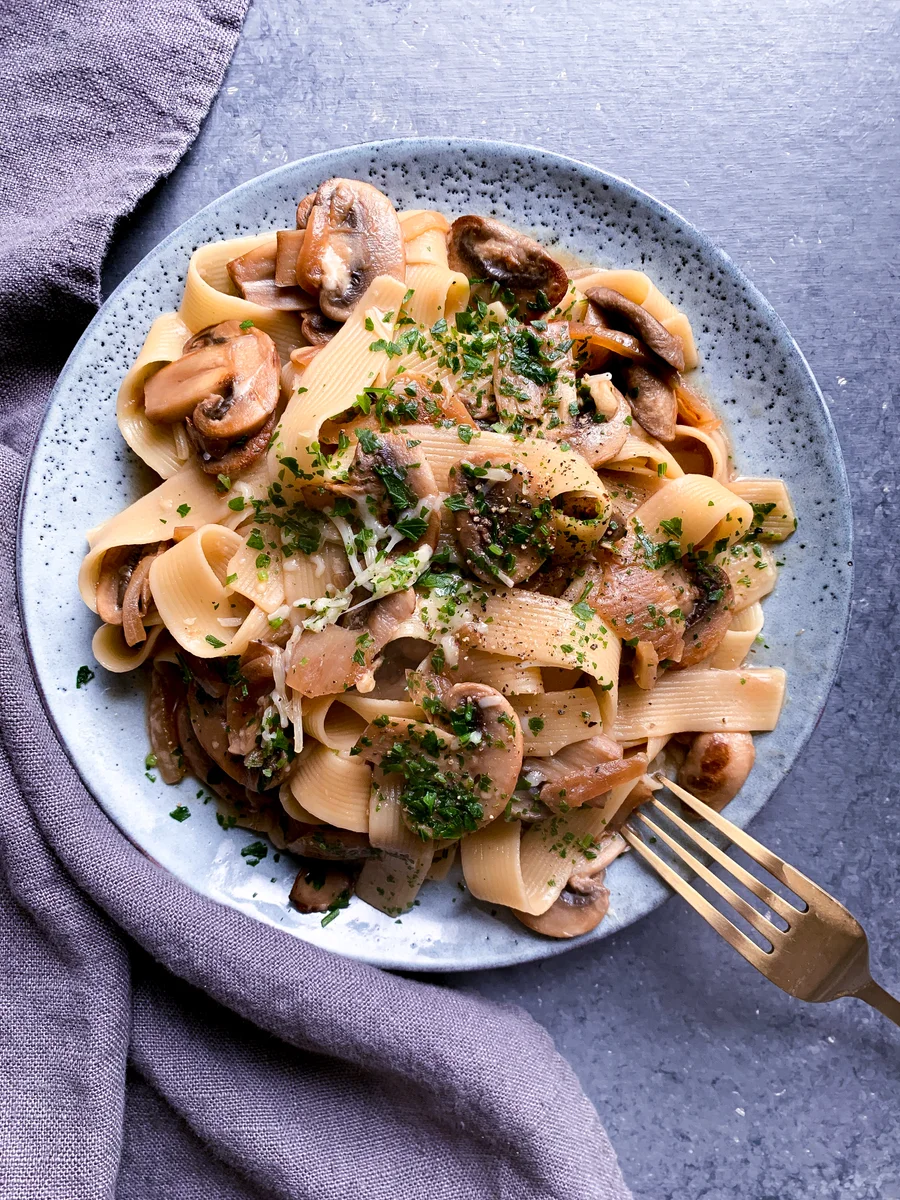
Pappardelle is tossed with browned mushrooms and sweet, caramelised onion, then finished with Gruyère and a little pasta water for a glossy coating. It makes a quick, savoury one-person meal with plenty of flavour from a short cook.
Ingredients
- 100 g (adjust to your appetite)pappardelle
- 10 gsalted butter
- ½onion
- 100 gbutton mushrooms
- 2 tspbalsamic vinegar
- 20 galpine Gruyère
- to tastesalt and black pepper
- to tastefresh parsley
Instructions
- 1
Cook the pasta
Boil the pappardelle in plenty of salted water, following the packet instructions.
- 2
Prepare the vegetables
Wash and slice the mushrooms, then finely slice the onion.
- 3
Start the onions
Heat half the butter in a frying pan over a high heat and fry the sliced onion.
- 4
Brown the mushrooms
When the onion is translucent, add the mushrooms and cook over a medium-high heat for about 8 minutes. Stir in the balsamic vinegar and cook for about 2 minutes more, mixing until the onions and mushrooms are well caramelised.
- 5
Reserve pasta water
When the pasta is cooked, drain it, keeping about 30–45 ml (2–3 tablespoons) of the cooking water.
- 6
Toss and finish
Add the pasta and reserved cooking water to the pan with the mushrooms. Add the remaining butter and grated Gruyère, then mix well.
- 7
Serve the pasta
Serve on a plate with black pepper and fresh parsley.
What is pappardelle with mushrooms?
Pappardelle are broad ribbons of pasta, traditionally associated with Tuscany in Italy. Their width gives a substantial bite and makes them a good match for rich, savoury sauces.
This quick version pairs mushrooms with onion cooked until golden and sweet, then uses balsamic vinegar for a sharp-sweet note. Gruyère and butter round out the sauce.
Nutrition and macros by portion
The nutrition label shows one serving as written: 550 calories, 20g protein, 75g carbs, 19g fat.
| Portion | Adjustment | kcal | Protein | Carbs | Fat |
|---|---|---|---|---|---|
| Lighter | Use less butter and cheese | 385 kcal | 14g | 53g | 13g |
| This serving | As written | 550 kcal | 20g | 75g | 19g |
| Hungry | Add more pappardelle | 825 kcal | 30g | 113g | 29g |
Most of the carbohydrates come from the pappardelle, while butter and Gruyère provide much of the fat and mushrooms and cheese contribute protein. Pair the pasta with a green salad or extra vegetables if you want more volume and freshness alongside it.
Why the ingredients work
Mushrooms: Button mushrooms are mild and readily available; slicing them evenly helps them cook at a similar rate.
Gruyère: Alpine Gruyère brings a nutty, savoury finish. Grating it helps it distribute through the pasta rather than sitting in clumps.
Caramelising the vegetables
Onion first: Starting the onion in half the butter gives it time to soften and turn translucent before the mushrooms go in.
Vinegar last: Add the balsamic after the mushrooms have cooked for about 8 minutes, then give everything about 2 more minutes to caramelise together.
Getting the sauce right
Pasta water: Save 30–45 ml before draining. Its starch helps the butter and cheese coat the pasta; add it with the pasta as directed.
Cheese: Stir in the grated Gruyère and remaining butter while the pasta is hot so they can melt and mingle with the cooking water.
Timing and texture
The recipe takes about 20 minutes overall, so begin cooking the pasta while you prepare and cook the vegetables. Follow the packet timing for the pasta.
Look for translucent onion and mushrooms that are cooked through and browned, rather than watery. The pappardelle should be tender with some bite.
What to serve alongside
The dish works on its own for a simple meal. For a more balanced plate, serve it with a crisp green salad or another lightly dressed vegetable.
Finish with parsley and black pepper just before serving; both add freshness to the buttery, cheesy pasta.
Recipe notes & tips
- Slice the mushrooms evenly so they cook at roughly the same pace.
- Keep the pasta water before draining; it helps bind the sauce.
- Grate the Gruyère finely so it melts and mixes through more easily.
- Taste before adding extra salt, as the butter and cheese are already savoury.
- Serve promptly while the cheese coating is warm and smooth.
Variations
- Add garlic: Finely chop a clove and cook it briefly with the onion.
- Use another mushroom: Replace the button mushrooms with sliced chestnut mushrooms.
- Add thyme: Stir a little fresh thyme into the pan with the mushrooms.
- Make it peppery: Finish with a generous grind of black pepper.
- Swap the cheese: Use a similar hard, melting cheese in place of Gruyère.
Common mistakes to avoid
- Crowding the mushrooms: They can release moisture and steam; use a wide pan so they have room.
- Cooking the vinegar too briefly: Give it about 2 minutes in the pan with the vegetables to blend and caramelise.
- Forgetting the pasta water: Reserve it before draining so you can help the sauce coat the ribbons.
- Adding cheese to a cold pan: Toss it with the hot pasta so it melts into the sauce.
- Overcooking the pasta: Check the packet timing and drain it once tender with some bite.
How to store
Refrigerate leftovers in a covered container and eat within 2 days. Reheat gently in a pan with a small splash of water, stirring until hot; the sauce may be less glossy after chilling.
Frequently asked questions
Can I use a different type of pasta?
Yes. Tagliatelle or another broad pasta works well, though cooking times will vary, so follow the packet instructions.
Can I use unsalted butter?
Yes. Taste the finished dish and add salt as needed, since unsalted butter contributes less seasoning.
Why reserve pasta water?
The starchy water helps the butter and melted cheese coat the pasta. This recipe uses about 30–45 ml.
Can I prepare the mushrooms ahead?
You can wash and slice them in advance, then refrigerate them in a covered container and cook them just before serving.
How do I know when the mushrooms are ready?
They should be cooked through and browned, with their released moisture mostly cooked away before you add the balsamic vinegar.
Cook it from the original
This recipe comes from clemfoodie.com. Their page has the author’s own photos, notes and tips — the best place to cook it from.
Open the recipe on clemfoodie.com