
Mbejú mestizo, traditional Paraguayan recipe
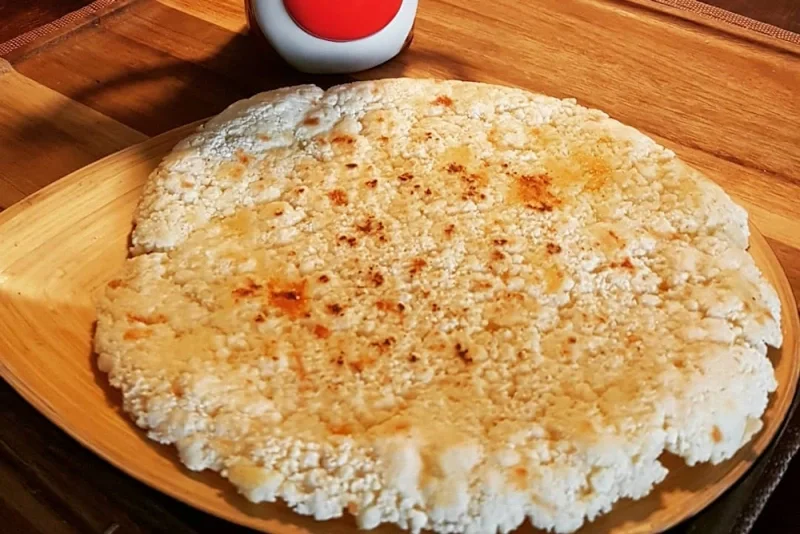
Mbejú mestizo is a Paraguayan cheese flatbread made with cassava starch and maize flour. It cooks quickly in a frying pan and is best served hot, when its edges are lightly crisp and the cheese is soft.
Ingredients
- 500 gcassava starch
- 300 gParaguayan cheese
- 200 gmaize flour
- 150 gbutter
- 150 mlmilk
- 2 teaspoonsanise (optional)
- 100 mlwater
- to tastesalt
Instructions
- 1
Mix the liquid
Stir the milk into the 100 ml of water, then set the mixture aside.
- 2
Combine the flours
Mix the cassava starch and maize flour in a bowl and season with salt to taste. Make a well in the centre, add the melted butter and half of the milk-and-water mixture, then knead by hand until combined.
- 3
Add cheese
Pour in the remaining milk mixture and keep kneading until the mixture has a sandy consistency. Add the crumbled cheese and knead a little longer; the mixture should still look sandy.
- 4
Shape the flatbreads
Heat a little butter or margarine in a frying pan over a medium heat. Shape the mixture by hand into a flatbread about 1 cm thick, place it in the pan and use a spoon to neaten its shape.
- 5
Cook both sides
When the mixture begins to loosen slightly from the pan, turn it over and cook the other side. Repeat with the remaining mixture; it should make about 6 portions.
- 6
Serve hot
Serve hot with cocido or a glass of milk.
What is mbejú mestizo?
Mbejú is a traditional Paraguayan flatbread, commonly made with cassava starch and cheese. The mestizo version combines cassava starch with maize flour, giving the dough its characteristic crumbly, sandy texture.
This version brings the ingredients together by hand and cooks the flatbreads in a pan, so there is no need to heat an oven. Serve them straight from the pan while warm.
Nutrition and macros by portion
The nutrition label shows one serving as written: 196 calories, 0g protein, 0g carbs, 0g fat.
| Portion | Adjustment | kcal | Protein | Carbs | Fat |
|---|---|---|---|---|---|
| Lighter | Use less butter | 137 kcal | 0g | 0g | 0g |
| This serving | As written | 196 kcal | 0g | 0g | 0g |
| Hungry | Serve a larger portion | 294 kcal | 0g | 0g | 0g |
Cassava starch and maize flour provide most of the carbohydrates, while butter contributes much of the fat and the cheese provides protein and additional fat. Balance a portion with vegetables or salad, especially if serving it as a meal.
The two flours
Cassava starch: this is the main dry ingredient and gives mbejú its distinct texture. Mix it thoroughly with the maize flour before adding the wet ingredients.
Maize flour: it makes this a mestizo-style mixture alongside the cassava starch. Use the flour specified in the recipe rather than substituting a coarser maize product.
Making the sandy dough
Liquid in stages: add half of the milk-and-water mixture with the melted butter first, then knead in the rest. This gradual approach helps the flours combine evenly.
Cheese: crumble it before adding so it can be worked through the mixture. Keep kneading until the mixture looks sandy, as described in the method, rather than trying to make a smooth dough.
Shaping and turning
Thickness: shape each flatbread to about 1 cm thick. A spoon can help tidy the edges once it is in the pan.
Turning cue: wait until the mixture begins to separate slightly from the pan before flipping. Turn it carefully to keep the flatbread together.
Cooking over medium heat
Heat: use a medium heat and a little butter or margarine in the frying pan, as directed. If the pan is too hot, the outside may brown before the centre has had time to cook.
Batches: cook the flatbreads in turn, adding a little more fat to the pan if needed. The method gives an approximate yield of 6 portions.
How to serve it
Traditional pairing: serve the mbejú hot with cocido, a Paraguayan hot drink, or with a glass of milk as suggested in the recipe.
For a more substantial plate, pair it with a fresh salad or vegetables. Its cheese and flour base also makes it a handy snack on its own.
Recipe notes & tips
- Crumble the cheese before mixing it into the sandy dough.
- Add the milk-and-water mixture in two stages, as directed.
- Keep each flatbread close to 1 cm thick so it is easier to turn.
- Use medium heat and wait for the edges to loosen before flipping.
- Serve the flatbreads soon after cooking for the best warm texture.
Variations
- Omit anise: leave it out if you prefer a simpler flavour.
- Choose another cheese: use a mild, crumbly cheese if Paraguayan cheese is unavailable.
- Serve with cocido: pair the hot flatbread with the traditional drink named in the recipe.
- Serve with milk: offer a glass of milk alongside for a simple snack.
- Add a salad: serve with fresh salad for a more balanced plate.
Common mistakes to avoid
- Adding all the liquid at once: add half first, then knead in the remainder.
- Smoothing the dough: keep its sandy appearance rather than kneading it into a smooth ball.
- Making thick flatbreads: shape them to about 1 cm so they cook through more evenly.
- Flipping too soon: wait until the mixture begins to loosen from the pan.
- Using high heat: cook over medium heat to avoid browning the outside too quickly.
How to store
Store cooled leftovers in an airtight container in the fridge for up to 2 days. Reheat in a frying pan over a low-to-medium heat until warmed through.
Frequently asked questions
What does ‘mestizo’ mean in this recipe?
Here it refers to the combination of cassava starch and maize flour in the mbejú.
Can I leave out the anise?
Yes. The recipe marks the anise as optional, so you can omit it.
What should the mixture look like before cooking?
It should have a sandy, crumbly appearance after the cheese is worked in, rather than forming a smooth dough.
How do I know when to turn a flatbread?
Turn it when the mixture begins to separate slightly from the pan.
What can I serve with mbejú?
The recipe suggests cocido or a glass of milk. Salad or vegetables are other simple accompaniments.
How many portions does this recipe make?
The method says it should make about 6 portions.
Cook it from the original
This recipe comes from comidasparaguayas.com. Their page has the author’s own photos, notes and tips — the best place to cook it from.
Open the recipe on comidasparaguayas.com