
Potato Buns | No knead Potato Buns Recipe
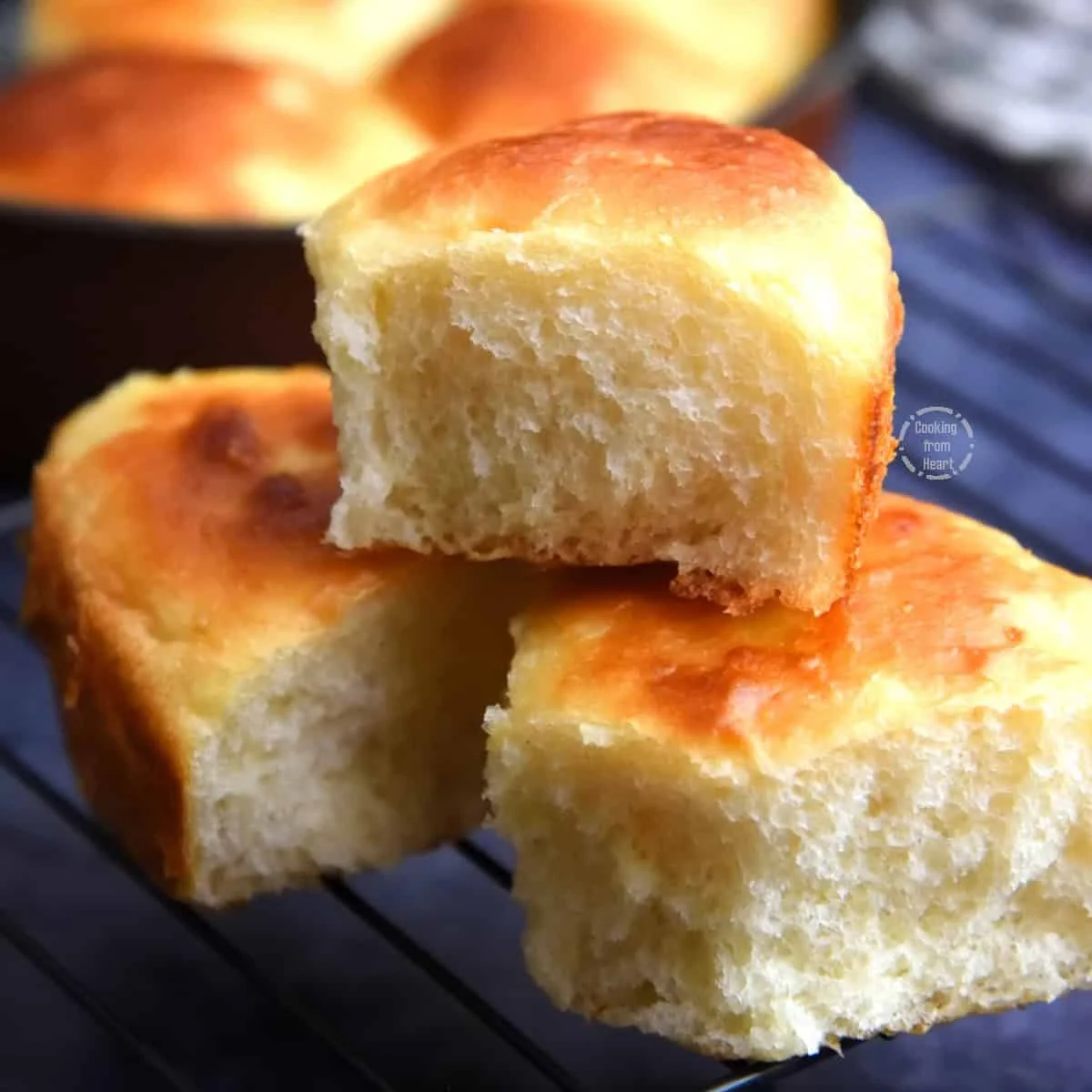
These soft, fluffy potato buns are made with mashed potato and a simple yeast dough that needs very little kneading. Serve them as dinner rolls, burger buns or toasted with butter.
Ingredients
- 120 g (½ cup)boiled, mashed potatoes
- 250 g (2 cups)plain flour
- 120 ml (½ cup)milk, plus a little extra for brushing
- 80 ml (⅓ cup)warm water
- 12 g (1 tbsp)sugar
- 3 g (1 tsp)instant dried yeast
- 3 g (½ tsp)salt
- 30 ml (2 tbsp)oil
- 5 g (1 tsp), optionalbutter
Instructions
- 1
Activate the yeast
Mix the warm water, instant dried yeast and sugar in a bowl. Set aside for 4–5 minutes, until frothy.
- 2
Mix potato and milk
In a large mixing bowl, beat the mashed potatoes with the milk until thick and creamy.
- 3
Add dry ingredients
Add the flour and salt, then mix roughly.
- 4
Add yeast mixture
Pour in the frothy yeast mixture and 1 tablespoon of the oil.
- 5
Bring dough together
Mix roughly until no dry patches of flour remain.
- 6
Knead and fold
Knead for 2–3 minutes, until smooth. Fold one third of the dough in from one side, then fold one third in from the other side. Turn the dough and repeat. Use about 1 tablespoon more oil as needed while kneading and folding.
- 7
Cover the dough
The dough should be smooth and elastic, with no cracks. Lightly oil the bowl and dough, then cover the bowl with cling film or a kitchen towel.
- 8
First rise
Leave in a warm place for about 1 hour, or until the dough has doubled in volume.
- 9
Knock back dough
Gently punch down the dough, then fold and knead it again for 2–3 minutes.
- 10
Divide the dough
Use a sharp knife to cut the dough into 8 roughly equal pieces.
- 11
Shape the buns
Grease and line a 25 cm (10-inch) round baking tray with baking paper. Roll each piece into a smooth ball and pinch the ends together tightly. Arrange the balls in the tray about 5 cm (2 inches) apart.
- 12
Proof and preheat
Cover with a kitchen towel or cling film and leave in a warm place for 30–45 minutes, or until doubled in volume. During the final 10 minutes of proofing, preheat the oven to 180°C.
- 13
Brush with milk
Brush the proofed buns with milk to help prevent them from drying out as they bake.
- 14
Bake and cool
Bake in the preheated oven for 20–25 minutes, until golden brown. Remove from the oven and brush the tops with melted butter or oil. Leave to rest for 5 minutes, then turn out onto a wire rack to cool.
What are potato buns?
Potato buns are soft yeast rolls made with mashed potato in the dough. Potato breads are found in several baking traditions, and this version uses a straightforward, no-knead-style method with just a brief period of kneading and folding.
Mashed potato adds moisture and gives the buns their tender texture. Shaping them together in a round tin makes them handy to pull apart for dinner or split for burgers.
Nutrition and macros by portion
The nutrition label shows one serving as written: 212 calories, 5g protein, 37g carbs, 5g fat.
| Portion | Adjustment | kcal | Protein | Carbs | Fat |
|---|---|---|---|---|---|
| Lighter | Use less finishing fat | 148 kcal | 4g | 26g | 4g |
| This serving | As written | 212 kcal | 5g | 37g | 5g |
| Hungry | Serve two buns | 318 kcal | 8g | 56g | 8g |
The flour and sugar provide most of the carbohydrate, while the oil and optional butter contribute much of the fat. The potatoes and flour provide some protein, though these buns are not a substantial protein source; serve them with eggs, beans or another protein-rich filling and some vegetables for a more balanced plate.
Why mashed potato matters
Potato: Use well-cooked, smooth mashed potato so it blends easily with the milk. If it is lumpy, mash it thoroughly before mixing.
Working the dough
Folding: This dough only needs 2–3 minutes of kneading at a time, with envelope-style folds to help bring it together. Add the remaining oil as needed rather than pouring it all in at once.
Texture: Aim for a smooth, elastic dough without cracks before covering it for the first rise.
Let the dough rise fully
First rise: Leave the covered dough somewhere warm until it has doubled in volume; the stated hour is a guide, as conditions can affect the timing.
Second rise: After shaping, wait for the buns to double again before baking. Starting the oven during the final 10 minutes of this proof helps it reach 180°C in time.
Shaping and spacing
Equal pieces: Divide the dough into 8 roughly even portions so the buns bake at a similar rate. Pinch the ends of each shaped ball together to keep its surface taut.
Room to expand: Arrange the buns about 5 cm apart in the lined 25 cm tin. They will grow during the second rise and baking.
Check for doneness
Colour: Bake for 20–25 minutes at 180°C, looking for a golden-brown top. If the buns need more colour, use the upper end of the suggested baking time.
Cooling: Rest the buns in the tin for 5 minutes before turning them onto a wire rack. This brief pause helps them release without trapping steam against the base.
How to serve them
At the table: Serve the buns warm as dinner rolls, or split them for burgers and sandwiches. They are also good toasted, with butter or your preferred spread.
Recipe notes & tips
- Let the yeast mixture stand until frothy before adding it to the dough.
- Use mashed potato that is smooth and not watery for an easier-to-handle dough.
- Oil your hands lightly if the dough feels sticky while folding.
- Pinch each bun’s seam firmly underneath so it holds its shape.
- Allow the buns to finish their second rise before brushing and baking.
- Brush the tops with melted butter or oil after baking while they are still warm.
Variations
- Seeded tops: Sprinkle sesame or poppy seeds over the milk-brushed buns before baking.
- Herb dough: Mix finely chopped herbs into the flour and salt for savoury rolls.
- Garlic finish: Brush the baked buns with garlic butter instead of plain butter.
- Burger size: Shape the 8 pieces into flatter rounds for easier burger assembly.
- Sweet serving: Serve a toasted bun with butter and jam for breakfast.
Common mistakes to avoid
- Yeast mixture stays flat: Check that the yeast is active and the water is warm, not hot.
- Dry patches remain: Keep mixing until all the flour is incorporated before kneading.
- Dough cracks while shaping: Knead and fold until it is smooth and elastic before dividing.
- Buns bake unevenly: Divide the dough into 8 pieces of similar size and space them evenly.
- Buns turn out dense: Give both rises time to reach the doubled-volume cue rather than rushing them.
- Tops dry out: Brush the proofed buns with milk before they go into the oven.
How to store
Once cool, store the buns in an airtight container at room temperature for up to 2 days. Warm them briefly in the oven or toast split halves before serving; freeze for longer storage and thaw before reheating.
Frequently asked questions
Can I use leftover mashed potatoes?
Yes, provided they are smooth and not very wet. If they contain added salt or butter, the flavour of the finished buns may vary.
How do I know when the dough has risen enough?
Look for it to double in volume during both rises. The timing can vary depending on how warm the room is.
Can I make these buns without a stand mixer?
Yes. The method uses a bowl and brief hand kneading, so a stand mixer is not necessary.
Can I make the dough ahead?
The recipe does not specify an overnight rise. For the most reliable result, follow the two rises in the method and bake the buns the same day.
Can I freeze potato buns?
Yes. Cool them completely, seal them well and freeze. Thaw before warming or toasting.
Cook it from the original
This recipe comes from cookingfromheart.com. Their page has the author’s own photos, notes and tips — the best place to cook it from.
Open the recipe on cookingfromheart.com