
Ragi Rava Dosa | Instant Ragi Dosa Recipe
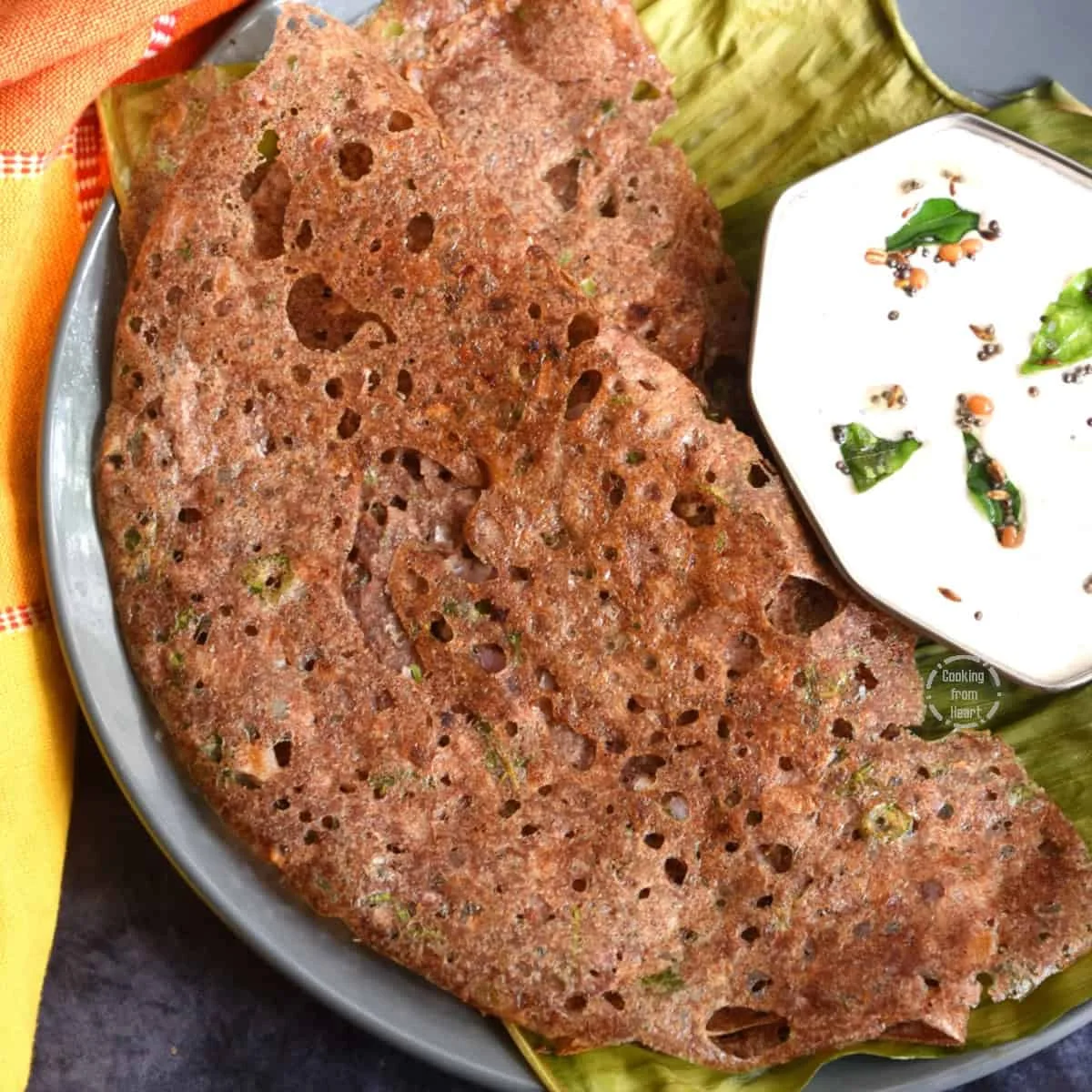
Ragi rava dosa is a thin, lacy South Indian pancake made with finger millet flour, semolina and rice flour. This quick batter needs no fermentation and cooks into crisp-edged dosas that are lovely with chutney or sambar.
Ingredients
- 60 g (½ cup)ragi flour
- 30 g (¼ cup)unroasted rava (semolina)
- 40 g (¼ cup)rice flour
- ½ tspcumin seeds
- 1onion, finely chopped
- 3 tbspcoriander leaves, finely chopped
- 10–12curry leaves, finely chopped
- 2 cupswater
- 1green chilli, finely chopped
- as neededsalt
- as neededoil, for cooking
Instructions
- 1
Mix dry ingredients
Put the ragi flour, rice flour, unroasted rava, cumin seeds and salt in a mixing bowl.
- 2
Make the batter
Add about 2 cups of water and whisk until smooth and lump-free. Stir in the chopped onion, coriander leaves, curry leaves and green chilli.
- 3
Rest the batter
Leave the batter to stand for 15–20 minutes. It should still be thin and free-flowing, with no lumps.
- 4
Pour onto the tawa
Heat a cast-iron dosa tawa until very hot, then reduce the heat to medium. Stir the batter well and pour a large ladleful around the tawa, moving around it only once and avoiding pouring too much in one spot. Drizzle oil over the dosa.
- 5
Cook and fold
Cook until the dosa is golden brown around the edges and begins to lift from the tawa. Flip if needed, cook the other side, then fold in half and remove from the heat.
- 6
Use a non-stick tawa
You can also cook the dosas on a non-stick dosa tawa over medium heat. A tawa with raised edges helps contain the thin batter as you pour it. Cook in the same way and remove each dosa once golden brown.
- 7
Serve the dosas
Serve hot with coconut chutney, peanut chutney or sambar.
What is ragi rava dosa?
Dosa is a South Indian savoury pancake, traditionally made from a fermented batter. This instant-style version uses ragi, or finger millet, along with semolina and rice flour, so it can be cooked without a fermentation stage.
Ragi gives the dosa its distinctive earthy flavour, while the thin, pourable batter helps create a lacy shape. The method is similar to rava dosa, with a mix of flours and a hot pan doing the work.
Nutrition and macros by portion
The nutrition label shows one serving as written: 57 calories, 2g protein, 11g carbs, 1g fat.
| Portion | Adjustment | kcal | Protein | Carbs | Fat |
|---|---|---|---|---|---|
| Lighter | Use less cooking oil | 40 kcal | 1g | 8g | 1g |
| This serving | As written | 57 kcal | 2g | 11g | 1g |
| Hungry | Serve an extra dosa | 86 kcal | 3g | 17g | 2g |
The rice flour and semolina provide most of the carbohydrates, while ragi flour contributes some protein and carbohydrates. Oil is the main source of fat, so the amount used at the tawa affects the finished dosa; pair it with sambar and chutney for a more rounded plate.
Why these flours work
Ragi flour: it brings the dosa's characteristic colour and flavour. Rice flour helps the cooked pancake set into a crisp-edged layer.
Rava: unroasted semolina adds texture and makes this a recognisable rava-style dosa. Keep it unroasted as specified.
Keep the batter thin
Water: add about 2 cups and mix thoroughly, checking that no flour pockets remain. The batter should pour freely rather than sit in a thick mound on the tawa.
Rest: give the batter 15–20 minutes before cooking. Stir it again afterwards, as the flour and semolina can settle while it stands.
Pour for a lacy finish
Hot tawa: heat the pan until sizzling hot, then turn the flame down to medium before pouring. This gives the batter a hot surface to meet without leaving the heat at its highest setting.
One pass: pour around the tawa once rather than filling gaps with extra batter. The open spaces help the dosa cook with a lacy pattern and crisp edges.
Look for colour and lift
The dosa is ready to turn when it has browned around the edges and starts lifting from the pan. If it still clings or looks pale, give it more time before trying to flip it.
The recipe allows for flipping if required. Cook the second side, then fold the dosa in half and take it off the heat.
Serve it hot
Coconut chutney and peanut chutney are both suggested accompaniments, as is sambar. Serve the dosas as soon as they are cooked to enjoy their crisp edges.
If you are cooking several, serve each one promptly or keep it uncovered briefly so steam does not soften the surface.
Recipe notes & tips
- Stir the batter again just before each pour so the flours and semolina stay evenly mixed.
- Use a ladle to pour the batter rather than trying to spread it like a thick dosa batter.
- Set the heat to medium after the tawa is hot, as directed, before cooking.
- Pour around the tawa only once to keep the dosa open and lacy.
- Use a tawa with raised edges if you have one; they help contain the thin batter.
- Cook each dosa until it is golden and begins to lift before deciding whether to flip it.
Variations
- More chilli: add extra finely chopped green chilli for a hotter dosa.
- Extra coriander: increase the chopped coriander leaves for a fresher herbal flavour.
- Chutney pairing: serve with coconut chutney for a mild accompaniment.
- Peanut pairing: choose peanut chutney for a nutty side.
- Sambar pairing: serve with sambar to make the meal more substantial.
Common mistakes to avoid
- Lumpy batter: whisk the flours thoroughly into the water before adding the chopped ingredients.
- Thick batter: check that it pours freely and add water only as needed to reach that consistency.
- Skipping the rest: leave the batter for 15–20 minutes, then stir it well before cooking.
- Overpouring: avoid adding too much batter in one spot or going around the tawa more than once.
- Flipping too soon: wait until the dosa is browned and beginning to lift from the tawa.
- High heat throughout: reduce the flame to medium once the tawa is sizzling hot.
How to store
These dosas are best served hot, soon after cooking. If you have leftovers, refrigerate them in a covered container and reheat in a hot pan until warmed through; they may be less crisp after storage.
Frequently asked questions
Does the batter need to ferment?
No. This is an instant-style dosa batter, and the recipe calls for a 15–20 minute rest rather than fermentation.
How thin should the batter be?
It should be free-flowing and pour easily from a ladle. Mix it without lumps and stir again after the resting time.
Can I use a non-stick pan?
Yes. The recipe says a non-stick dosa tawa works over medium heat, and a pan with raised edges can help contain the batter.
Do I have to flip the dosa?
The recipe says to flip it if required. First cook until it is golden around the edges and starts lifting from the tawa.
What can I serve with ragi rava dosa?
Serve it hot with coconut chutney, peanut chutney or sambar.
Why is the dosa not lacy?
The method relies on a thin, lump-free batter and a single pour around the tawa. Avoid pouring extra batter over the same areas.
Cook it from the original
This recipe comes from cookingfromheart.com. Their page has the author’s own photos, notes and tips — the best place to cook it from.
Open the recipe on cookingfromheart.com