
Cauliflower rice
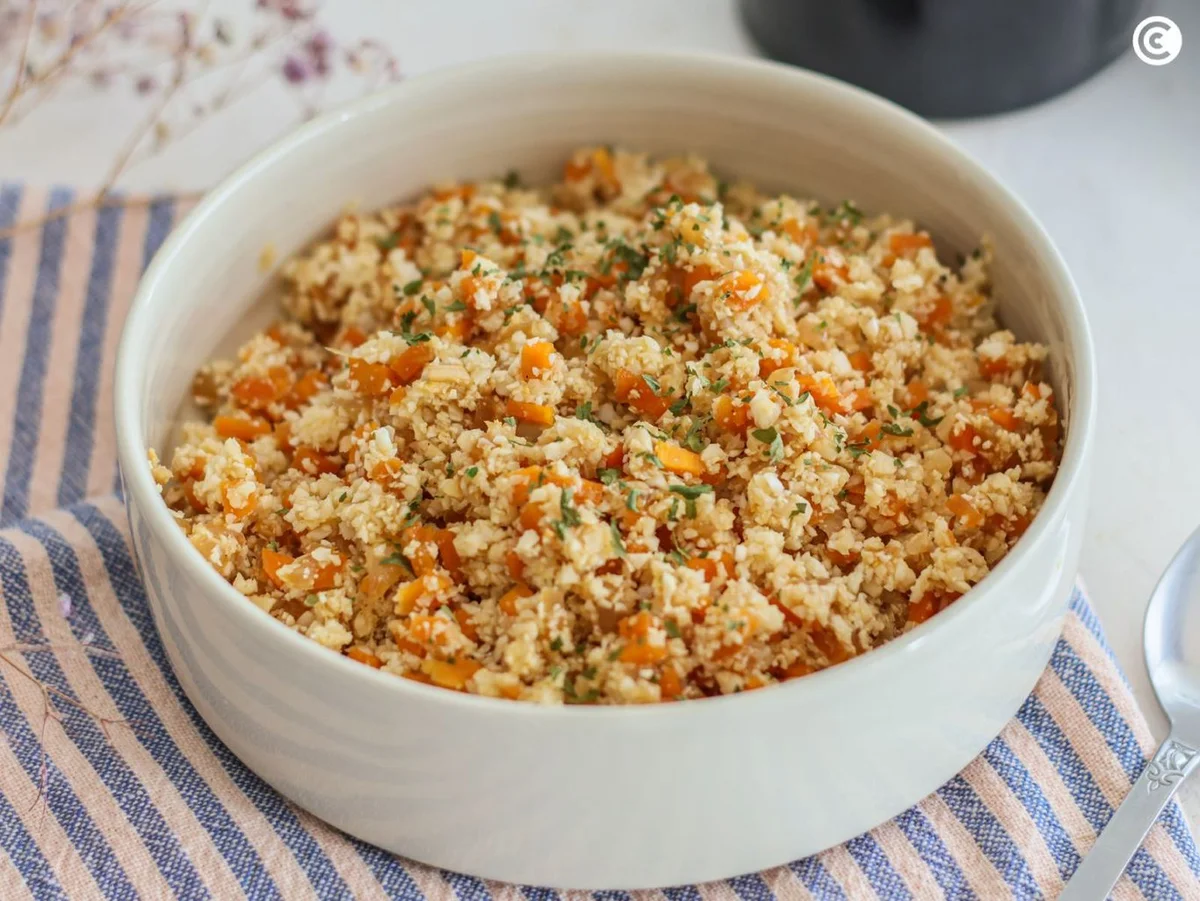
This is a quick, vegetable-forward take on cauliflower rice, sautéed with carrot, onion, garlic and soy sauce. Serve it warm as a light main or alongside meat, fish or tofu.
Ingredients
- 300 gcauliflower
- 2garlic cloves
- 1onion
- 20 mlsoy sauce
- 2carrots
- to tastesalt
- to tasteground black pepper
Instructions
- 1
Prepare the cauliflower
Wash the cauliflower and remove its leaves and the tougher central stem. Break it into small florets, then pulse in a food processor for a few seconds until it resembles rice-sized crumbs; if you do not have a processor, grate it by hand. You can eat it raw in a salad or cook it as described here.
- 2
Chop the vegetables
Peel and finely chop the garlic, onion and carrots, or cut them into strips if you prefer.
- 3
Cook the vegetables
Heat a large frying pan or wok with oil and add the chopped vegetables. Season with salt and black pepper, pour in the soy sauce and stir-fry over medium-high heat for 10 minutes, stirring often so they do not burn.
- 4
Add the cauliflower
Once the vegetables are golden, add the cauliflower rice and stir-fry for a few minutes, just until tender but not too soft. Aim to leave it slightly crisp.
- 5
Serve warm
Serve the cauliflower rice hot as a light main or as a side with meat, fish, tofu or tempeh.
What is cauliflower rice?
Cauliflower rice is cauliflower chopped or grated into small pieces that resemble rice. It is a rice-style preparation rather than a traditional Spanish rice dish.
This version combines it with familiar sautéed vegetables and soy sauce for a savoury, colourful result. The cauliflower is added near the end so it stays pleasantly firm.
Nutrition and macros by portion
The nutrition label shows one serving as written: 267 calories, 11g protein, 23g carbs, 1g fat.
| Portion | Adjustment | kcal | Protein | Carbs | Fat |
|---|---|---|---|---|---|
| Lighter | Use less cooking oil | 187 kcal | 7g | 16g | 1g |
| This serving | As written | 267 kcal | 11g | 23g | 1g |
| Hungry | Serve a larger portion | 401 kcal | 16g | 35g | 2g |
The provided nutrition per serving is 267 kcal, with 23.3 g of carbohydrate, 10.6 g of protein and 1 g of fat. Most of the carbohydrates come from the cauliflower, carrot and onion, while the vegetables and soy sauce contribute some protein; the method also calls for oil, though no amount is listed. For a more filling plate, serve it with tofu, tempeh, fish or another protein-rich accompaniment.
Making rice-sized pieces
Food processor: pulse the florets briefly and check the texture often; long processing can turn them into a paste.
By hand: a grater works well if you do not have a processor. Keeping the pieces fairly even helps them cook at a similar rate.
Building the flavour
Vegetable base: garlic, onion and carrot go into the pan first, giving them time to soften and turn golden before the cauliflower is added.
Seasoning: soy sauce brings savoury depth, while salt and pepper let you adjust the taste. The method calls for oil, but the ingredient list does not specify an amount.
Getting the texture right
The key cue is tenderness with a little bite: the cauliflower should not become soft or wet. Stir-fry it for only a few minutes after adding it to the cooked vegetables.
Stir the vegetables regularly during their 10-minute cooking time to help them brown without catching on the pan.
When to serve it
Serve it hot as a light main, or use it alongside meat or fish. Tofu or tempeh makes a plant-based pairing.
Because the cauliflower is added at the end, have it grated and ready before the vegetables finish cooking.
Recipe notes & tips
- Pulse the cauliflower in short bursts so it stays crumbly rather than becoming a purée.
- Cut the onion, garlic and carrots into similarly small pieces for more even cooking.
- Stir the vegetable mixture frequently during its 10 minutes in the pan.
- Taste before adding extra salt, as soy sauce is already savoury.
- Add the cauliflower only once the vegetables are golden, then cook it briefly.
Variations
- Add ginger: finely grate a little into the vegetables for extra warmth.
- Use tamari: swap it for the soy sauce if you prefer that flavour.
- Add spring onions: scatter sliced spring onions over the dish just before serving.
- Bring the heat: add chilli flakes to the pan with the other seasonings.
- Make it a fuller meal: stir through cooked tofu or tempeh before serving.
Common mistakes to avoid
- Over-processing the cauliflower: pulse briefly and stop when it looks like small rice-sized crumbs.
- Adding cauliflower too early: wait until the other vegetables are golden so it does not overcook.
- Leaving the vegetables unstirred: stir often during the 10-minute sauté to prevent them burning.
- Cooking until very soft: take the cauliflower off the heat while it still has a slight crunch.
- Oversalting: taste after adding the soy sauce before seasoning further.
How to store
Cool leftovers promptly and keep them in a covered container in the fridge for up to 3 days. Reheat in a frying pan until piping hot, stirring gently; the cauliflower may soften a little after storage.
Frequently asked questions
Can I make cauliflower rice without a food processor?
Yes. Use a hand grater to break the cauliflower into small, rice-like pieces.
Can I eat the cauliflower rice raw?
Yes. The method notes that it can be used raw, for example in a salad; this version is cooked with vegetables.
How do I keep it from going mushy?
Pulse it only until crumbly and stir-fry it for just a few minutes at the end. Stop cooking while it still has a little bite.
Is this dish vegan?
The listed vegetables and soy sauce are plant-based. Check that your soy sauce is suitable, and note that the method calls for oil without listing its amount.
What can I serve with cauliflower rice?
It works as a side for meat or fish, or with tofu or tempeh for a plant-based pairing.
Cook it from the original
This recipe comes from cocinatis.com. Their page has the author’s own photos, notes and tips — the best place to cook it from.
Open the recipe on cocinatis.com