
Ragi Porridge
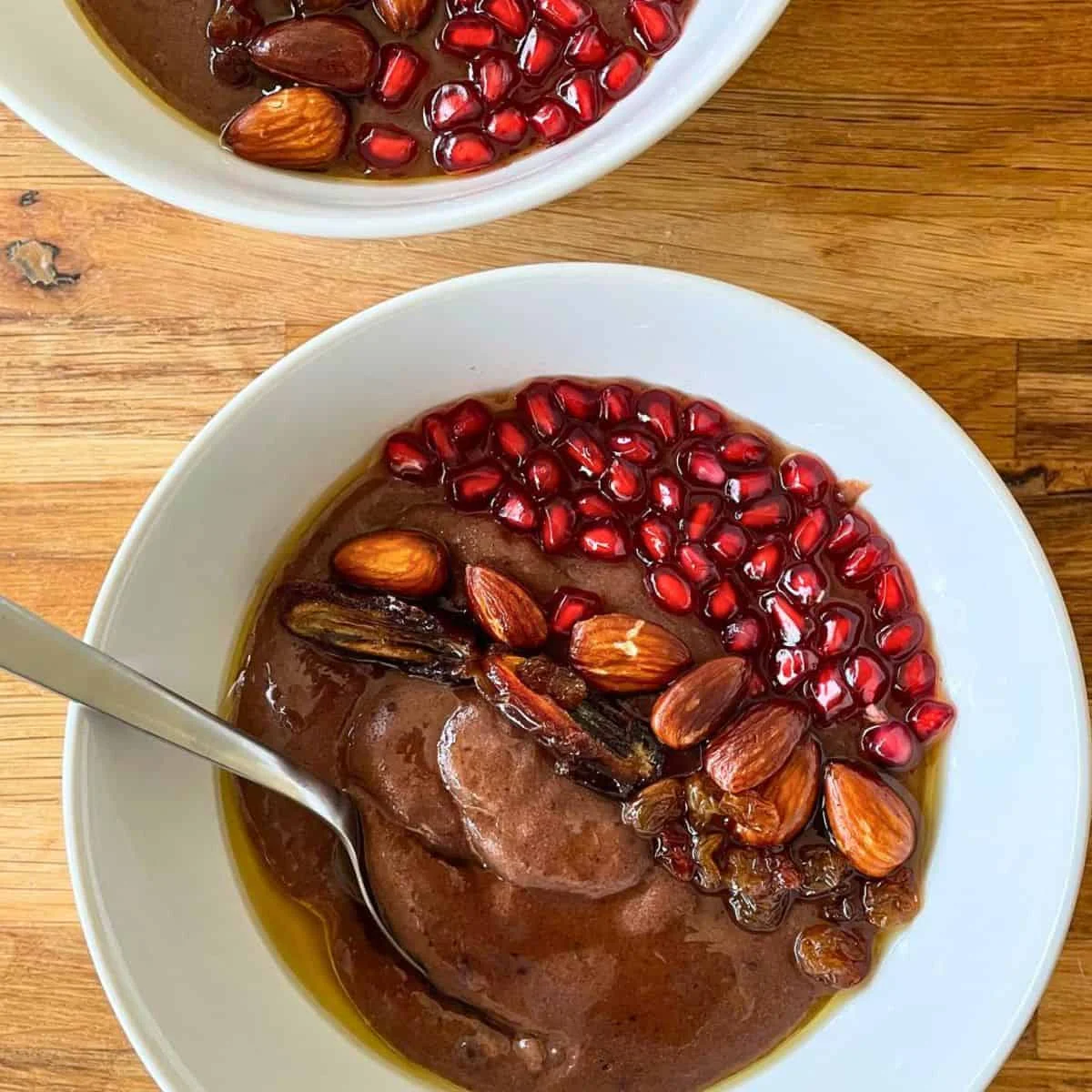
Ragi porridge is a smooth, gently spiced Indian millet porridge sweetened with jaggery and finished with toasted almonds. It comes together quickly from pantry staples, making it a handy warm breakfast or snack.
Ingredients
- 43 g (⅓ cup, approximately 6 tbsp)finger millet flour (ragi flour)
- 80 ml (⅓ cup)water or milk
- 480 ml (2 cups)water
- 30 ml (2 tbsp)jaggery
- 1 pinchground cardamom
- 1 pinchsalt
- 15 ml (1 tbsp)ghee
- 8–10almonds, chopped
Instructions
- 1
Mix the flour
In a small bowl, whisk the ragi flour with 80 ml water or milk until the mixture is smooth and free of lumps.
- 2
Boil the water
Pour 480 ml water into a medium saucepan and bring it to a full boil.
- 3
Add the mixture
Turn the heat down to low. Pour in the ragi mixture gradually, stirring continuously as you do so.
- 4
Cook until thick
Cook for 5–8 minutes, stirring, until the porridge thickens.
- 5
Season the porridge
Add the ground jaggery, cardamom and salt. Stir until the jaggery dissolves, then turn off the heat and divide the porridge between two bowls.
- 6
Fry the almonds
Heat the ghee in a small saucepan. Fry the chopped almonds until golden and aromatic, then turn off the heat and divide them between the bowls. Serve warm.
What is ragi porridge?
Ragi porridge is a simple Indian dish made with ragi, or finger millet, cooked with water or milk until smooth and thick. Ragi has a long history in South Asian cooking, where it is used in everyday porridges and other staple foods.
This version balances the millet’s earthy flavour with jaggery and cardamom, then adds almonds fried in ghee for a fragrant, crisp topping. The flour slurry helps the porridge cook evenly without lumps.
Nutrition and macros by portion
The nutrition label shows one serving as written: 210 calories, 5g protein, 24g carbs, 12g fat.
| Portion | Adjustment | kcal | Protein | Carbs | Fat |
|---|---|---|---|---|---|
| Lighter | Use less ghee | 147 kcal | 4g | 17g | 8g |
| This serving | As written | 210 kcal | 5g | 24g | 12g |
| Hungry | Add a larger portion | 315 kcal | 8g | 36g | 18g |
The ragi flour and jaggery provide most of the carbohydrate, while ghee contributes much of the fat; the flour and almonds provide some protein. For a more balanced plate, pair a bowl with plain yoghurt or fresh fruit.
Choosing the liquid
Water in the slurry: The recipe uses water to loosen the flour before it goes into the pan. Milk can be used instead for this portion, as listed in the ingredients.
Water in the pan: Bring the larger measure to a full boil before adding the slurry. Pouring it in gradually while stirring helps it blend into the hot liquid.
Getting a smooth texture
Make a slurry: Whisk the flour and the smaller quantity of liquid until no dry pockets or lumps remain. A fork works too, but a whisk makes it easier to smooth the mixture.
Stir as you pour: Keep the pan over low heat and stir continuously while adding the slurry. This is the key step for an even, silky porridge.
Knowing when it is ready
Cooking time: Allow 5–8 minutes after adding the slurry, stirring as it cooks. The porridge is ready when it has thickened; if it still seems thin, give it more time within that range.
After seasoning: Add the jaggery, cardamom and salt once the porridge has thickened. Stir until the jaggery dissolves, then turn off the heat.
Making the almond topping
Gentle frying: Warm the ghee in a small pan and fry the chopped almonds until they turn golden and smell aromatic. Keep an eye on them, as small pieces can colour quickly.
Finish at the end: Divide the almonds and their ghee between the bowls just before serving. This keeps the topping distinct from the soft porridge.
Serving the porridge
Serve it warm in two bowls, with the almonds spread over the top. The combination of soft porridge and toasted nuts gives each spoonful a little contrast.
For a more substantial meal, serve it alongside fresh fruit or plain yoghurt. Keep any additional toppings separate until serving so the porridge’s texture remains the focus.
Recipe notes & tips
- Whisk the flour slurry just before cooking so it stays evenly mixed.
- Pour the slurry in slowly while stirring to help prevent lumps.
- Keep the heat low after adding the slurry to avoid scorching the bottom.
- Stir frequently throughout the 5–8 minute cooking time.
- Fry the almonds close to serving so they keep their toasted aroma.
Variations
- Use milk: Replace the slurry’s water with milk for a creamier taste.
- Choose coconut oil: Use coconut oil instead of ghee to fry the almonds.
- Adjust the sweetness: Use less jaggery for a less sweet bowl.
- Change the nuts: Try another chopped nut in place of the almonds.
- Add more cardamom: Increase the pinch slightly for a more pronounced spice note.
Common mistakes to avoid
- Lumpy slurry: Whisk the flour and liquid thoroughly before adding them to the pan.
- Adding it all at once: Pour the slurry in gradually while stirring continuously.
- Cooking on high heat: Turn the heat down to low once the water boils.
- Stopping too soon: Cook for 5–8 minutes and check that the porridge has thickened.
- Over-toasting the almonds: Fry them until just golden and aromatic, then turn off the heat.
How to store
Refrigerate leftover porridge in a covered container and use within 2 days. Reheat gently in a saucepan, stirring; add a little water or milk if it has become too thick. Store the almonds separately if possible and add them after reheating.
Frequently asked questions
Can I make this with milk?
Yes. The smaller quantity used to mix the flour can be water or milk. The larger quantity in the pan is listed as water.
How do I stop ragi porridge from going lumpy?
Whisk the flour with the smaller amount of liquid until smooth first. Then pour it slowly into the boiling water while stirring continuously over low heat.
How thick should the porridge be?
It should thicken during the 5–8 minute cook. If it becomes thicker than you like, stir in a little liquid while reheating.
Can I use coconut oil instead of ghee?
Yes. The method gives coconut oil as an alternative for frying the almonds.
Can I prepare it ahead?
You can cook the porridge ahead and refrigerate it, but it will thicken as it cools. Reheat it gently with a little water or milk, and fry the almonds fresh for serving.
Can I change the amount of jaggery?
Yes. Add less or more to suit your preference, stirring until it dissolves.
Cook it from the original
This recipe comes from butfirstchai.com. Their page has the author’s own photos, notes and tips — the best place to cook it from.
Open the recipe on butfirstchai.com