
Vegetable risotto
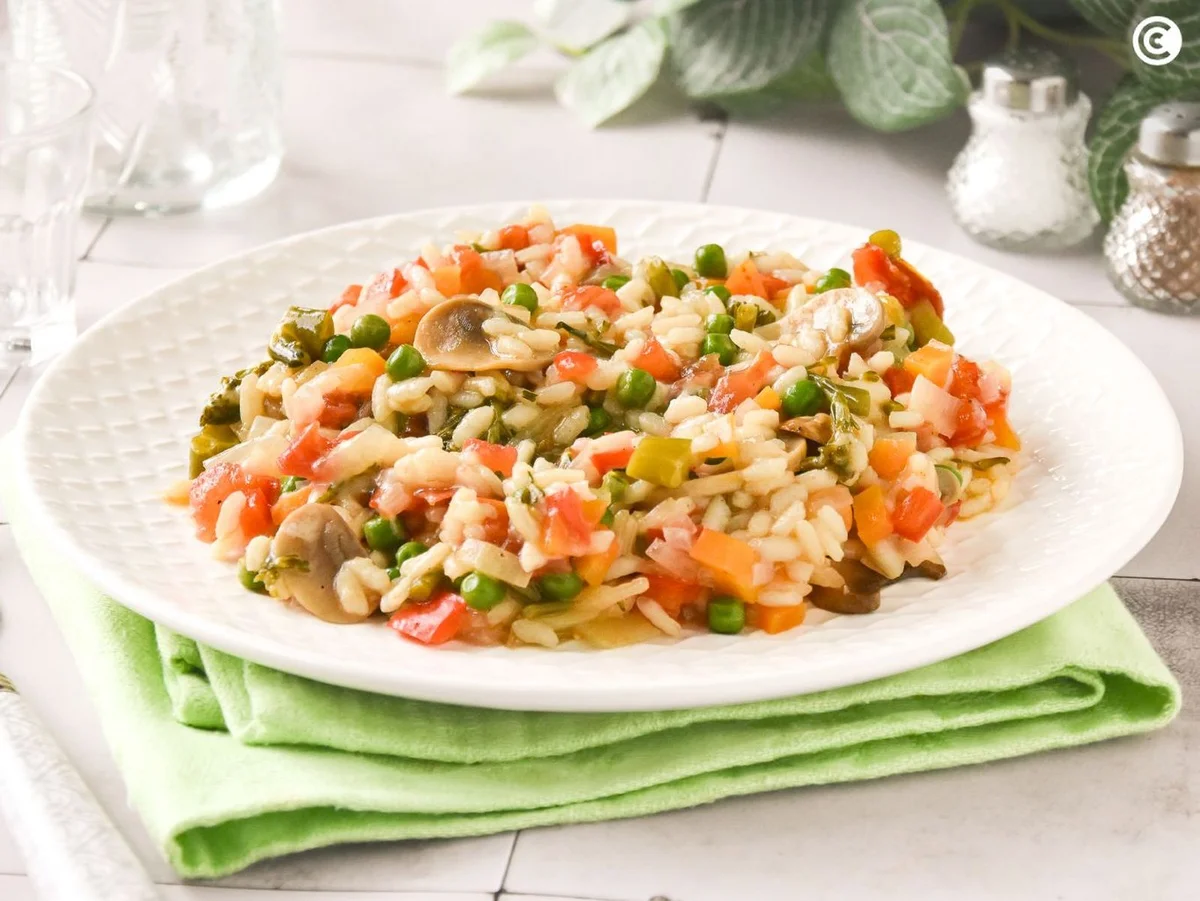
This Italian-style vegetable risotto combines short-grain rice with broccoli, pepper, mushrooms, carrot, tomato and peas for a creamy, colourful meal. It is cooked gradually with hot stock and finished with Parmesan, so it is best served straight away.
Ingredients
- 100 gbroccoli
- 1Italian red pepper
- 60 gmushrooms
- 80 gcarrot
- 1red tomato
- 60 gonion
- 2 tablespoonsolive oil
- to tastesalt
- to tasteground black pepper
- 60 mlSherry
- 100 grisotto rice
- 400 mlhot vegetable stock
- 50 gfrozen peas
- 40 ggrated Parmesan
Instructions
- 1
Prepare the vegetables
Cut the broccoli into florets and slice its stems very finely. Remove the seeds from the red pepper and dice it. Slice the mushrooms, peel and dice the carrot, deseed and dice the tomato, then peel and finely chop the onion.
- 2
Soften the vegetables
Heat the olive oil in a large frying pan or heavy-based casserole. Cook the vegetables over a low to medium heat for 7 minutes, then season to taste with salt and black pepper.
- 3
Toast the rice
Pour in the Sherry and let it reduce over a high heat for 2 minutes. Add the risotto rice, stir and cook for 1 minute so the grains are coated in the vegetable mixture.
- 4
Add the stock
Add a ladleful of the hot vegetable stock and stir constantly until the rice absorbs it. Continue adding the stock gradually, stirring as you go, until it is all used; this should take about 18–20 minutes in total. Add the frozen peas 5 minutes before the end of cooking.
- 5
Stir in Parmesan
When the rice is cooked to your liking, remove the pan from the heat. Add the grated Parmesan and mix well.
- 6
Serve straight away
Serve the vegetable risotto immediately, while it has its soft, creamy texture.
What is vegetable risotto?
Risotto is an Italian rice dish cooked by adding warm liquid gradually and stirring as the grains absorb it. This version brings together several vegetables, with Sherry and Parmesan adding savoury depth.
The slow addition of stock helps the rice release starch into the dish. That gives the finished risotto its characteristic creamy consistency without needing a separate sauce.
Nutrition and macros by portion
The nutrition label shows one serving as written: 467 calories, 18g protein, 57g carbs, 18g fat.
| Portion | Adjustment | kcal | Protein | Carbs | Fat |
|---|---|---|---|---|---|
| Lighter | Use less Parmesan | 327 kcal | 13g | 40g | 12g |
| This serving | As written | 467 kcal | 18g | 57g | 18g |
| Hungry | Serve a larger portion | 701 kcal | 27g | 85g | 27g |
The rice supplies most of the carbohydrates, while olive oil and Parmesan contribute much of the fat. The rice, vegetables and Parmesan all contribute protein, with Parmesan adding a savoury finish. For a balanced plate, serve a portion with a simple green salad or extra non-starchy vegetables.
Choosing the ingredients
Rice: Use a short-grain risotto variety such as Arborio or Carnaroli, as suggested in the method. These grains can absorb stock while releasing starch as they cook.
Vegetables: Keep the pieces small and fairly even so they soften together during the initial 7-minute sauté. The recipe also mentions bimi as an alternative to broccoli.
Building the flavour
Soffritto: Start the vegetables over low to medium heat so they soften in the oil rather than colouring too quickly. Season them at this stage to distribute the salt and pepper through the base.
Sherry: Let the wine reduce for 2 minutes over high heat before adding the rice. Stirring the rice for a further minute coats the grains with the cooked vegetables and oil.
Adding stock gradually
First ladle: Add only one ladleful of hot stock to begin with, then keep stirring while the rice absorbs it. Add the next portion once the pan is no longer visibly liquid-heavy.
Steady pace: Continue in small additions until the 400 ml of stock is used, allowing about 18–20 minutes for this part of the cooking. The stock should be hot so it does not cool the rice each time it is added.
Checking the texture
Rice: Taste a grain near the end of cooking; it should be tender but still hold its shape. If it needs longer, continue cooking while adding stock as required, keeping to the recipe’s gradual method.
Consistency: The finished dish should be soft and creamy rather than dry. Stir in the Parmesan off the heat, then serve promptly.
Serving the risotto
Timing: Risotto is at its best immediately after cooking, when the rice is still moist and the Parmesan has just been mixed through. Have bowls ready before you finish the final step.
On the side: Serve it as a main course, or pair it with a simple green salad for a fresh contrast. Keep additions modest so the vegetables and creamy rice remain the focus.
Recipe notes & tips
- Cut the vegetables into similar-sized pieces so they soften at roughly the same rate.
- Keep the vegetable stock hot while you cook the rice.
- Stir as each ladleful of stock is absorbed before adding more.
- Add the frozen peas during the final 5 minutes so they retain their shape.
- Have the Parmesan grated and the serving bowls ready before the rice finishes.
- Taste the rice towards the end to check its texture before taking the pan off the heat.
Variations
- Use bimi: Replace the broccoli with bimi, as suggested in the method.
- Try white wine: Use 60 ml of white wine instead of Sherry, as allowed by the method.
- Change the mushrooms: Use another variety of mushroom, sliced in the same way.
- Adjust the vegetables: Swap in other vegetables cut small enough to soften during the sauté.
- Finish with herbs: Stir chopped fresh herbs through the risotto just before serving.
Common mistakes to avoid
- Adding all the stock at once: The gradual method helps the rice absorb the liquid; add it a ladleful at a time.
- Using cold stock: Cold liquid can interrupt the cooking; keep the vegetable stock hot as you work.
- Skipping the rice coating: Stir the rice with the vegetables for 1 minute before adding stock.
- Leaving the rice unstirred: Stir constantly as the stock is absorbed to follow the recipe's creamy cooking method.
- Adding the peas too early: Put them in 5 minutes before the end so they do not cook for the full rice-cooking time.
- Letting the risotto stand: Serve as soon as it is mixed with Parmesan to enjoy its creamy texture.
How to store
Risotto is best served immediately. If you have leftovers, cool them promptly, store them covered in the fridge and use within 2 days; reheat until piping hot, adding a splash of water or stock if needed to loosen the texture.
Frequently asked questions
What rice should I use for this risotto?
Use risotto rice; the method names Arborio or Carnaroli as options. Their short grains suit the gradual stock-and-stir cooking method.
Can I use white wine instead of Sherry?
Yes. The method allows 60 ml of white wine as an alternative to the Sherry.
When should I add the peas?
Add the 50 g of frozen peas 5 minutes before the rice finishes cooking.
How do I know when the rice is ready?
Taste a grain near the end of the 18–20-minute stock-adding stage. It should be tender while still holding its shape.
Can I prepare this risotto ahead?
It is best cooked just before serving, as the texture is creamiest when fresh. Leftovers can be refrigerated and reheated, though the rice will soften further.
Can I use bimi instead of broccoli?
Yes. The method specifically gives bimi as an alternative; cut it into florets and finely sliced stems.
Cook it from the original
This recipe comes from cocinatis.com. Their page has the author’s own photos, notes and tips — the best place to cook it from.
Open the recipe on cocinatis.com