
Couscous with vegetables
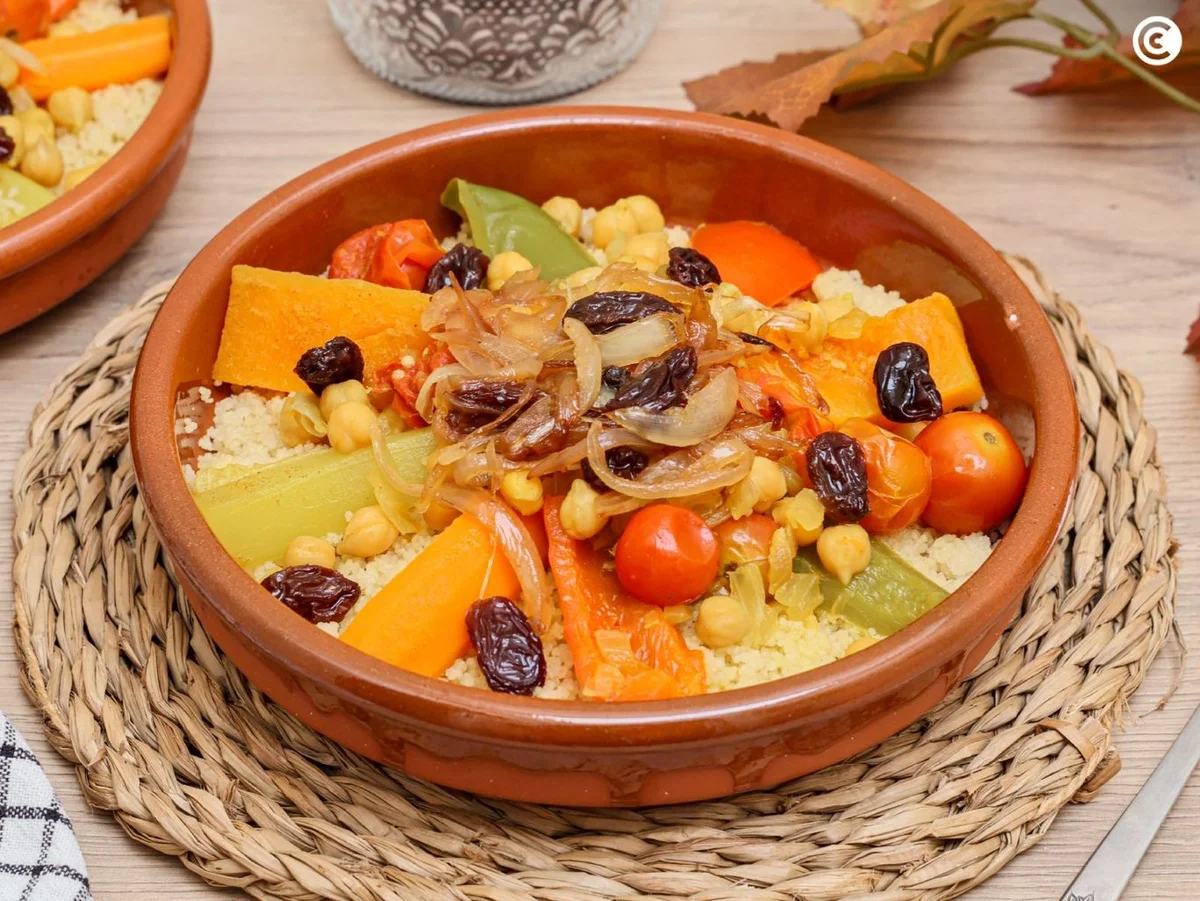
This Moroccan-style vegetable couscous pairs fluffy grains with warmly spiced vegetables, chickpeas and sweet, slowly softened onion with raisins. It makes a colourful, satisfying meal for two, with the different parts prepared separately and brought together to serve.
Ingredients
- 200 gcouscous
- 20 mlolive oil
- 100 gcooked chickpeas
- 1carrot
- ½courgette
- 150 gpumpkin
- 100 gcherry tomatoes
- ½red pepper
- ½green pepper
- 1onion
- 50 graisins
- 200 mlvegetable stock
- 1 tablespoonras el hanout
- 1 tablespoon, to tastesalt
Instructions
- 1
Prepare the vegetables
Cut half the onion into thin strips and finely chop the other half. Peel and cut the carrot, pumpkin and courgette into medium-sized pieces. Wash the peppers and cherry tomatoes, then cut them into large pieces.
- 2
Cook the vegetables
Heat a splash of oil in a casserole over a medium heat. Fry the chopped onion with the salt and ras el hanout until the onion has browned and the spices smell fragrant. Add the carrot, pumpkin, peppers and tomatoes. Cover with water, put on the lid and cook over a medium heat for 15 minutes, until the vegetables are tender but still hold their shape.
- 3
Soften the onion
In a separate frying pan, cook the sliced onion and raisins in a splash of oil over a low heat for about 40 minutes, stirring occasionally, until caramelised. If the mixture looks too dry, add a splash of water after 20 minutes. The onion should be golden and slightly sweet.
- 4
Steam the couscous
Heat the vegetable stock in a saucepan. As soon as it comes to the boil, remove it from the heat and stir in the couscous. Cover and leave for about 5 minutes, until all the liquid has been absorbed. Add the olive oil and fluff the grains with a fork so they separate.
- 5
Assemble the plates
Put a generous layer of couscous on each plate. Spoon the vegetables over the top, add the cooked chickpeas, then finish with the caramelised onion and raisins.
What is Moroccan vegetable couscous?
Couscous is a North African staple, and versions served with vegetables are found across the region, with ingredients and seasonings varying from kitchen to kitchen. This recipe takes a Moroccan direction with ras el hanout, a mixture of spices, and serves the couscous with vegetables, chickpeas and raisins.
Separate preparation gives each part its own character: the vegetables turn tender, the couscous stays light, and the onion and raisins bring a sweet finish.
Nutrition and macros by portion
The nutrition label shows one serving as written: 503 calories, 16g protein, 76g carbs, 14g fat.
| Portion | Adjustment | kcal | Protein | Carbs | Fat |
|---|---|---|---|---|---|
| Lighter | More vegetables, less couscous | 352 kcal | 11g | 53g | 10g |
| This serving | As written | 503 kcal | 16g | 76g | 14g |
| Hungry | Larger couscous portion | 755 kcal | 24g | 114g | 20g |
The couscous supplies most of the carbohydrates, while olive oil contributes much of the fat; chickpeas add protein alongside smaller amounts from the other ingredients. For a balanced plate, serve the couscous with a generous share of vegetables and chickpeas rather than adding extra grains.
Get the vegetable cuts ready
Even pieces: Cut the carrot, pumpkin and courgette into similar medium-sized chunks so they are easy to eat and cook at a similar pace.
Two onion cuts: Keep half in strips for the slow, sweet topping and finely chop the other half to soften into the spiced vegetable base.
Build flavour with ras el hanout
Bloom the spices: Frying ras el hanout with the chopped onion helps release its aroma before the vegetables go into the casserole. Keep the heat moderate and stir so the onion browns without the spices scorching.
Season carefully: The recipe lists a tablespoon of salt but also says to season to taste. Start with less if your stock is already salty, then adjust the finished dish to your preference.
Keep the vegetables tender
Cooking time: The method calls for 15 minutes covered over a medium heat. Check that the vegetables are tender but not falling apart, and avoid cooking them for longer than needed.
The courgette: It is prepared in the first step but is not listed among the vegetables added in the second. Follow the written sequence, and check the courgette's tenderness if you add it to the casserole.
Make the onion and raisin topping
Low and slow: The onion and raisins cook for about 40 minutes over a low heat, with occasional stirring. This is a long, gentle step, so allow for it when planning the meal.
Prevent sticking: If the pan starts to look dry, add a splash of water after 20 minutes, as directed. Aim for golden, softened onion rather than a dark or crisp result.
Steam fluffy couscous
Rest off the heat: Once the stock boils, take the pan off the hob before adding the couscous. Cover it for about 5 minutes so the grains absorb the liquid.
Fluff gently: Add the olive oil after the liquid has been absorbed, then use a fork to separate the grains. This helps avoid a compact layer when you serve it.
Serve it as a complete meal
Layer the plate: Start with couscous, then add the vegetables and chickpeas, finishing with the onion and raisins. The topping gives a sweet contrast to the warmly spiced base.
For a fresh side: A simple salad or sliced cucumber can sit alongside the warm couscous. Serve soon after assembling so the grains stay fluffy.
Recipe notes & tips
- Cut the vegetables to a similar size so they cook more evenly.
- Taste the vegetable mixture before adding more salt, especially if the stock is seasoned.
- Keep the onion and raisin pan on a low heat and stir it from time to time.
- Fluff the couscous with a fork after adding the oil rather than pressing it down.
- Prepare the onion topping first or while another part cooks, allowing for its 40-minute cooking time.
Variations
- Add extra chickpeas: Increase the cooked chickpeas for a heartier, more substantial topping.
- Use another squash: Replace the pumpkin with an equal amount of a similar squash, cut into chunks.
- Adjust the spice: Use less ras el hanout for a gentler flavour or add more to taste.
- Add fresh herbs: Scatter chopped herbs over the assembled plates for a fresh finishing note.
- Include the courgette: Add it with the other vegetables and check it regularly for tenderness.
Common mistakes to avoid
- Scorching the spices: Keep the heat at medium and add the vegetables once the onion is browned and the spices smell fragrant.
- Overcooking the vegetables: Check them after 15 minutes and stop when tender but still holding their shape.
- Drying out the onion: Cook it over a low heat and add a splash of water after 20 minutes if needed.
- Clumping the couscous: Let it absorb the stock off the heat, then loosen the grains with a fork.
- Oversalting the dish: Taste first and account for the saltiness of the vegetable stock.
How to store
Refrigerate leftovers in a covered container and eat within 3 days. Reheat until piping hot, adding a small splash of water if the couscous has become dry; the onion topping can be reheated with it.
Frequently asked questions
Can I prepare any part of this dish ahead?
You can cook the onion and raisin topping ahead and refrigerate it, then reheat it gently. For the fluffiest couscous, prepare it close to serving time.
Why is my couscous clumping?
It may not have been fluffed after absorbing the stock. Add the oil and gently separate the grains with a fork.
Can I use tinned chickpeas?
Yes. Drain and rinse them before adding them to the plated dish, as the method does not cook them with the vegetables.
How do I know when the vegetables are ready?
They should be tender when pierced but should not collapse. The method gives a cooking time of 15 minutes, so begin checking around then.
Should I add the courgette to the casserole?
The ingredient list includes half a courgette and the first step says to cut it, but the cooking step does not name it. If you include it, add it with the other vegetables and check that it stays tender rather than mushy.
Can I replace ras el hanout?
Ras el hanout gives the dish its Moroccan-style spice profile. If you do not have it, use a different warm spice blend, knowing the flavour will change.
Cook it from the original
This recipe comes from cocinatis.com. Their page has the author’s own photos, notes and tips — the best place to cook it from.
Open the recipe on cocinatis.com