
Bengali Luchi
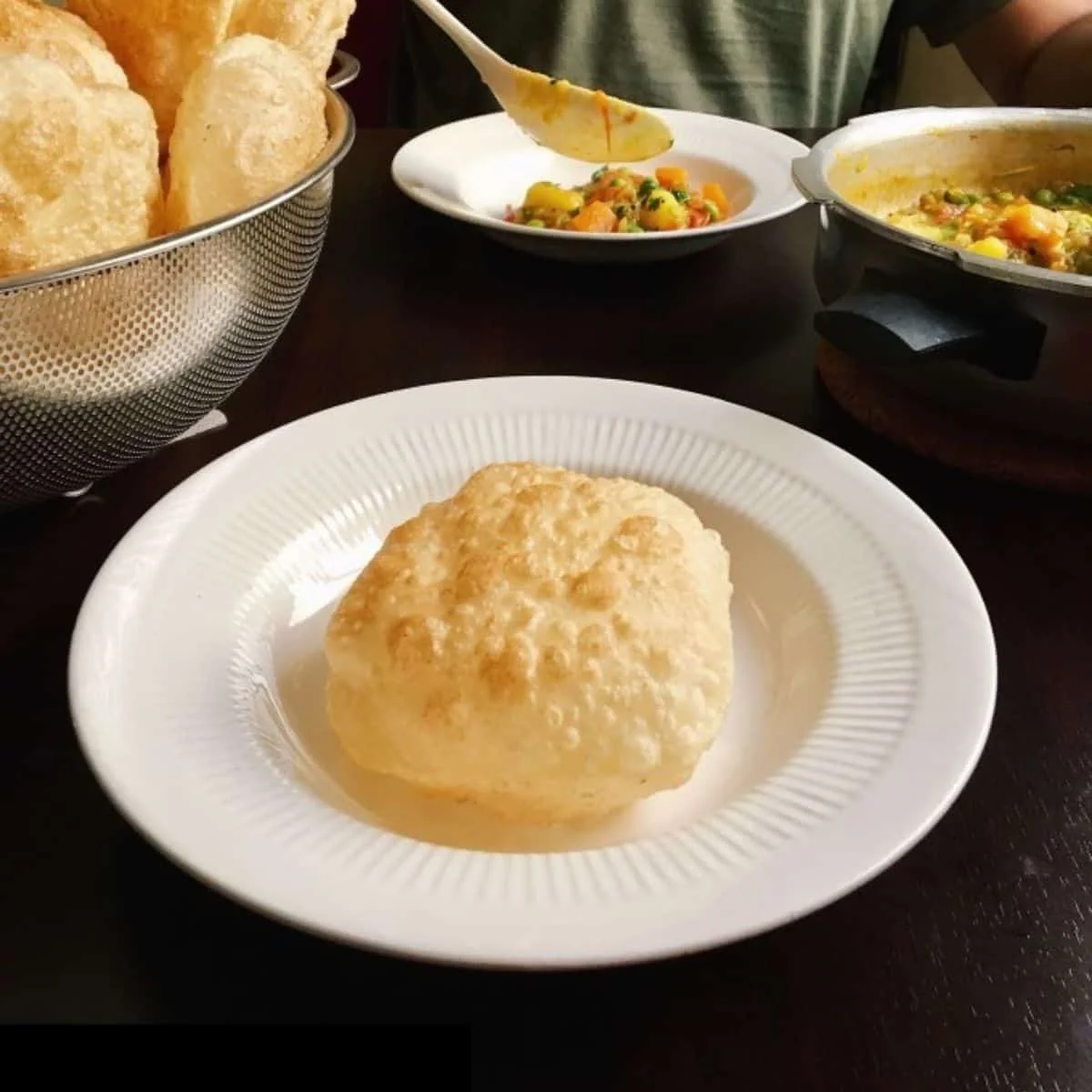
Bengali luchi are small, deep-fried breads that puff into soft, golden rounds. They are made with a simple flour dough and are especially good served hot alongside a savoury curry or dal.
Ingredients
- 250 g (2 cups)plain flour
- 2.5 ml (1/2 teaspoon)salt
- 30 ml (2 tablespoons)ghee
- 180 ml (3/4 cup)warm water
- For rollingcooking oil
- For deep-fryingoil
Instructions
- 1
Mix the flour
Put the flour, salt and ghee in a large bowl. Rub them together with your hands until the mixture looks like breadcrumbs.
- 2
Make the dough
Add the warm water gradually, working it into the flour with a circular motion of your fingers until a dough forms.
- 3
Knead until smooth
Knead the dough in the bowl or on the work surface for about 5 to 8 minutes, until it is smooth, firm and not sticky.
- 4
Rest the dough
Lightly coat the dough ball with oil, cover it completely and leave it to rest for 10 to 20 minutes.
- 5
Divide into balls
Divide the dough into equal balls, adjusting their size to suit your kadai. The recipe makes roughly 15 to 20 luchi, each rolled to about 3 inches in diameter.
- 6
Heat the oil
Pour plenty of oil into a kadai and heat it until very hot.
- 7
Roll the luchi
Take one dough ball, spread oil on both sides and roll it into a circle about 3 inches across.
- 8
Roll the remainder
Repeat with the remaining dough balls. Keep the rolled rounds separate and covered.
- 9
Test the oil
Drop a small pinch of dough into the oil. It is ready when the dough sizzles and rises to the surface straight away.
- 10
Fry until puffed
Slide a rolled luchi into the hot oil and immediately spoon or splash hot oil over its top with a slotted spatula. You can also press it gently with the back of the spatula for a few seconds to help it puff.
- 11
Turn and brown
Flip the luchi and fry the other side until golden brown.
- 12
Drain and serve
Lift out the luchi, drain it and place it in a basket lined with paper towels. Serve hot with potato masala, cholar dal, kosha mangsho or a similar accompaniment.
What is Bengali luchi?
Luchi is a Bengali fried flatbread, made from a simple dough and cooked in hot oil until it puffs. It is a familiar part of Bengali home cooking and is often served with a substantial savoury dish.
This version uses ghee in the dough for richness and oil to roll the rounds. Small portions of dough make neat, palm-sized breads that are easy to fry in batches.
Nutrition and macros by portion
The nutrition label shows one serving as written: 93 calories, 2g protein, 13g carbs, 4g fat.
| Portion | Adjustment | kcal | Protein | Carbs | Fat |
|---|---|---|---|---|---|
| Lighter | Smaller luchi, less oil | 65 kcal | 1g | 9g | 3g |
| This serving | As written | 93 kcal | 2g | 13g | 4g |
| Hungry | Serve extra luchi | 140 kcal | 3g | 19g | 6g |
The flour supplies most of the carbohydrates, while ghee in the dough and oil absorbed during frying contribute much of the fat. There is a little protein from the flour; serve luchi with dal or another protein-rich accompaniment and vegetables for a more balanced plate.
A simple, firm dough
Flour and ghee: Rubbing the ghee into the flour first gives the mixture a crumb-like texture before the water goes in.
Water: Add it gradually so you can bring the dough together without making it sticky. The finished dough should feel firm and smooth.
Rest before rolling
Cover the dough after lightly coating it with oil, and let it rest for 10 to 20 minutes. This gives you a pause before shaping and helps the dough feel more manageable.
Keep the dough covered while you portion and roll it so the surface does not dry out.
Roll even rounds
Aim for circles about 3 inches across, as in the recipe, and try to keep their thickness even. Consistent rounds cook at a similar pace in the oil.
Oil both sides of each dough ball before rolling, then keep the finished rounds separate and covered so they do not stick together.
Frying and puffing cues
Oil test: A small piece of dough should sizzle and rise to the surface straight away. If it does not, wait for the oil to heat further before frying.
Puffing: Spoon hot oil over the top as soon as the luchi goes in. Gentle pressure with the back of a slotted spatula for a few seconds can also help it puff; flip once the first side has cooked.
Serve while hot
Drain the fried luchi on paper towels in a basket and bring them to the table hot. They pair well with potato masala, cholar dal or kosha mangsho, as suggested in the recipe.
Because the recipe fries the breads in batches, have the accompaniments ready before you start cooking.
Recipe notes & tips
- Add the warm water gradually so the dough stays firm rather than sticky.
- Knead until the dough is smooth before covering it to rest.
- Keep both the dough and rolled rounds covered while you work.
- Use the small dough-piece test to check that the oil is hot before frying.
- Fry one luchi at a time so you can spoon hot oil over it as soon as it enters the kadai.
- Drain each cooked luchi before serving it hot.
Variations
- Serve with potato masala: Pair the hot breads with the potato dish suggested in the recipe.
- Add cholar dal: Serve alongside this Bengali dal for a hearty combination.
- Pair with kosha mangsho: Use the rich meat dish named in the recipe as an accompaniment.
- Change the size: Divide the dough into smaller or larger balls to suit your kadai.
- Adjust the seasoning: Add a little more or less salt to the dough to suit your taste.
Common mistakes to avoid
- Adding all the water at once: Add it gradually so you can stop when the dough comes together.
- Leaving the dough uncovered: Cover it completely during the rest and keep it covered while shaping.
- Rolling uneven rounds: Aim for an even thickness so the luchi cooks more consistently.
- Frying before the oil is ready: Test with a pinch of dough; it should sizzle and rise straight away.
- Skipping the hot-oil splash: Spoon oil over the top as soon as the luchi enters the kadai to encourage puffing.
- Crowding the kadai: Fry in manageable batches so each luchi can be handled and turned.
How to store
Luchi are best served hot and freshly fried. If you have leftovers, cool them and refrigerate in an airtight container; reheat briefly in a hot, dry pan, though they may not puff again.
Frequently asked questions
How do I know when the frying oil is ready?
Drop in a small pinch of dough. The oil is ready when it sizzles and the dough rises to the surface straight away.
Why is my luchi not puffing?
Check that the oil is hot enough and spoon hot oil over the top as soon as the dough goes in. Pressing gently with the back of a slotted spatula for a few seconds may help.
How large should I roll each luchi?
This recipe rolls them to about 3 inches in diameter. You can make the dough balls larger or smaller to fit your kadai.
How many luchi does this recipe make?
The recipe serves 15, and its method says it made roughly 15 to 20 luchi, depending on their size.
Can I prepare the dough ahead?
The method includes a 10 to 20 minute rest. For longer storage, refrigerate the covered dough and bring it back towards room temperature before shaping.
What should I serve with luchi?
The recipe suggests potato masala, cholar dal or kosha mangsho. Serve the luchi hot alongside your chosen dish.
Cook it from the original
This recipe comes from butfirstchai.com. Their page has the author’s own photos, notes and tips — the best place to cook it from.
Open the recipe on butfirstchai.com