
Homemade flan
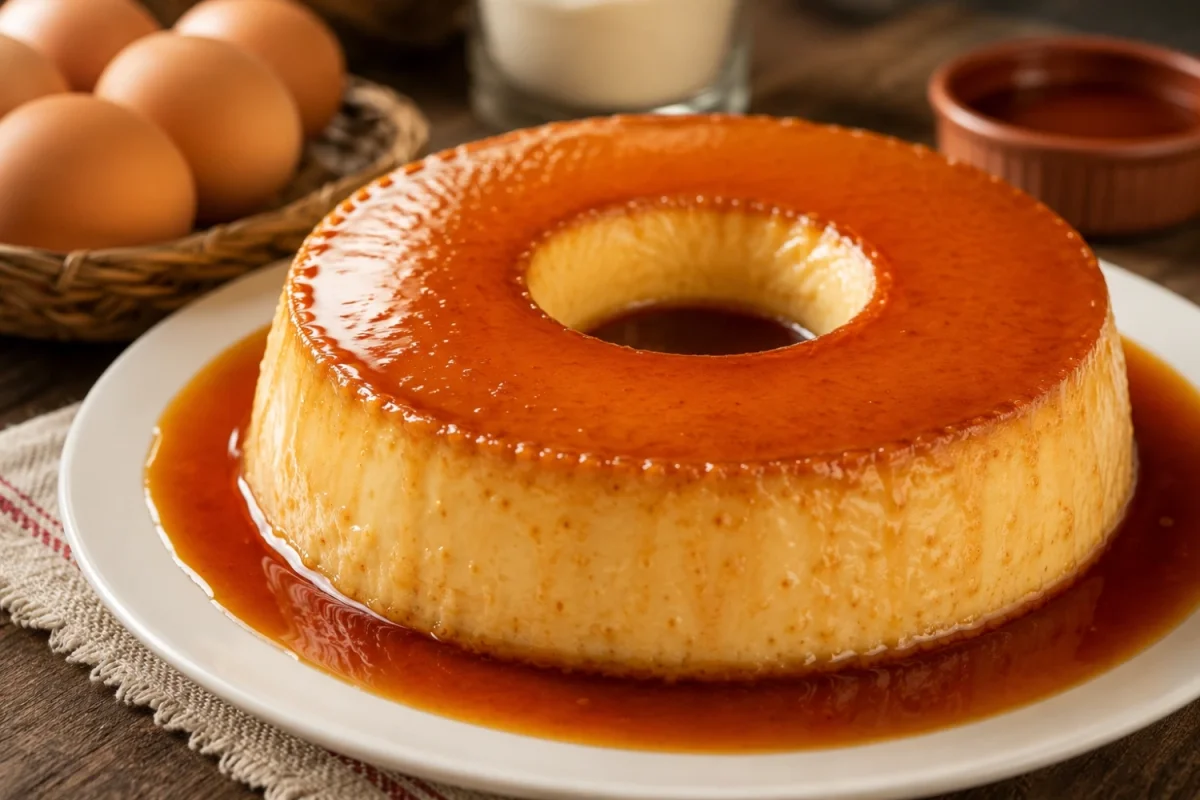
This Paraguayan-style homemade flan is a smooth baked custard topped with a layer of amber caramel. Gentle mixing, straining and a water bath help give it an even, delicate texture, while chilling makes it easier to turn out and serve.
Ingredients
- 1 litrewhole milk
- 6eggs
- 180 gsugar
- 1 teaspoonvanilla essence
- 100 gsugar, for the caramel
Instructions
- 1
Make the caramel
Put the 100 g sugar in a saucepan over a medium-low heat, without adding water. Once it has melted and turned golden amber, gently swirl the pan to distribute it evenly.
- 2
Coat the mould
Immediately pour the caramel into the mould and carefully tilt it to cover the base and part of the sides. Set aside to cool.
- 3
Beat the eggs
Crack the eggs into a bowl and mix gently, just until the whites and yolks are combined. Avoid incorporating too much air.
- 4
Add the sugar
Add the 180 g sugar and mix until it dissolves.
- 5
Add milk and vanilla
Warm the milk slightly without letting it boil, then add it to the eggs with the vanilla essence. Mix until combined.
- 6
Strain the mixture
Pour the mixture through a fine sieve directly into the caramel-coated mould for a smoother flan.
- 7
Set up the water bath
Cover the mould with foil and place it in a roasting tin. Pour in hot water until it reaches about halfway up the mould.
- 8
Bake the flan
Bake in an oven preheated to 160 °C for approximately 55–70 minutes. It is ready when the edges are firm and the centre still wobbles slightly when the mould is moved.
- 9
Cool and turn out
Leave the flan to cool completely at room temperature, then refrigerate for at least 3 hours, preferably overnight. To turn it out, run a thin knife around the edge and invert the mould onto a serving plate.
What is homemade flan?
Flan is a baked custard served with caramel, a familiar dessert across Latin America and Spain. This Paraguayan-style version uses a simple mixture of milk, eggs, sugar and vanilla.
The method keeps the custard gentle: the eggs are mixed without whipping, the mixture is strained, and the mould is baked in a water bath. Together, those steps help produce a smooth set beneath the caramel.
Nutrition and macros by portion
The nutrition label shows one serving as written: 281 calories, 0g protein, 0g carbs, 0g fat.
| Portion | Adjustment | kcal | Protein | Carbs | Fat |
|---|---|---|---|---|---|
| Lighter | Serve with fresh fruit | 197 kcal | 0g | 0g | 0g |
| This serving | As written | 281 kcal | 0g | 0g | 0g |
| Hungry | Serve a larger slice | 422 kcal | 0g | 0g | 0g |
The milk and sugar contribute most of the carbohydrates, while the eggs and whole milk provide the protein and fat in the custard. Serve a slice with fresh fruit, or alongside a lighter meal, for a balanced plate.
Caramel without water
Dry sugar: melt the 100 g sugar over a medium-low heat without adding water. Swirl the pan gently once it has melted rather than stirring it vigorously.
Golden colour: take care not to let the caramel become very dark, as it can taste bitter. Pour it into the mould as soon as it reaches a golden amber shade, since it hardens quickly as it cools.
Keep the custard smooth
Gentle mixing: combine the eggs only until the whites and yolks are blended, then stir in the sugar. Whisking hard adds air that can leave holes in the cooked custard.
Warm milk: heat the milk only until slightly warm, not boiling, before adding it to the egg mixture. Straining the finished mixture catches any small lumps and supports an even texture.
Why use a water bath?
Steady heat: the hot water around the mould helps the custard cook more gently than direct oven heat. Add enough to come about halfway up the sides, and handle the filled tray carefully.
Covered mould: foil covers the mould during baking, as directed, and helps shield the surface. Keep the foil in place while checking the flan's doneness by moving the mould gently.
Check the set
Edges and centre: start checking around 55 minutes, within the recipe's 55–70 minute baking range. The edges should look firm while the centre retains a slight wobble.
Chilling: cool the flan completely at room temperature before refrigerating it for at least 3 hours. An overnight chill gives it ample time to firm up before turning it out.
Serving and turning out
Release the edge: run a thin knife around the inside of the mould before inverting it onto a plate. Work around the whole edge so the custard can release cleanly.
Serve chilled, with the caramel that flows over the top. Fresh fruit alongside makes a simple contrast to the flan's rich, sweet custard.
Recipe notes & tips
- Use a mould that fits comfortably inside the roasting tin so the water bath can surround it.
- Swirl the saucepan gently to move the caramel instead of stirring it.
- Pour the warm milk in gradually while mixing to combine it evenly with the eggs.
- Strain the custard directly into the caramel-coated mould to avoid transferring it twice.
- Check for firm edges and a gently wobbling centre rather than waiting for the whole flan to feel firm.
- Allow the flan to chill thoroughly before attempting to turn it out.
Variations
- Citrus note: Add a little finely grated lemon or orange zest to the milk mixture.
- More vanilla: Use vanilla extract instead of essence, keeping the amount to taste.
- Individual portions: Divide the caramel and custard mixture among small ovenproof moulds and check them earlier for doneness.
- Coffee hint: Stir a little cooled, strong coffee into the milk mixture for a coffee-flavoured custard.
- Fruit accompaniment: Serve each slice with seasonal fruit rather than changing the custard itself.
Common mistakes to avoid
- Overcooked caramel: Remove it from the heat once it is golden amber, before it turns very dark.
- Too much air: Mix the eggs gently instead of whisking them until foamy.
- Boiling the milk: Warm it only slightly; boiling can make it harder to combine gently with the eggs.
- Skipping the sieve: Strain the custard into the mould to catch lumps and help keep the texture smooth.
- Dry water bath: Check that hot water reaches about halfway up the mould before baking.
- Turning out too soon: Chill for at least 3 hours after cooling completely so the flan has time to set.
How to store
Cover and refrigerate leftover flan, and eat it within 3 days. Serve it cold; reheating is not needed.
Frequently asked questions
How can I tell when the flan is done?
The edges should be firm and the centre should still wobble slightly when you move the mould. Bake for approximately 55–70 minutes at 160 °C, checking towards the earlier end of that range.
Why does the flan need a water bath?
The water bath surrounds the mould with gentler, steadier heat, helping the custard cook evenly. The water should come about halfway up the mould.
Can I make the flan the day before?
Yes. The recipe recommends refrigerating it for at least 3 hours, preferably overnight, so it is well chilled before serving.
Why should I strain the custard?
Straining catches small lumps and helps produce a smoother custard. Pour it through a fine sieve directly into the caramel-coated mould.
How do I stop the caramel turning bitter?
Cook the sugar over a medium-low heat and watch its colour closely. Swirl the pan gently and pour the caramel into the mould once it is golden amber.
How do I turn out the flan cleanly?
Once it has cooled and chilled, run a thin knife around the edges, then invert the mould onto a serving plate.
Cook it from the original
This recipe comes from comidasparaguayas.com. Their page has the author’s own photos, notes and tips — the best place to cook it from.
Open the recipe on comidasparaguayas.com