
Asparagus, goat cheese and bean salad
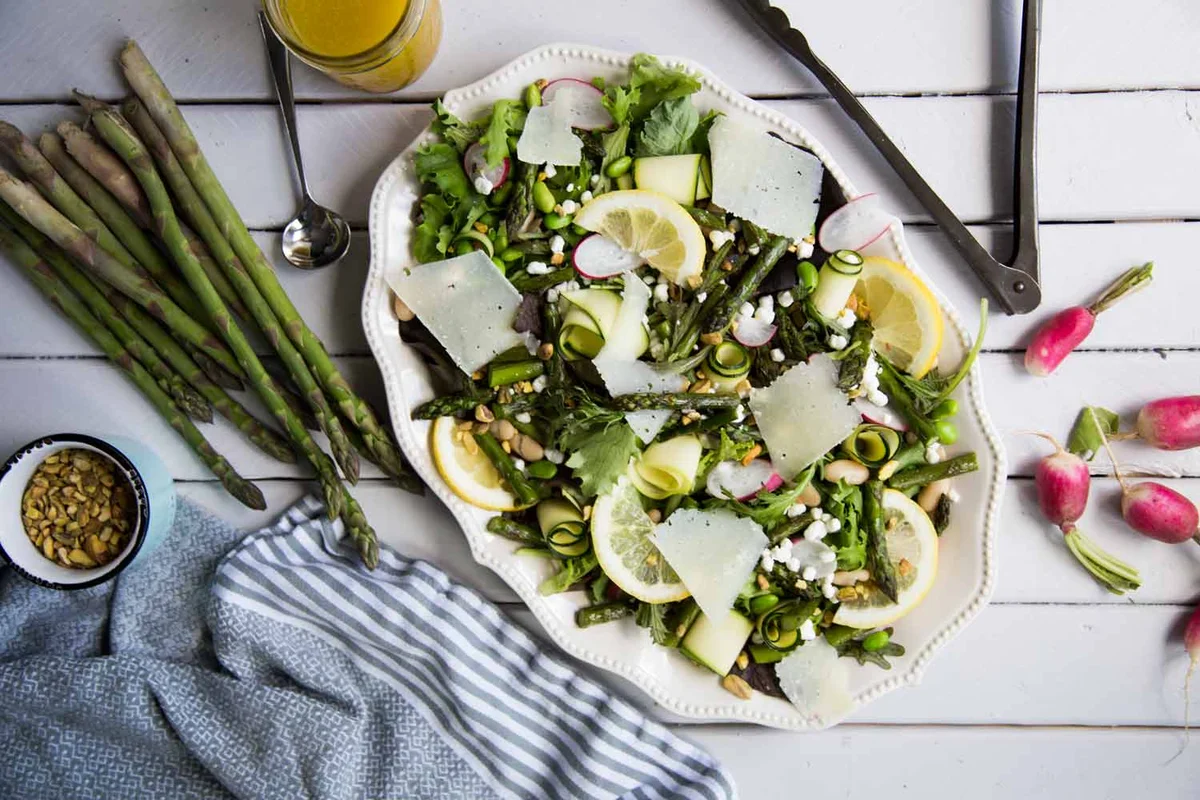
This warm-weather salad combines tender-crisp asparagus, creamy goat’s cheese, beans and edamame with crunchy vegetables and pistachios. A lemon, Dijon and honey dressing brings the ingredients together, and you can serve it as a generous lunch or a side dish.
Ingredients
- 1 bunchasparagus
- 15 ml (1 tablespoon)olive oil
- 1.9 litres (8 cups)mesclun salad leaves
- 120 ml (½ cup)white beans
- 240 ml (1 cup)edamame
- 120 ml (½ cup)crumbled goat’s cheese
- 1courgette, cut into ribbons with a vegetable peeler
- 6radishes, thinly sliced
- 80 ml (⅓ cup)pistachios
- A few shavingsParmesan
- To tastesalt and pepper
- Slices, for decorationlemon
- 150 mlolive oil, for the dressing
- 60 mllemon juice
- 30 ml (2 tablespoons)Dijon mustard
- 60 ml (4 tablespoons)honey
- To tastesalt and pepper, for the dressing
Instructions
- 1
Cook the asparagus
Cut the asparagus into 2.5 cm (1-inch) pieces. Heat 15 ml of olive oil in a frying pan and sauté the asparagus for a few minutes, until tender but still slightly crisp.
- 2
Mix the dressing
In a bowl, combine the dressing ingredients: 150 ml olive oil, lemon juice, Dijon mustard, honey, and salt and pepper to taste.
- 3
Assemble the salad
In a large bowl, mix the mesclun, white beans and edamame, then arrange them on a large serving plate. Scatter over the goat’s cheese, radishes, courgette ribbons, pistachios and Parmesan. Season to taste, drizzle with as much dressing as you like and decorate with lemon slices.
What is asparagus, goat’s cheese and bean salad?
This is a composed salad of greens, beans and seasonal vegetables, topped with soft goat’s cheese and nuts. The description places it in warm weather and asparagus season; no more specific regional origin is given.
Here, briefly sautéed asparagus adds warmth while mesclun, courgette ribbons and radishes keep the plate fresh and crisp. Beans and edamame make it more substantial, and the tangy-sweet dressing ties the mix together.
Nutrition and macros by portion
The nutrition label shows one serving as written: 600 calories, 16g protein, 34g carbs, 45g fat.
| Portion | Adjustment | kcal | Protein | Carbs | Fat |
|---|---|---|---|---|---|
| Lighter | Use less dressing | 420 kcal | 11g | 24g | 31g |
| This serving | As written | 600 kcal | 16g | 34g | 45g |
| Hungry | Add extra beans | 900 kcal | 24g | 51g | 68g |
The beans and edamame provide most of the carbohydrates and some of the protein, with goat’s cheese adding protein and fat. Olive oil, pistachios and cheese contribute much of the fat; the dressing’s share per portion depends on how much you use. For a more balanced plate, serve a moderate drizzle alongside a lean protein such as grilled fish.
Choosing the ingredients
Asparagus: Choose firm spears with closed tips, and cut them into evenly sized pieces so they cook at a similar rate.
Beans and edamame: The white beans bring a soft, creamy bite, while edamame adds a firmer texture. Drain the beans well before adding them to the salad.
Goat’s cheese and pistachios: Crumbled cheese gives the salad a tangy, creamy finish; pistachios add crunch. Parmesan shavings provide another savoury note.
Getting the asparagus right
Cook the asparagus in a hot pan with the measured tablespoon of oil, turning or stirring it as it sautés. The method calls for only a few minutes, so keep an eye on the spears rather than relying on a fixed cooking time.
Take the pan off the heat when the pieces are tender but still have a little bite. Overcooked asparagus can lose the crisp contrast that makes this salad appealing.
Balancing the dressing
Oil and lemon: The dressing uses olive oil for richness and lemon juice for acidity. Whisk them together with the mustard and honey until combined.
Seasoning: Add salt and pepper to the dressing to taste, then season the salad separately if needed. Since the dressing is drizzled on to taste, start with a little and add more at the table.
Keeping the textures fresh
Ribbons: Use a vegetable peeler to make long, thin courgette ribbons, which sit lightly among the leaves. Slice the radishes thinly so they add crispness without overwhelming each forkful.
Assembly: Combine the mesclun, beans and edamame first, then scatter the toppings over the arranged salad. Add the dressing just before serving to help the leaves stay fresh.
Serving the salad
Serve it straight after assembly, while the asparagus is still warm and the leaves are cool. Lemon slices make a simple garnish, and any remaining dressing can be offered alongside.
It works as a light meal on its own or as a side with bread, grilled fish or another simple main. Keep the salad and dressing separate until serving if you are preparing ahead.
Recipe notes & tips
- Drain the white beans thoroughly so they do not water down the salad.
- Cut the asparagus into similar-sized pieces for more even cooking.
- Keep the asparagus slightly crisp rather than cooking it until soft.
- Make courgette ribbons with a sharp vegetable peeler, stopping when you reach the seedy centre.
- Dress the salad gradually and serve any extra dressing on the side.
- Add the Parmesan and pistachios just before serving to preserve their texture.
Variations
- Use toasted almonds: Swap the pistachios for toasted almonds for a different crunch.
- Change the greens: Use another mild salad-leaf mix in place of mesclun.
- Add fresh herbs: Scatter chopped mint or parsley over the salad just before serving.
- Make it more filling: Serve with crusty bread or add another portion of beans.
- Adjust the sweetness: Start with less honey, then add more to the dressing to taste.
Common mistakes to avoid
- Overcooking the asparagus: Sauté it only until tender with a little bite.
- Adding wet beans: Drain them well before mixing them with the leaves.
- Pouring on all the dressing: Drizzle gradually and stop when the salad is lightly coated.
- Cutting thick radish slices: Slice them thinly so their crunch stays delicate.
- Dressing too early: Add the vinaigrette just before serving to keep the leaves fresh.
How to store
Store leftover undressed salad and dressing separately in airtight containers in the fridge, and use within 1–2 days. The dressed leaves will soften, so add dressing only to the portion you plan to eat; serve the asparagus cold or briefly warm it separately.
Frequently asked questions
Can I prepare this salad ahead?
You can cook the asparagus, mix the dressing and prepare the toppings ahead. Keep them separate from the mesclun and combine everything just before serving.
Should the asparagus be served warm or cold?
The method serves it after sautéing, so it can go on the salad warm. It is also fine to let it cool before assembling.
Can I use tinned white beans?
Yes. Drain and rinse them well, then let them drain thoroughly before adding them to the salad.
How much dressing should I use?
The recipe leaves the amount to taste. Start with a small drizzle, toss or arrange the salad, and add more if needed.
Can I make the dressing without honey?
You can leave it out or reduce the amount, though the dressing will be less sweet. Taste it with the lemon and mustard and adjust the balance to your liking.
Cook it from the original
This recipe comes from cinqfourchettes.com. Their page has the author’s own photos, notes and tips — the best place to cook it from.
Open the recipe on cinqfourchettes.com