
Neapolitan spaghetti
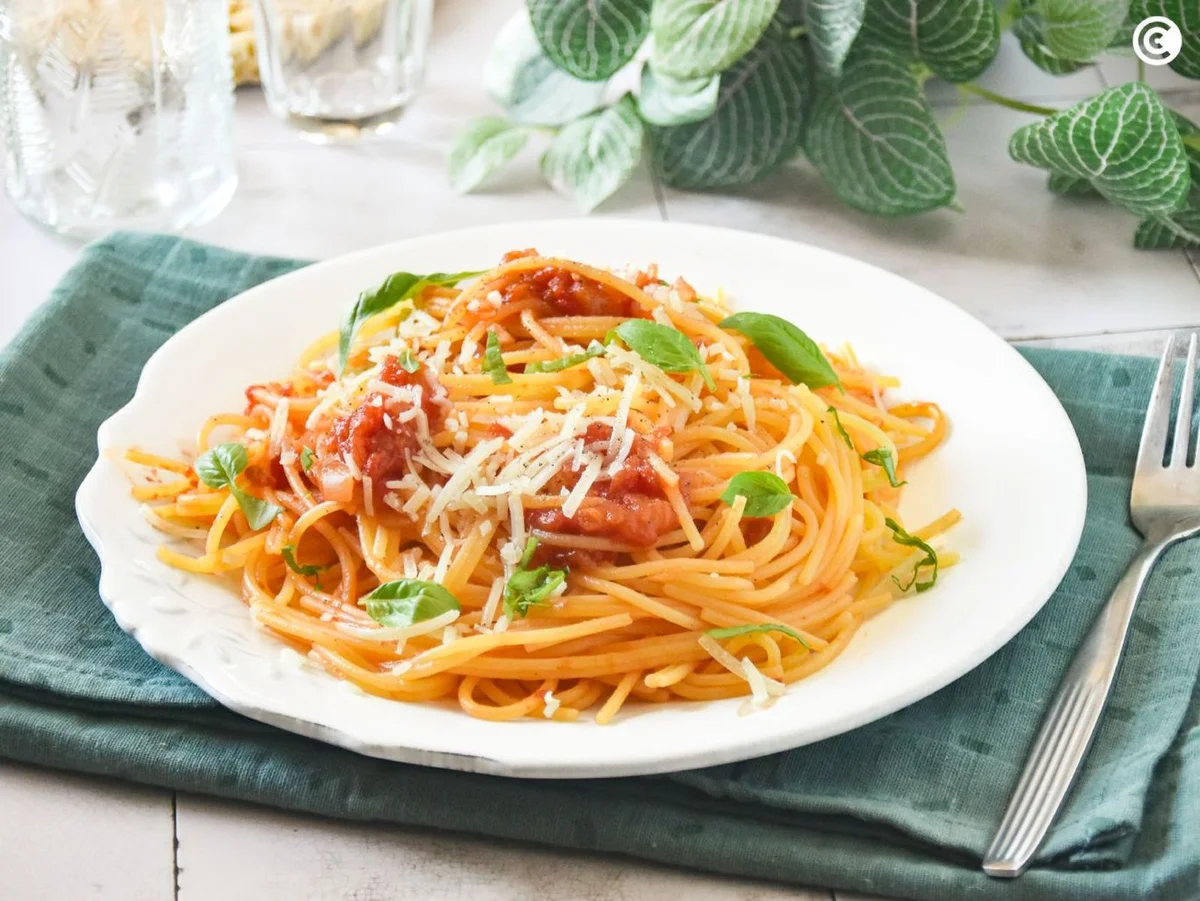
Neapolitan spaghetti pairs pasta with a slowly reduced tomato sauce, softened onion, garlic and fresh basil. It is a straightforward Italian supper, finished with grated Parmesan for a savoury contrast.
Ingredients
- 250 gspaghetti
- to tastesalt
- 1 tablespoonolive oil
- 80 gonion
- 1 clovegarlic
- 400 gtinned tomatoes
- to tasteground black pepper
- 4 leavesbasil
- 50 gParmesan
Instructions
- 1
Cook the spaghetti
Bring a pot of salted water to the boil and cook 250 g spaghetti for the time stated on the packet.
- 2
Soften the aromatics
While the pasta cooks, warm 1 tablespoon of oil over a medium heat. Peel and chop 80 g onion, then fry it for 5 minutes. Press in 1 clove of garlic and cook for 1 minute more.
- 3
Reduce the tomatoes
Add 400 g tinned tomatoes to the pan; use whole, chopped or puréed tomatoes according to the texture you prefer. Season with salt and pepper, stir and cook for 15 minutes so the tomatoes lose some of their liquid and the sauce becomes more concentrated.
- 4
Combine and serve
When the spaghetti is al dente, drain it and add it straight to the sauce. Toss to coat and bring the flavours together. Serve with chopped basil leaves and 50 g grated Parmesan.
What is Neapolitan spaghetti?
Neapolitan spaghetti is a simple Italian pasta dish built around tomato sauce and spaghetti. This version keeps the sauce aromatic but uncomplicated, using onion and garlic as its base and basil and Parmesan at the finish.
The name points to Naples, a city strongly associated with tomato-centred cooking. Here, a short simmer concentrates the tinned tomatoes, making a quick homemade sauce with a fuller flavour.
Nutrition and macros by portion
The nutrition label shows one serving as written: 642 calories, 32g protein, 104g carbs, 10g fat.
| Portion | Adjustment | kcal | Protein | Carbs | Fat |
|---|---|---|---|---|---|
| Lighter | Use less Parmesan | 449 kcal | 22g | 73g | 7g |
| This serving | As written | 642 kcal | 32g | 104g | 10g |
| Hungry | Add more spaghetti | 963 kcal | 47g | 156g | 15g |
Most of the carbohydrates come from the spaghetti, while olive oil and Parmesan contribute much of the fat. The pasta and cheese also provide protein, with smaller amounts coming from the other ingredients. Serve it with a green salad or extra vegetables to add freshness and round out the plate.
Build the tomato base
Onion: cooking it gently for 5 minutes gives it time to soften before the tomatoes go in. Keep the heat moderate so it turns tender without browning too much.
Garlic: add it after the onion and cook for just 1 minute. This lets its aroma bloom without giving it a chance to scorch.
Choose your tomatoes
Whole or chopped: either works, and the pieces will soften as the sauce simmers. Break up larger pieces in the pan if you want a less chunky result.
Puréed: this makes a smoother sauce from the start. Whichever form you choose, the 15-minute simmer helps reduce excess liquid and deepen the tomato flavour.
Coordinate pasta and sauce
Timing: start the sauce while the spaghetti cooks so the two are ready around the same time. Follow the packet timing, since spaghetti brands and thicknesses differ.
Doneness: drain the pasta when it is al dente, with a little bite remaining. It will be tossed with the hot sauce before serving.
Finish for flavour
Basil: chop the leaves and add them just before serving for a fresh, fragrant finish. Keeping them out of the long simmer preserves their delicate aroma.
Parmesan: grate 50 g over the plated pasta. Its savoury, salty character balances the bright tomato sauce.
Serve it simply
This spaghetti can be served on its own as a quick meal, or alongside a green salad for a fresh contrast. Crusty bread is another useful option for mopping up any sauce left on the plate.
Taste the sauce before combining it with the pasta and adjust the salt and pepper if needed. The Parmesan adds saltiness too, so keep that in mind when seasoning.
Recipe notes & tips
- Salt the pasta water before adding the spaghetti.
- Keep the onion over a medium heat so it softens without scorching.
- Choose whole, chopped or puréed tomatoes to suit your preferred sauce texture.
- Let the tomato sauce simmer for the full 15 minutes so it can reduce.
- Drain the spaghetti as soon as it is al dente.
- Grate the Parmesan shortly before serving for a fresh finish.
Variations
- Chilli: add a little chilli while cooking the garlic for a gentle heat.
- Herb swap: use chopped parsley in place of basil for a different fresh finish.
- Chunky sauce: choose whole or chopped tinned tomatoes and leave some pieces intact.
- Smooth sauce: use puréed tomatoes for an even texture.
- Extra vegetables: stir in finely chopped courgette with the onion and cook until softened.
Common mistakes to avoid
- Burning the garlic: add it after the onion and cook for only 1 minute.
- Rushing the sauce: give the tomatoes the full 15 minutes to reduce.
- Overcooking the pasta: follow the packet timing and check for an al dente bite.
- Draining too early: wait until the pasta is cooked, then add it directly to the sauce.
- Adding basil too soon: chop it and use it at the end so its aroma stays fresh.
- Oversalting: season the sauce with the Parmesan in mind, as the cheese adds saltiness.
How to store
Refrigerate leftovers in an airtight container and eat within 2 days. Reheat gently in a pan or microwave until hot throughout; add a small splash of water if the pasta has become dry.
Frequently asked questions
Can I use fresh tomatoes instead of tinned?
Yes, but their water content and ripeness can vary, so the sauce may need more time to reduce. Cook until it has the thickness you want.
Which type of tinned tomato should I use?
Whole, chopped or puréed tomatoes all work. Choose based on whether you prefer a chunky or smooth sauce.
How can I tell when the spaghetti is al dente?
Follow the packet timing and taste a strand near the end of cooking. It should be cooked through but still have a slight firmness.
Can I make the sauce ahead?
Yes. Cook the tomato sauce, cool it and refrigerate it in a sealed container, then reheat it while the spaghetti cooks.
Can I leave out the Parmesan?
Yes. The dish will still have its tomato, garlic and basil flavours, though it will lose the cheese's savoury finish.
Cook it from the original
This recipe comes from cocinatis.com. Their page has the author’s own photos, notes and tips — the best place to cook it from.
Open the recipe on cocinatis.com