
Griddled fish
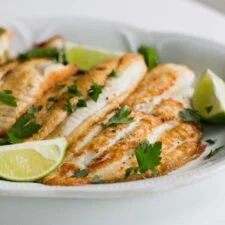
Griddled fish is a quick main of white fish fillets cooked in a hot, lightly oiled pan until browned outside and tender inside. It needs only a few basic seasonings, with lemon and parsley to finish.
Ingredients
- 4cleaned white fish fillets, such as hake or catfish
- about 1 tablespoonoil
- to tastesalt and pepper
- optional, to tastecomplete seasoning (a blend of oregano, cumin, coriander, garlic, pepper and salt)
- to serveparsley and lemon
Instructions
- 1
Prepare the tray
Line a plate or tray with two layers of kitchen paper.
- 2
Heat the pan
Warm a non-stick frying pan over medium heat for about 2–3 minutes.
- 3
Dry the fish
Put the fillets on the paper and pat them completely dry with more kitchen paper.
- 4
Add the oil
Pour about 1 tablespoon of oil into the hot pan; it will heat up straight away.
- 5
Season the fillets
Add two fillets, or four if the pan is large enough, making sure they do not overlap. Season with salt, pepper and complete seasoning if using.
- 6
Cook the fish
Cook for 3 minutes without moving the fillets. Turn them with a spatula, season the other side, then cook for 2–3 minutes more, depending on the thickness of the fish.
- 7
Keep warm
Transfer the fish to a plate and serve straight away, or cover it with foil or a pan lid to keep it warm.
- 8
Finish and serve
Cook the remaining fillets in the same way. Serve with parsley sprinkled over the top and lemon.
What is griddled fish?
Griddled fish is a straightforward way to cook fillets in a hot pan, using little more than oil and seasoning. This version pairs white fish with an optional oregano, cumin, coriander and garlic blend, then finishes it with parsley and lemon.
The method is practical for a quick meal: dry fillets and a properly heated non-stick pan help the fish cook without being disturbed.
Nutrition and macros by portion
The nutrition label shows one serving as written: 297 calories, 38g protein, 1g carbs, 15g fat.
| Portion | Adjustment | kcal | Protein | Carbs | Fat |
|---|---|---|---|---|---|
| Lighter | Use less oil | 208 kcal | 26g | 0g | 11g |
| This serving | As written | 297 kcal | 38g | 1g | 15g |
| Hungry | Add a larger side | 446 kcal | 57g | 1g | 23g |
The fish provides most of the protein, while the oil supplies most of the fat; the fish itself contributes very little carbohydrate. Serve with vegetables and a modest portion of potatoes or rice to round out the plate.
Choosing the fish
White fish: Hake or catfish are suggested choices, but the key is using cleaned fillets. Fillets of different thicknesses may need slightly different cooking times.
Dry surface: Pat the fish thoroughly with kitchen paper before it goes into the pan. This helps prevent excess moisture from interfering with the sear.
Seasoning the fillets
Simple seasoning: Salt and pepper are enough to flavour the fish while letting its mild taste come through.
Complete seasoning: The suggested optional blend includes oregano, cumin, coriander, garlic, pepper and salt. Use it if you want a more pronounced, savoury flavour.
Getting the pan right
Preheating: Give the non-stick pan about 2–3 minutes over medium heat before adding the oil. The oil heats quickly once it meets the hot pan.
Room to cook: Arrange the fillets in a single layer without overlap. Cook in batches if four fillets will not fit comfortably.
When the fish is done
First side: Leave the fillets undisturbed for 3 minutes so they can cook against the pan.
Second side: Turn them with a spatula and cook for another 2–3 minutes. The recipe notes that the precise time depends on how thick the fish is.
Serving ideas
Fresh finish: Sprinkle parsley over the cooked fish and serve with lemon. A squeeze at the table adds a bright contrast to the savoury seasoning.
Complete plate: Pair the fillets with vegetables and a portion of potatoes, rice or bread for a fuller meal. Serve promptly, or cover the fish briefly to help keep it warm.
Recipe notes & tips
- Dry each fillet well before it goes into the pan.
- Preheat the pan for the full 2–3 minutes.
- Keep the fillets in a single layer so they are not crowded.
- Leave the first side untouched for 3 minutes before turning.
- Use the shorter or longer second-side cooking time according to the thickness of the fish.
- Add parsley and lemon just before serving.
Variations
- Use hake: Choose hake fillets for the option named in the recipe.
- Add complete seasoning: Use the optional blend for extra savoury, herby flavour.
- Keep it simple: Season only with salt and pepper for a more delicate result.
- Finish with lemon: Serve extra lemon at the table for a brighter finish.
- Cook in batches: Fry two fillets at a time when the pan is not large enough for four.
Common mistakes to avoid
- Wet fillets: Pat them completely dry with kitchen paper before cooking.
- Cold pan: Heat the non-stick pan over medium heat for about 2–3 minutes first.
- Overlapping fish: Leave space between fillets and cook in batches if needed.
- Moving too soon: Leave the first side undisturbed for 3 minutes.
- Using a fixed cooking time: Allow 2–3 minutes on the second side according to the fillet thickness.
How to store
The recipe recommends serving the fish straight away, or covering it with foil or a pan lid to keep it warm. It does not specify storage times for leftovers.
Frequently asked questions
Can I use a different white fish?
The recipe suggests hake or catfish. Use cleaned fillets, and adjust the cooking time to their thickness.
Do I have to use complete seasoning?
No. It is optional; salt and pepper are the basic seasonings.
How many fillets can I cook at once?
Cook two in a standard-sized pan, or four if the pan is large enough. The fillets should not overlap.
How long should I cook the fish?
Cook the first side for 3 minutes without moving it, then cook the other side for 2–3 minutes. The thickness of the fillets affects the second-side timing.
How can I keep the first batch warm?
Cover the cooked fish with foil or a pan lid while you cook the remaining fillets.
What should I serve with it?
Serve with parsley and lemon, alongside vegetables and a side such as potatoes, rice or bread.
Cook it from the original
This recipe comes from cocinachilena.cl. Their page has the author’s own photos, notes and tips — the best place to cook it from.
Open the recipe on cocinachilena.cl