
Sambar Recipe without Coconut
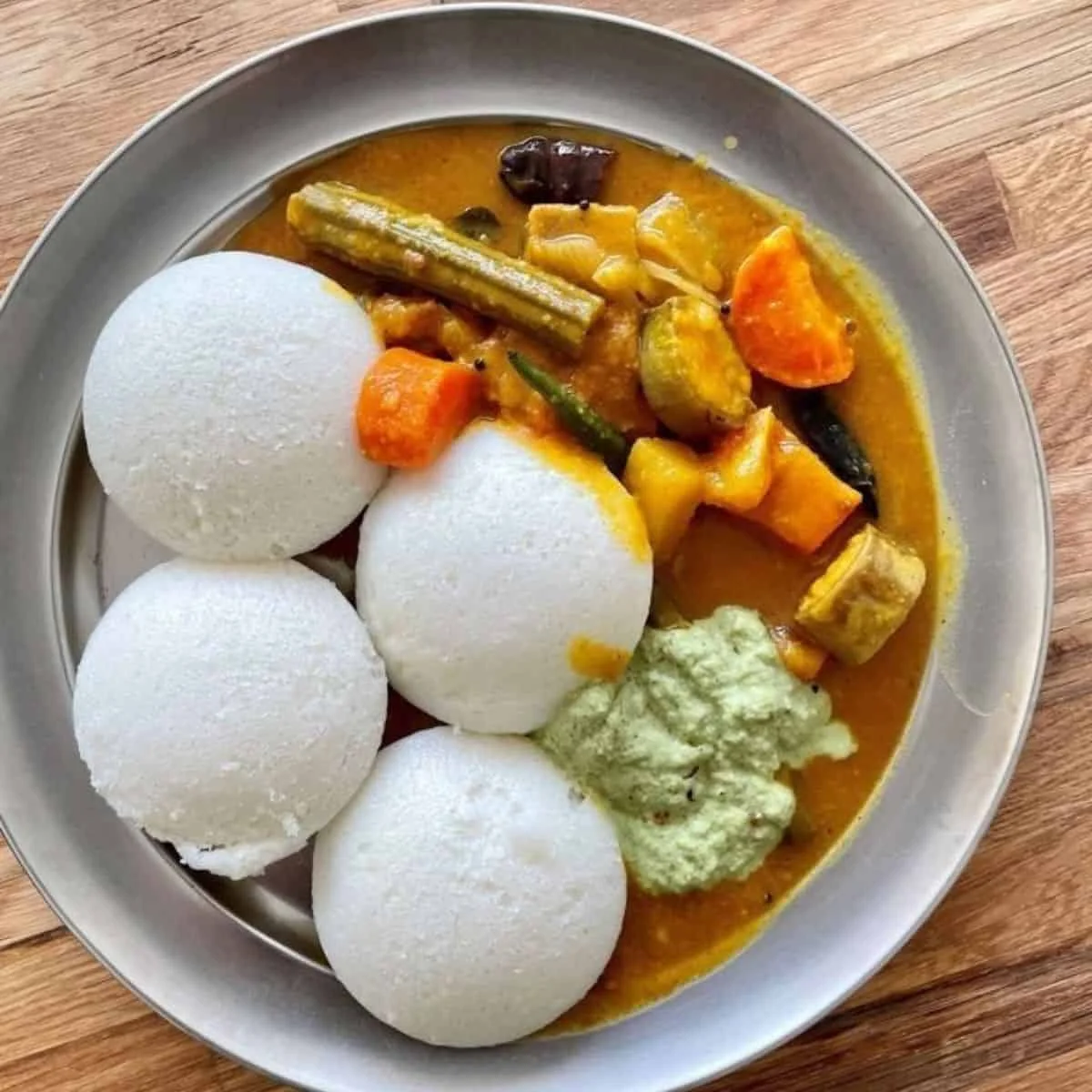
This Sambar recipe without coconut is a classic south-Indian mixed vegetable and lentil curry served with idly, dosa, vada or rice.
Ingredients
- 1/2 cup toor dal ((split pigeon peas))
- 2 garlic cloves
- 1 pinch turmeric powder
- 1 1/2 cup water
- 1/2 tsp ghee
- 2 tablespoons tamarind pulp
- 1/4 cup hot water
- 1 tablespoon ghee (or coconut oil)
- 1/4 cup mini shallots ((pearl onions))
- 500 grams sambar vegetables ((see post))
- 2 large tomato (chopped )
- 2 to 3 green chillies
- 1/4 teaspoon turmeric powder
- 1/2 teaspoon kashmiri red chilli powder
- 2 cups water (to cover the veggies)
- 21/2 tbsp sambar powder
- 1 teaspoon jaggery (optional)
- Salt to taste
- 1 tablespoon ghee (or coconut oil)
- 1/2 teaspoon mustard seeds
- 2 sprig of curry leaves
- 1/4 teaspoon fenugreek seeds ((methi seeds))
- 1 pinch asafoetida ((hing))
- 2 dried red chillies
- Fresh coriander leaves (chopped)
- curry leaves
- 2 green chillies
- 1 teaspoon ghee (to be stirred in before serving)
Instructions
- 1
--- Wash and soak the tuvar dal ---
- 2
soak: Rinse the dal a couple of times until the water runs almost clear. Soak the lentils in enough water for at least 20 minutes.
- 3
--- Pressure cook ---
- 4
pressure cook: Add to a small pressure cooker along with garlic clove, turmeric and a smidge of ghee. Pressure cook for 10 minutes or 3 to 4 whistles on medium heat. Let the pressure release on its own. The cooked lentils should be cooked through and easily mashable with a spoon.
- 5
--- Prepare the tamarind extract ---
- 6
Soak the tamarind pulp in hot water and keep covered until required or at least for 10 to 20 minutes.
- 7
--- Cook the veggies for sambar ---
- 8
saute: Heat some ghee in a deep thick bottomed saucepot. Saute the pearl onions or onions until translucent. To have the veggies retain their shape till the end, it is better to first add the vegetables that need more time to cook to give them a head start.
- 9
boil: Add the chopped vegetables, tomatoes, turmeric, red chilli, half of the sambar powder and salt. Stir the veggies on high flame for 2 to 3 minutes. Pour water just enough to cover the veggies and bring this to a full boil. Reduce the flame to medium and cook partially covered until the veggies are almost cooked.
- 10
--- Prepare sambar ---
- 11
Check the veggies by poking a knife through the centre of a few pieces to make sure they are cooked. The veggies should not be hard.
- 12
pour: Stir in the tamarind extract through a strainer or squeeze using your hands and mix well. Stir in the remaining sambar powder and the pressure-cooked dal.
- 13
simmer: Mix everything thoroughly, taste and adjust the flavours. You may add more sambar powder, tamarind water, or jaggery to balance. Let it simmer on low to medium flame until the sambar comes to a boil. Switch off and move on to preparing the tempering.
- 14
--- Prepare the tempering (tadka) ---
- 15
fry: Heat ghee or any coconut oil in a small tadka pan on a low flame. Add the mustard seeds and wait for them to splutter.
- 16
fry: Next, add the curry leaves, methi seeds and hing and fry until the curry leaves are crisp.
- 17
fry: Switch off and add the dried red chillies and fry in the residual heat until they turn crisp. Pour this immediately into the pot of sambar, stir and cover the pot.
- 18
--- Serve and store Sambar ---
- 19
serve: Stir in the freshly chopped coriander leaves, curry leaves and a teaspoon of ghee before serving with steamed rice, idli, dosa, vada, etc.
- 20
Store any leftovers covered in the refrigerator for not more than 3 days.
Cook it from the original
This recipe comes from butfirstchai.com. Their page has the author’s own photos, notes and tips — the best place to cook it from.
Open the recipe on butfirstchai.com