
Homemade tomato sauce
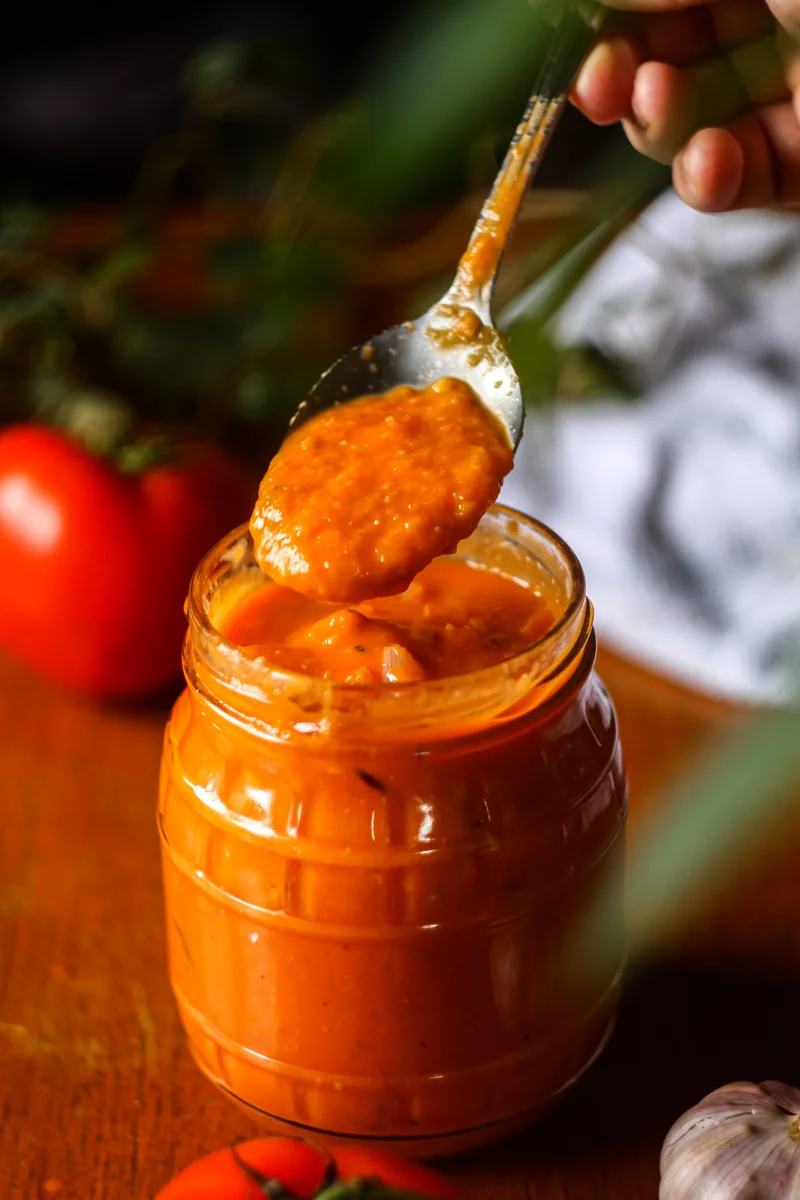
This roasted tomato sauce blends softened tomatoes with sweet, oven-roasted garlic, herbs and olive oil, then simmers briefly with sautéed onion. It is a straightforward way to make a versatile sauce for pasta, vegetables or other dishes.
Ingredients
- 5 or moretomatoes
- 1 headgarlic
- as neededolive oil
- to tastesalt and ground black pepper
- to tasteherbs, such as bay leaves, marjoram and rosemary
- 1onion, chopped
Instructions
- 1
Prepare tomatoes
Cut the tomatoes into rough pieces and spread them in a baking dish.
- 2
Add garlic
Cut the top off the garlic head and place it in the centre of the dish.
- 3
Add olive oil
Drizzle olive oil over the tomatoes and garlic.
- 4
Season the tray
Add salt, ground black pepper and the herbs.
- 5
Roast tomatoes
Bake at 200°C for about 30 minutes, or until the tomatoes have softened.
- 6
Blend the sauce
Remove the herbs and transfer the tomatoes to a blender. Add the garlic cloves and the olive oil left in the dish.
- 7
Adjust the texture
Blend until the mixture becomes a sauce, stopping when it reaches your preferred texture if you want it chunkier.
- 8
Cook the onion
In a pan, sauté the chopped onion with a drizzle of olive oil.
- 9
Add the sauce
Once the onion is golden, add the tomato sauce.
- 10
Finish cooking
Adjust the salt and let the sauce cook for about 5 minutes so the flavours come together.
- 11
Serve
The sauce is ready.
What is homemade tomato sauce?
Tomato sauce is a staple across many cuisines, with styles ranging from quick stovetop sauces to longer-cooked versions. This recipe roasts the tomatoes and garlic first, then blends them with herbs and finishes the sauce with sautéed onion.
Roasting concentrates the tomatoes’ flavour and softens the garlic, while blending lets you choose between a smooth finish and a more rustic texture.
Nutrition and macros by portion
The nutrition label shows one serving as written: 5 calories, 0g protein, 1g carbs, 0g fat.
| Portion | Adjustment | kcal | Protein | Carbs | Fat |
|---|---|---|---|---|---|
| Lighter | Use less olive oil | 4 kcal | 0g | 0g | 0g |
| This serving | As written | 5 kcal | 0g | 1g | 0g |
| Hungry | Serve a larger portion | 8 kcal | 0g | 1g | 0g |
The tomatoes and onion provide most of the carbohydrates, while olive oil contributes most of the fat; the sauce contains little protein unless served with a protein-rich accompaniment. To balance a meal, serve it with beans, fish or another protein alongside vegetables or whole grains. The recipe lists 100 servings despite giving no precise tomato size or oil amount, so per-serving nutrition is only a rough estimate.
Choosing the tomatoes and herbs
Tomatoes: Use ripe tomatoes that feel firm enough to cut into rough pieces. The recipe gives a minimum of five, so the amount of sauce will depend on their size.
Herbs: Bay leaves, marjoram and rosemary are the suggested choices. Remove the herbs after roasting, before blending.
Roast until softened
Spread the tomato pieces across the baking dish so they roast rather than sit in a deep pile. The guide is about 30 minutes at 200°C, but use the stated cue—the tomatoes should have softened.
Keep the garlic head in the dish while roasting; its cloves are added to the blender afterwards along with the oil left in the dish.
Blend to your preferred texture
Blend the roasted tomatoes, garlic and tray oil until they form a sauce. For a chunkier result, stop blending sooner and check the consistency as you go.
Remove the herbs first so they do not get blended into the finished sauce.
Finish with sautéed onion
Cook the chopped onion in a drizzle of olive oil until golden before adding the blended sauce. This final stovetop stage gives the ingredients time to combine.
Let the sauce cook for about 5 minutes, then taste and adjust the salt.
Ways to serve it
Spoon the sauce over pasta, or serve it with vegetables, grains or beans. Its smooth or lightly chunky texture makes it easy to use as a base or as a simple accompaniment.
For a more substantial plate, pair it with a protein-rich food and a side of vegetables.
Recipe notes & tips
- Cut the tomatoes into similarly sized rough pieces so they soften at a similar pace.
- Use a baking dish large enough to spread the tomato pieces out.
- Keep the herbs easy to retrieve so you can remove them before blending.
- Add the oil left in the baking dish to the blender as directed.
- Blend in short bursts and check the texture if you prefer a chunkier sauce.
- Taste for salt after the final 5-minute cook.
Variations
- Choose different herbs: Use the suggested bay leaves, marjoram and rosemary, or select a combination you enjoy.
- Keep it chunky: Blend briefly and stop while some tomato pieces remain.
- Make it smoother: Blend for longer until the sauce reaches a more even consistency.
- Use as a pasta sauce: Spoon the finished sauce over cooked pasta.
- Serve with vegetables: Pair the sauce with cooked vegetables as an accompaniment.
Common mistakes to avoid
- Crowding the tomatoes: A deep pile may soften unevenly; spread the pieces across the dish.
- Blending the herbs: Remove them after roasting before transferring the tomatoes to the blender.
- Discarding the tray oil: Add the oil left in the dish to the blender as the method directs.
- Over-blending: For a chunkier sauce, stop early and check the texture.
- Skipping the onion browning: Wait until it is golden before adding the blended sauce.
- Forgetting to taste: Adjust the salt after the sauce has cooked for about 5 minutes.
How to store
Cool the sauce and refrigerate it in a covered container, using it within 3–4 days. Reheat gently in a pan, stirring until hot throughout; add a little water if it has thickened.
Frequently asked questions
Can I make the sauce chunkier?
Yes. Blend for less time and check the texture as you go, stopping while some pieces remain.
Do I blend the herbs with the tomatoes?
No. The method says to remove the herbs after roasting, before blending.
How do I know when the tomatoes are ready?
They should be softened after about 30 minutes at 200°C. The exact time can vary with their size and ripeness.
Can I use a blender or a food processor?
The method specifies a blender. If using another appliance, blend carefully and stop when you reach the texture you want.
Why does the recipe say 100 servings?
That is the serving count supplied with the recipe, but the ingredient quantities are not precise enough to determine reliable portions. The amount of sauce will also vary with the size of the tomatoes.
Cook it from the original
This recipe comes from comcaju.com.br. Their page has the author’s own photos, notes and tips — the best place to cook it from.
Open the recipe on comcaju.com.br