
Chicken Kabsa
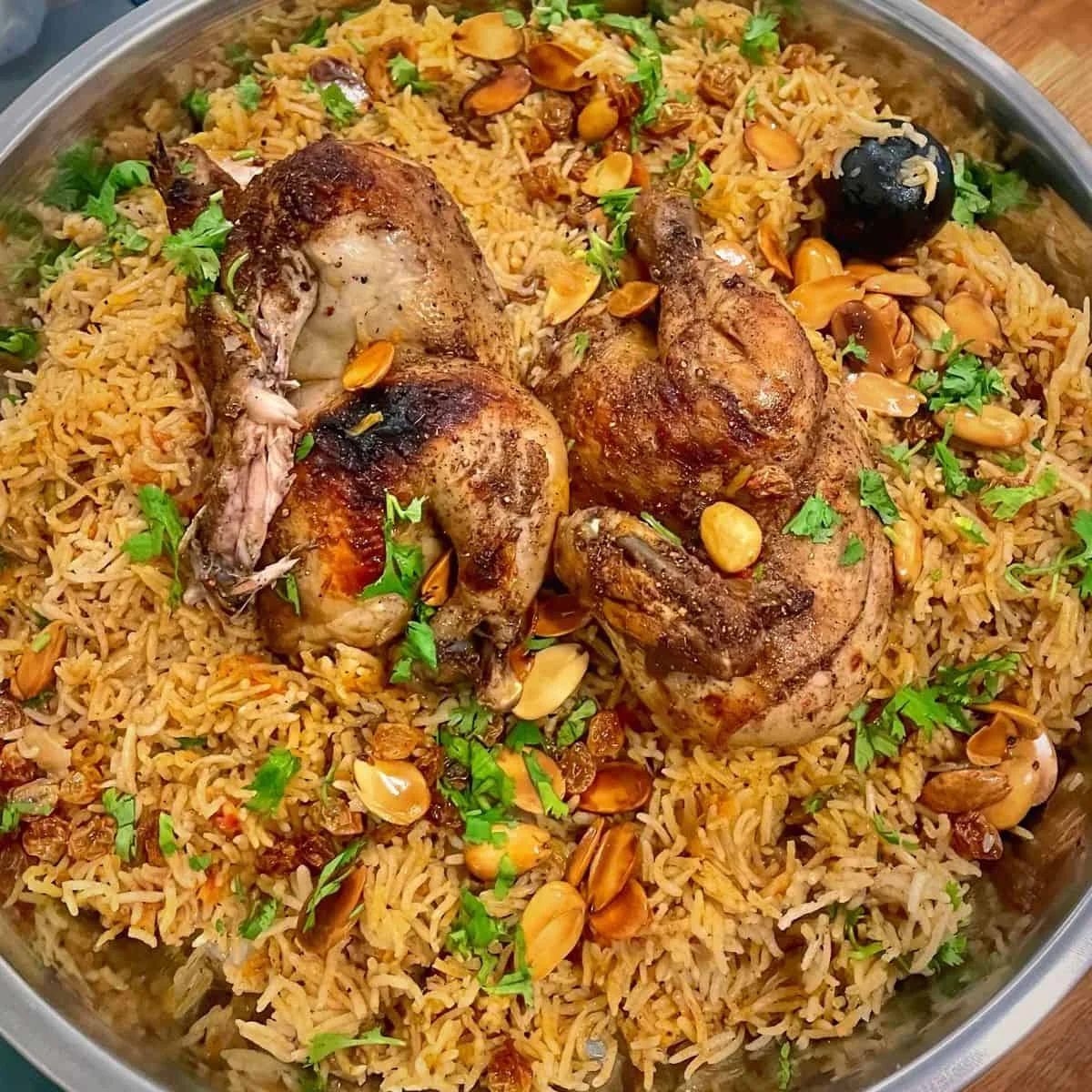
Chicken kabsa is a Saudi Arabian one-pot rice dish cooked with warmly spiced chicken, tomatoes and basmati rice. This version finishes with browned chicken, fried almonds and raisins for a fragrant, celebratory meal.
Ingredients
- 300 g (1½ cups)basmati rice, washed, soaked for 30 minutes and drained completely
- 60 ml (¼ cup)cooking oil (olive oil or vegetable oil)
- 35 g (⅓ cup)blanched, peeled and sliced almonds
- 35 g (¼ cup)black raisins
- 4green cardamom pods
- 4–6cloves
- 1 stick, 5 cm (2 inches)cinnamon
- 1dried black lime (loomi)
- 1bay leaf
- 3 mediumred onions, finely diced
- 1 teaspoonginger-garlic paste
- 300 g (2 large)tomatoes, chopped or puréed
- 60 g (½ small)carrot, grated
- 1 tablespoontomato paste
- 800 gwhole chicken with skin, or skinless, cut into 2 or 4 pieces
- 1 teaspoonblack pepper powder
- 1 teaspooncoriander powder
- 1 teaspooncumin powder
- ¼ teaspoonallspice powder or cinnamon powder
- ¼ teaspooncardamom powder
- to tastesalt
- 1 teaspoon (optional)orange zest
- 540 ml (2¼ cups)water, plus extra hot water if needed
Instructions
- 1
Heat the oil
Set a wide, deep, heavy-based pot over a medium heat and warm the oil.
- 2
Fry the almonds
Fry the prepared almonds until golden brown. Lift them out with a slotted spoon and set aside.
- 3
Puff the raisins
Fry the raisins until puffed, then remove and set aside.
- 4
Toast the spices
Add all the whole spices to the pot and fry until fragrant.
- 5
Soften the onions
Add the diced onions and cook until translucent.
- 6
Brown the aromatics
Stir in the ginger-garlic paste and cook for 5 minutes, until the onions begin to brown.
- 7
Brown the chicken
Arrange the chicken in the pot skin-side down. Cook over a high heat, partially covered, until browned and the chicken turns white.
- 8
Add powdered spices
Add the spice powders and salt, mix well, and add 1 teaspoon of orange zest if using.
- 9
Cook the tomatoes
Add the tomatoes, tomato paste and grated carrot. Cook until the oil comes to the surface.
- 10
Simmer the chicken
Add at least 480 ml (2 cups) of water and adjust the salt. Bring to the boil, cover, and cook over a low to medium heat until the chicken is cooked.
- 11
Remove the chicken
Take the chicken pieces out of the pot and place them in a baking pan.
- 12
Add the rice
Stir the drained rice into the pot. Add more hot water if required, adjusting the salt; make sure the water sits above the grains.
- 13
Cook until visible
Cook over a medium to high heat for 5 minutes, until the rice grains can be seen at the surface.
- 14
Steam the rice
Turn the heat to its lowest setting. Slide a flat pan beneath the pot to help distribute the heat and prevent scorching. Cover the pot with foil or a clean cloth, seal it tightly with the lid, and cook for 10 minutes. Switch off the heat and leave undisturbed for another 10 minutes.
- 15
Brown the chicken
Grill or broil the chicken in a hot oven, or brown it on the stovetop with some butter.
- 16
Serve the kabsa
Top the kabsa with the browned chicken, fried almonds and raisins. Serve with salads and yoghurt.
What is chicken kabsa?
Kabsa is a rice-and-meat dish associated with Saudi Arabia and the wider Arabian Peninsula. Its characteristic flavour comes from cooking the rice with the seasoned chicken and fragrant whole spices.
This version builds a tomato-based broth, then steams the rice in it and browns the chicken separately before serving. Almonds and raisins add a crisp, sweet finish.
Nutrition and macros by portion
The nutrition label shows one serving as written: 860 calories, 53g protein, 92g carbs, 33g fat.
| Portion | Adjustment | kcal | Protein | Carbs | Fat |
|---|---|---|---|---|---|
| Lighter | Use less oil | 602 kcal | 37g | 65g | 23g |
| This serving | As written | 860 kcal | 53g | 92g | 33g |
| Hungry | Add more rice | 1290 kcal | 79g | 138g | 50g |
The basmati rice and raisins provide most of the carbohydrates, while the oil, almonds and chicken skin contribute much of the fat. Chicken is the main source of protein, with almonds adding some as well. Serve with salad or other vegetables and yoghurt for a more balanced plate.
The spice foundation
Whole spices: Cardamom, cloves, cinnamon, dried lime and bay leaf infuse the oil before the onions go in. Fry them only until fragrant so they flavour the dish without scorching.
Ground spices: Black pepper, coriander, cumin, allspice and cardamom season the chicken and tomato mixture. Orange zest is optional and brings a fresh citrus note.
Build the cooking broth
Onions first: Cook them until translucent, then continue with the ginger-garlic paste until they begin to brown. This gives the base time to develop flavour before the chicken and tomatoes are added.
Tomatoes and carrot: Cook these with the tomato paste until oil appears at the surface. That visual cue indicates the mixture has cooked down before you add water.
Get the rice texture right
Rinsing and soaking: Wash and soak the basmati for 30 minutes, then drain it completely. This prepares the grains for the final steaming stage.
Water level: Once the rice is in the pot, the recipe calls for water above the grains. Add extra hot water if needed, and check the salt before covering.
Steam gently, then rest
After 5 minutes over medium to high heat, look for grains at the surface before turning the heat down. A flat pan beneath the pot helps spread the heat and reduce the risk of scorching.
Seal the pot tightly and steam for 10 minutes on the lowest setting, then leave it untouched for a further 10 minutes off the heat. Keeping the lid on helps the rice finish evenly.
Finish and serve
Brown the cooked chicken separately under a hot grill or broiler, or on the stovetop with some butter. This final step gives the pieces a more roasted finish than simmering alone.
Scatter the fried almonds and raisins over the rice and serve with salads and yoghurt. Keep the garnishes until serving so the nuts retain their crunch.
Recipe notes & tips
- Drain the soaked rice thoroughly so excess soaking water does not throw off the broth balance.
- Fry the almonds and raisins separately, as they need different amounts of time to brown or puff.
- Use a heavy-based pot and keep the heat gentle during the final steaming stage.
- Check the salt in the broth before adding the rice, since the rice will absorb its seasoning.
- Leave the pot undisturbed for the full 10-minute rest after switching off the heat.
Variations
- Use skinless chicken: Choose skinless pieces if you prefer, as the recipe allows.
- Swap the oil: Use olive oil or vegetable oil for frying the garnishes and cooking the base.
- Change the warm spice: Use cinnamon powder instead of allspice powder.
- Skip the citrus: Leave out the orange zest for a less pronounced citrus note.
- Adjust the garnish: Add the fried almonds and raisins to taste when serving.
Common mistakes to avoid
- Burning the whole spices: Fry just until fragrant, then move on to the onions.
- Adding undrained rice: Drain it completely after soaking so the liquid remains easier to control.
- Guessing the rice water: Check that water sits above the grains and add hot water if necessary.
- Cooking on high throughout: Reduce the heat to its lowest setting for the covered steaming stage.
- Lifting the lid during resting: Keep the pot closed for the full 10 minutes off the heat.
How to store
Cool leftovers promptly, then store the rice and chicken in an airtight container in the fridge for up to 2 days. Reheat until piping hot throughout, adding a splash of water to the rice if it has dried out.
Frequently asked questions
Can I use skinless chicken?
Yes. The ingredient list allows for either skin-on or skinless chicken; brown the pieces as directed.
Do I need to soak the basmati rice?
The recipe calls for washing and soaking it for 30 minutes, followed by thorough draining. This is part of the preparation before the rice goes into the broth.
How do I know when to cover the rice?
After about 5 minutes over medium to high heat, cover it when grains are visible at the surface. Then steam on the lowest heat for 10 minutes.
Why put a flat pan under the pot?
It helps spread the heat during the final steaming and reduces the chance of the rice scorching on the base.
Can I leave out the orange zest?
Yes. It is optional, so omit it if you would rather not add its citrus flavour.
What should I serve with chicken kabsa?
The recipe suggests salads and yoghurt alongside the kabsa.
Cook it from the original
This recipe comes from butfirstchai.com. Their page has the author’s own photos, notes and tips — the best place to cook it from.
Open the recipe on butfirstchai.com