
Vegan coconut cake
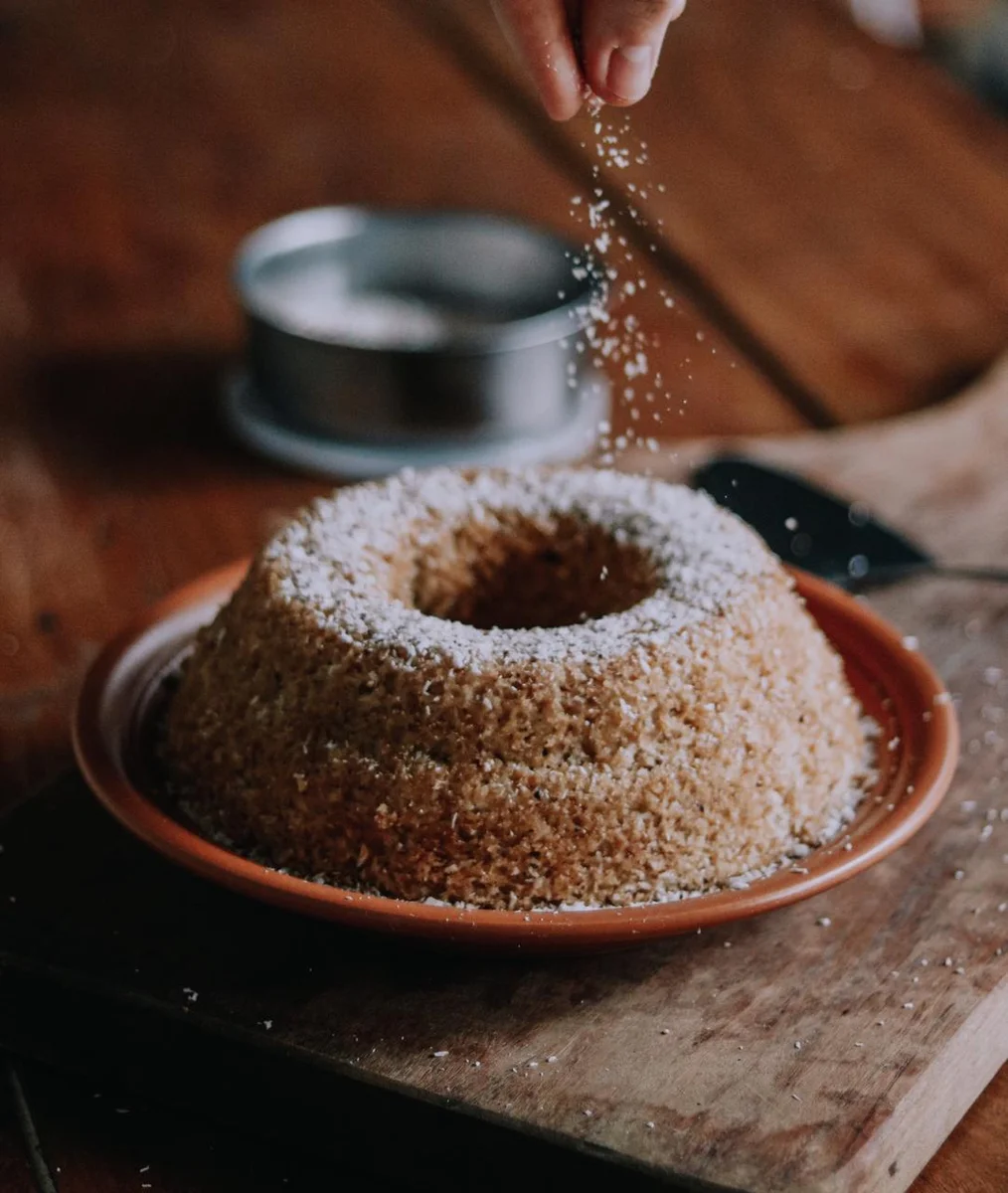
This soft vegan coconut cake uses leftover pulp from homemade coconut milk, or desiccated coconut, for a fragrant, easy-to-make bake. It is a practical way to use coconut pulp and needs no eggs or dairy.
Ingredients
- 250 g (2 cups)plain flour
- 300 g (1½ cups)sugar
- 240 ml (1 cup)warm water or coconut milk
- 120 ml (½ cup)vegetable oil
- 15 ml (1 tablespoon)vanilla essence
- 120 g (1½ cups)desiccated coconut or leftover coconut pulp
- A pinchsalt
- 12 g (1 tablespoon)baking powder
- 5 ml (1 teaspoon)vinegar
Instructions
- 1
Preheat the oven
Heat the oven to 180°C.
- 2
Mix the dry ingredients
Put the dry ingredients in a bowl and mix them together.
- 3
Add the liquids
Pour in the water or coconut milk and the oil, then mix well.
- 4
Fold in the raising agents
Add the baking powder and vinegar last. Stir gently until the baking powder is fully incorporated into the batter.
- 5
Fill the tin
Transfer the batter to a cake tin greased with oil and dusted with flour.
- 6
Bake the cake
Bake for 45 minutes, or until a skewer inserted into the cake comes out clean.
What is vegan coconut cake?
Coconut cakes are made in many places, so there is no single origin to assign to this style. This version is a simple, egg-free and dairy-free cake built around coconut flavour.
Coconut pulp: Leftover pulp from homemade coconut milk gives the batter a way to use an ingredient that might otherwise be discarded. Desiccated coconut is an alternative when pulp is not available.
Nutrition and macros by portion
The nutrition label shows one serving as written: 386 calories, 4g protein, 53g carbs, 18g fat.
| Portion | Adjustment | kcal | Protein | Carbs | Fat |
|---|---|---|---|---|---|
| Lighter | Smaller slice, fresh fruit | 270 kcal | 3g | 37g | 13g |
| This serving | As written | 386 kcal | 4g | 53g | 18g |
| Hungry | Larger cake slice | 579 kcal | 6g | 80g | 27g |
Most of the carbohydrates come from the flour and sugar, while the vegetable oil and coconut contribute most of the fat; the flour and coconut provide a modest amount of protein. Serve a slice with fresh fruit or a plant-based yoghurt to make a more balanced plate.
Choosing the coconut
Leftover pulp: Use pulp that has been drained well so it does not add excess moisture to the batter. If it is very wet, press out some of the liquid before measuring.
Desiccated coconut: This is usually drier and more consistent than fresh pulp. Either option works, but the cake's texture may vary slightly depending on how moist the pulp is.
Mixing the batter
Dry ingredients: Stir the flour, sugar, coconut and salt together first to distribute them evenly.
Final additions: Add the baking powder and vinegar at the end, then mix gently just until incorporated. This helps avoid overworking the batter once the raising agents are in.
Checking when it is done
Bake time: The recipe gives 45 minutes at 180°C, but the cake is ready when a skewer inserted into the centre comes out clean.
Cooling: Let the cake settle in its tin before turning it out, as a warm cake can be delicate. The crumb should be tender, with coconut throughout.
Water or coconut milk?
Water: This makes a straightforward cake in which the coconut pulp or desiccated coconut supplies most of the coconut character.
Coconut milk: Choose this for a fuller coconut flavour. Use the same measured amount whichever liquid you select.
Serving the cake
Pairings: Serve a slice with tea or coffee, or add fresh fruit for a fresher contrast to the sweet, coconut-rich crumb.
Finishing touch: The cake can be served plain, or dusted with a little extra desiccated coconut once it has cooled.
Recipe notes & tips
- Measure the leftover pulp after draining it so its moisture is more predictable.
- Grease the tin with oil and dust it with flour to help the cake release cleanly.
- Use room-temperature coconut milk if you choose it instead of warm water.
- Mix gently after adding the baking powder and vinegar.
- Check the centre with a skewer at the end of the 45-minute bake.
- Allow the cake to cool before slicing for neater portions.
Variations
- Citrus lift: Add finely grated lemon or lime zest to the dry ingredients.
- Coconut topping: Scatter extra desiccated coconut over the batter before baking.
- Spiced cake: Add a small pinch of ground cinnamon for a warm background note.
- Chocolate version: Fold dairy-free chocolate chips into the batter just before baking.
- Fruit pairing: Serve each slice with fresh mango or berries.
Common mistakes to avoid
- Very wet pulp: Excess moisture can change the batter; drain or press the pulp before measuring.
- Overmixing: Too much stirring can make the crumb heavy; mix only until the ingredients are combined.
- Adding raising agents early: The method adds them last; follow that order and stir them in gently.
- Opening the oven repeatedly: This can interrupt baking; check near the end of the stated 45 minutes.
- Cutting it while hot: The crumb may break apart; let the cake cool before slicing.
How to store
Keep the cooled cake in an airtight container at room temperature for up to 3 days, or refrigerate it for up to 5 days. Warm individual slices briefly in the microwave or let them come to room temperature before serving.
Frequently asked questions
Can I use leftover coconut pulp instead of desiccated coconut?
Yes. Use the same measured amount, and drain the pulp well first because its moisture can vary.
Can I use coconut milk instead of water?
Yes. The recipe allows either, using 240 ml. Coconut milk gives the cake a fuller coconut flavour.
Is this cake vegan?
The listed ingredients contain no eggs or dairy. Check the labels on your ingredients if you need to confirm they are suitable for your diet.
How do I know when the cake is baked?
After 45 minutes at 180°C, insert a skewer into the centre. It is ready when the skewer comes out clean.
Can I make the batter ahead?
It is best to bake the batter soon after mixing in the baking powder and vinegar. You can bake the cake ahead and store it once completely cool.
What can I serve with coconut cake?
Tea or coffee is a simple match. Fresh fruit or plant-based yoghurt also works well alongside a slice.
Cook it from the original
This recipe comes from comcaju.com.br. Their page has the author’s own photos, notes and tips — the best place to cook it from.
Open the recipe on comcaju.com.br