
Shepherd’s migas
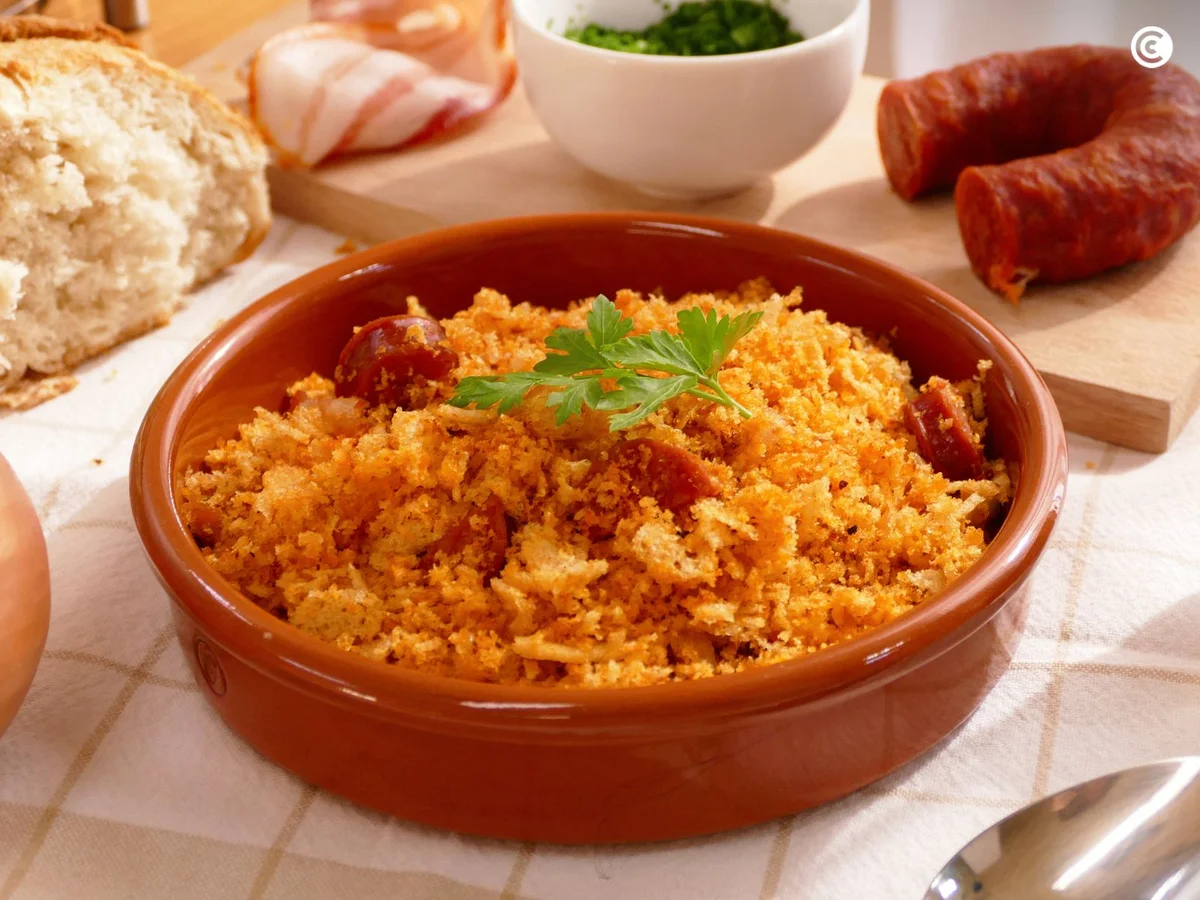
Shepherd’s migas is a traditional Aragonese way to turn day-old bread into a hearty meal, softened with white wine and fried with onion, chorizo and pancetta. It is a practical choice when you have stale bread to use up.
Ingredients
- 500 gstale bread, from the day before
- 150 gchorizo
- 150 gpancetta
- 1 tablespoonñora pepper flesh
- a generous drizzleextra-virgin olive oil
- 50 mlwhite wine
- ½onion
Instructions
- 1
Moisten the bread
Cut the bread into small cubes. Sprinkle it with the white wine and leave it to absorb the liquid for a few minutes.
- 2
Prepare the onion
Peel the onion and finely slice it.
- 3
Cut the meat
Slice the chorizo into half-moons and cut the pancetta into thin strips.
- 4
Fry the onion
Set a casserole over the heat with a generous amount of olive oil. Once hot, add the onion and cook for a couple of minutes. Add the pancetta and chorizo, stir, and cook for 1 minute.
- 5
Cook the migas
Add the ñora pepper flesh and cubed bread. Cook everything together, stirring, until the migas are dry.
- 6
Serve the migas
Serve the migas in a small earthenware dish and garnish with parsley.
What are shepherd’s migas?
Migas, meaning “crumbs”, are a Spanish dish traditionally made to use up stale bread. This Aragonese version combines the bread with pork, onion and ñora pepper flesh.
The method makes the most of day-old bread: wine softens it briefly, then stirring it in the pan helps it dry out while taking on flavour from the other ingredients.
Nutrition and macros by portion
The nutrition label shows one serving as written: 425 calories, 15g protein, 10g carbs, 35g fat.
| Portion | Adjustment | kcal | Protein | Carbs | Fat |
|---|---|---|---|---|---|
| Lighter | Use less oil and pancetta | 298 kcal | 11g | 7g | 25g |
| This serving | As written | 425 kcal | 15g | 10g | 35g |
| Hungry | Serve a larger portion | 638 kcal | 23g | 15g | 53g |
The bread provides most of the carbohydrates, while the olive oil, chorizo and pancetta contribute much of the fat; the pork also supplies protein. Pair a serving with vegetables or salad for a more balanced plate.
Choose the right bread
Stale bread: bread from the day before is firm enough to cut into cubes and less likely to collapse when moistened.
Wine: add the measured white wine over the bread and let it absorb for just a few minutes before cooking.
Build the flavour in the pan
Onion first: give it a couple of minutes in the hot oil so it starts to soften before adding the meat.
Chorizo and pancetta: cook them together for 1 minute, stirring, then add the ñora pepper flesh and bread so the ingredients can cook together.
Get the texture right
Stirring: keep the bread moving as it cooks so it dries evenly and picks up the flavours in the casserole.
Doneness: the recipe’s cue is dry migas. They should no longer feel wine-wet; keep stirring until they reach that point.
Allow time for the bread
The bread needs a few minutes to absorb the wine before it goes into the pan. The onion then cooks for a couple of minutes, followed by 1 minute with the chorizo and pancetta.
No total cooking time is specified, so use the stated timings and the dry texture of the migas as your guide for the final stage.
Serving suggestions
Serve the migas in small earthenware dishes, as directed, with parsley for garnish. A fresh salad or simply cooked vegetables can make a contrasting accompaniment to the rich, savoury pork and bread.
Recipe notes & tips
- Cut the bread into small, even cubes so it is easier to moisten and stir.
- Let the bread absorb the wine for only a few minutes before frying.
- Have the onion, chorizo and pancetta prepared before heating the oil.
- Stir regularly once the bread is in the casserole to help it dry evenly.
- Serve the migas as soon as they are dry, while still warm.
Variations
- Use a different stale loaf: cut it into small cubes so it cooks evenly.
- Adjust the chorizo: choose a milder or more strongly flavoured type to suit your preference.
- Add a little heat: use a spicier chorizo for a hotter version.
- Change the garnish: use chopped parsley, as in the method, or leave the migas ungarnished.
Common mistakes to avoid
- Using fresh, soft bread: it can turn mushy; use firm day-old bread.
- Soaking the bread for too long: it may become difficult to stir; moisten it for only a few minutes.
- Adding the bread too soon: give the onion a couple of minutes and the meat 1 minute first.
- Stopping while the bread is wet: keep stirring until the migas are dry.
- Leaving the pan unstirred: the bread may cook unevenly; stir it as it dries.
How to store
Refrigerate leftovers in a covered container and eat within 2 days. Reheat in a frying pan over a medium heat, stirring until hot; the bread may be less crisp after storage.
Frequently asked questions
Can I use fresh bread?
Day-old, firm bread is preferable because it holds its shape better. Fresh bread is more likely to become soft and clump together.
How long should I moisten the bread?
Leave the cubes with the white wine for a few minutes, just long enough to absorb it before cooking.
How do I know when the migas are ready?
Follow the recipe’s cue: they should be dry. Stir as they cook so the bread dries evenly.
What is ñora pepper flesh?
It is the soft flesh of a dried ñora pepper, used here to add flavour. The recipe calls for 1 tablespoon.
Can I prepare the ingredients in advance?
You can cut the onion, chorizo and pancetta ahead of cooking. Moisten the bread shortly before adding it to the pan.
What should I serve with migas?
A fresh salad or simply cooked vegetables make a good contrast to the rich, savoury migas.
Cook it from the original
This recipe comes from cocinatis.com. Their page has the author’s own photos, notes and tips — the best place to cook it from.
Open the recipe on cocinatis.com