
Kanda Poha Recipe
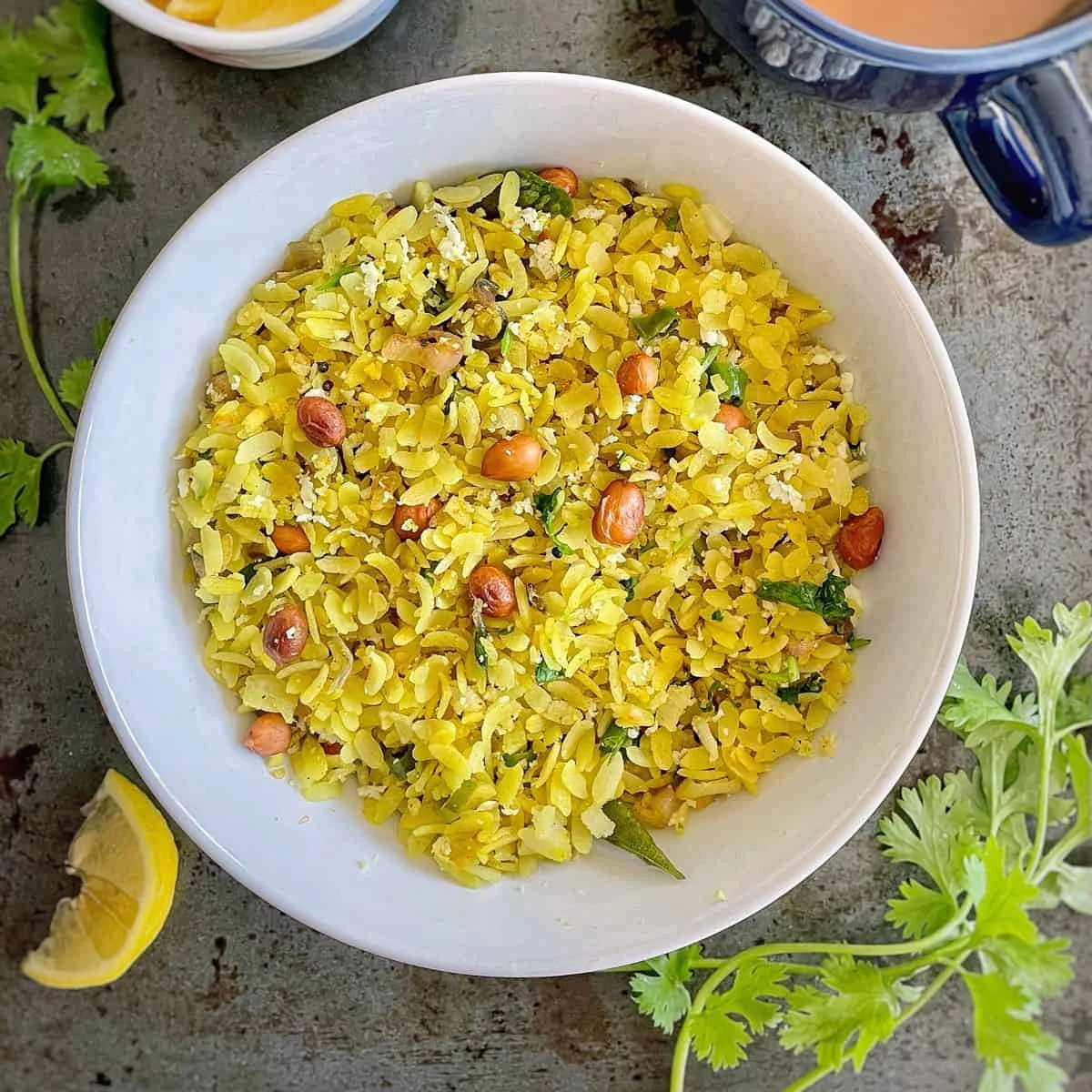
Kanda poha is a Maharashtrian breakfast of softened flattened rice tossed with onions, peanuts and a lightly spiced tempering. It comes together in one pan and makes a quick, savoury meal finished with lime, coriander and coconut.
Ingredients
- 480 ml (2 cups)thick poha (flattened rice)
- 480 ml (2 cups)water
- 30 ml (2 tbsp)coconut oil
- 60 ml (4 tbsp)peanuts
- 5 ml (1 tsp)mustard seeds
- 1 sprigcurry leaves
- 1 mediumonion
- 2–3green chillies
- 2.5 ml (1/2 tsp)turmeric powder
- to tastesalt
- juice of 1/2lime
- 30 ml (2 tbsp)chopped coriander leaves
- 60 ml (4 tbsp)grated coconut
Instructions
- 1
Rinse the poha
Put the measured poha in a colander set over a bowl. Measure the water in a pourable container and carefully pour it over the poha so the flakes are all wetted. Do not stir or turn them.
- 2
Let it soften
Leave the poha for 15–20 minutes, optionally covered. Let excess water drain away during this time as the flakes soften.
- 3
Fry the peanuts
Heat the coconut oil in a pan or kadhai over low to medium heat. Add the raw peanuts with their skins and sauté until they pop and crack, taking care not to burn them. Move them to one side of the pan.
- 4
Temper the spices
Add the mustard seeds to the pan and wait for them to crackle. Add the curry leaves, whole, torn or finely chopped.
- 5
Cook the onions
Add the chopped green chillies and diced onion. Sauté briefly until fragrant, then cook until the onion is translucent and slightly golden. Sprinkle in the turmeric and salt, coating the onion evenly.
- 6
Mix and steam
Add the softened, drained poha and gently mix until the flakes are coated with the onion and spice mixture and turn yellow. Cover and cook over low heat for 2–3 minutes.
- 7
Garnish and serve
Turn off the heat and top with grated coconut and chopped coriander. Squeeze over the lime juice just before serving; if using cast-iron cookware, serve immediately after adding it. Serve hot, with extra coriander and lime wedges on the side.
What is kanda poha?
Kanda poha is a popular breakfast from Maharashtra in western India; kanda means onion, while poha is flattened rice. The flakes are softened and then tossed with onion, spices and a tempering of mustard seeds.
This version brings together crisp peanuts, a little heat from green chillies and fresh finishes of lime, coriander and coconut. It works well as a quick, filling breakfast or snack.
Nutrition and macros by portion
The nutrition label shows one serving as written: 500 calories, 0g protein, 0g carbs, 0g fat.
| Portion | Adjustment | kcal | Protein | Carbs | Fat |
|---|---|---|---|---|---|
| Lighter | Use less coconut oil | 350 kcal | 0g | 0g | 0g |
| This serving | As written | 500 kcal | 0g | 0g | 0g |
| Hungry | Serve a larger portion | 750 kcal | 0g | 0g | 0g |
The flattened rice supplies most of the carbohydrates, while coconut oil, peanuts and grated coconut contribute much of the fat. Peanuts also provide some protein, alongside a smaller amount from the other ingredients. To balance the plate, add yoghurt or fruit on the side.
Choosing and soaking the poha
Thick poha: This recipe calls for thick flakes, which can absorb water while holding their shape. Thin poha may soften too quickly with the same soaking method.
Gentle wetting: Pour the measured water over the flakes without stirring or flipping them. Leave them to soften for 15–20 minutes while excess water drains through the colander.
Building the seasoning
Peanuts first: Fry them in coconut oil until they pop and crack, watching closely so they do not burn. Moving them aside makes room to temper the mustard seeds in the same pan.
Onions and chillies: Briefly sauté the chillies and curry leaves with the diced onion, then cook until the onion is translucent and slightly golden. Turmeric and salt go in before the poha so they coat the onion evenly.
Getting the texture right
Soft, not soggy: Avoid stirring the flakes while wetting them, and allow excess water to drain during the resting time. Mix them gently into the pan so they stay intact.
Final warming: Once the poha is coated and yellow, cover the pan and cook it on low heat for 2–3 minutes. The recipe gives no further visual doneness test, so keep the heat low and avoid prolonged cooking.
Finishing with lime and coconut
Fresh finish: Add the grated coconut and coriander after turning off the heat, so they remain fresh-tasting. Squeeze the lime over the poha just before serving for a bright, tangy note.
Cast iron: If you are using cast-iron cookware, serve the poha immediately after adding the lime juice, as specified in the recipe.
How to serve kanda poha
Serve it hot, with extra coriander and lime wedges so everyone can adjust the freshness and tang. The peanuts add crunch alongside the tender flakes.
For a more substantial breakfast, serve it with yoghurt or fruit on the side. Keep the poha itself as the savoury centre of the plate.
Recipe notes & tips
- Use thick poha so the flakes can soften without breaking down as easily.
- Pour the water evenly over the flakes, and resist the urge to stir them while they rest.
- Keep the heat low to medium when frying the peanuts and watch for popping so they do not burn.
- Let the mustard seeds crackle before adding the curry leaves.
- Mix the softened poha gently to keep the flakes intact.
- Add the lime juice just before serving for a fresh tang.
Variations
- Adjust the heat: Use fewer green chillies for a milder batch.
- Extra lime: Serve with more lime wedges for a sharper finish.
- Coconut finish: Add a little more grated coconut as a garnish.
- Coriander finish: Scatter extra chopped coriander over each serving.
- Peanut crunch: Keep the peanuts whole so their texture stands out.
Common mistakes to avoid
- Stirring while wetting: The flakes can turn soggy or dry unevenly; pour the water over them without mixing.
- Skipping the drain: Excess water can leave the poha too wet; let it drain as it softens.
- Burning the peanuts: They can catch while popping; sauté them carefully and move them aside once fried.
- Overcooking the onion: It should be translucent and slightly golden; avoid taking it much further.
- Mixing roughly: Softened flakes can break apart; fold them gently through the seasoning.
- Adding lime too early: Add it just before serving, and serve promptly if using cast iron.
How to store
The recipe does not specify storage guidance. Refrigerate any leftovers in a covered container and reheat gently in a pan until hot; add a little water if the poha seems dry, and finish with fresh lime and coriander.
Frequently asked questions
Can I use thin poha instead of thick poha?
The recipe is written for thick poha, which holds its shape during soaking and cooking. Thin flakes may soften faster, so check them sooner and handle them gently.
How long should the poha soak?
Leave it for 15–20 minutes. The excess water drains away during this time while the flakes soften.
Why has my poha turned soggy?
It may have been stirred while being wetted or not allowed to drain properly. Pour the water over the flakes without mixing, then leave them in the colander as they soften.
How can I make kanda poha less spicy?
Use fewer green chillies, or remove their seeds before chopping. The recipe allows 2–3 chillies, so choose the lower amount for a gentler result.
When should I add the lime juice?
Squeeze it over the poha just before serving. If you use cast-iron cookware, the recipe recommends serving immediately after adding the lime.
Can I prepare the poha ahead?
The recipe does not give make-ahead instructions. For the best texture, soak and cook the flakes close to serving time.
Cook it from the original
This recipe comes from butfirstchai.com. Their page has the author’s own photos, notes and tips — the best place to cook it from.
Open the recipe on butfirstchai.com