
Basic Orecchiette Recipe
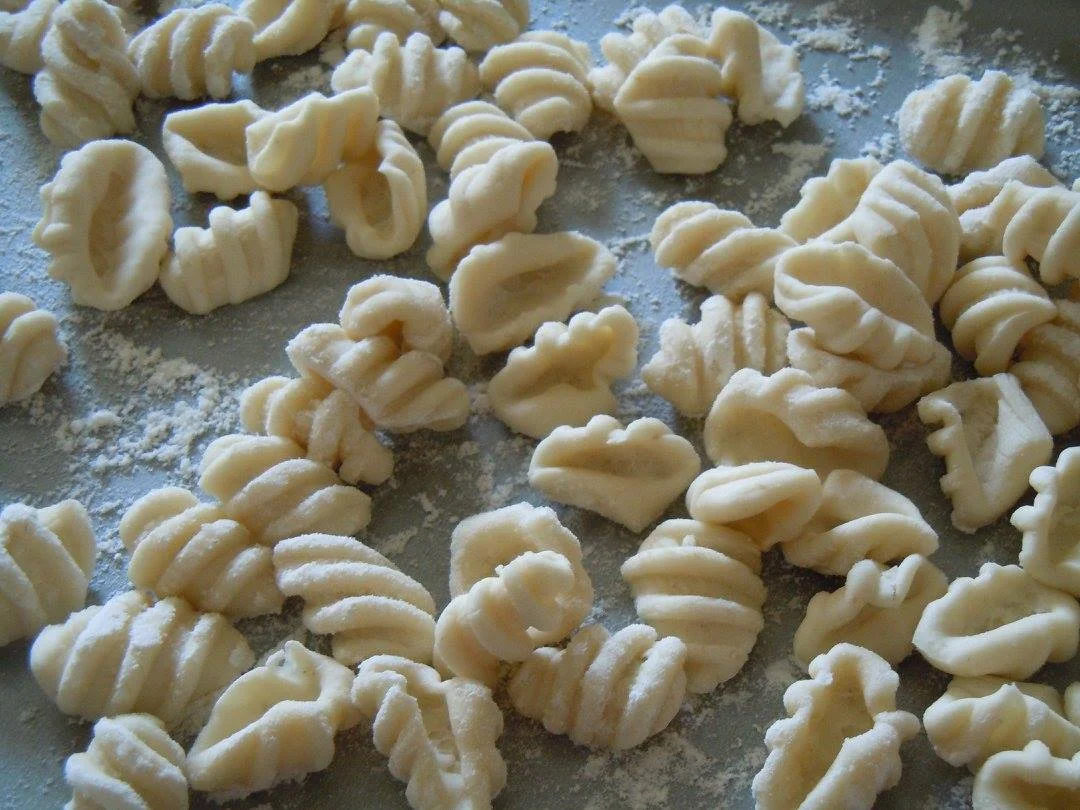
Orecchiette are small, ear-shaped pasta from Italy, made here with a simple flour-and-water dough. Shaping each piece takes a little practice, but a ridged surface helps it hold sauce and gives this homemade pasta its distinctive look.
Ingredients
- 200 gall-purpose flour
- 100 gsemolina flour
- 1 pinchsalt
- 150 g/mlwarm water
Instructions
- 1
Mix the flours
Combine the semolina flour, all-purpose flour and salt.
- 2
Knead the dough
Make a well in the centre and pour in the water. Mix, then knead for about 10 minutes until the dough is firm and elastic. It may seem dry at first; keep working it. A firm dough is important because a soft dough is harder to shape.
- 3
Cut the dough
Roll the dough into long rolls about 2 cm in diameter, then cut them into sections about 1 cm wide.
- 4
Shape the pasta
Use the tip of a butter knife to drag each section towards you across a work surface or gnocchi paddle. Apply slight downward pressure without squashing the dough. The technique takes practice, so the pieces do not need to be perfect.
- 5
Dust with flour
Flour the orecchiette to stop them sticking to one another.
- 6
Boil the pasta
Bring a pot of salted water to the boil, add the orecchiette and cook for 10 minutes.
- 7
Drain and serve
Drain the pasta and serve it with your favourite sauce.
What are orecchiette?
Orecchiette means “little ears” in Italian, a name that describes the pasta’s small cupped shape. It is associated with southern Italy, particularly Puglia, where it is often served with sauces that settle into its hollow centre.
This version uses a straightforward dough of wheat flours and water. Semolina gives it a sturdy texture, while shaping the pieces over a paddle or work surface creates the characteristic curve.
Nutrition and macros by portion
The nutrition label shows one serving as written: 272 calories, 0g protein, 0g carbs, 0g fat.
| Portion | Adjustment | kcal | Protein | Carbs | Fat |
|---|---|---|---|---|---|
| Lighter | Smaller pasta portion | 190 kcal | 0g | 0g | 0g |
| This serving | As written | 272 kcal | 0g | 0g | 0g |
| Hungry | Larger pasta portion | 408 kcal | 0g | 0g | 0g |
The flour supplies most of the carbohydrates, with some protein and a small amount of fat; the water and salt contribute little energy. Pair a serving with vegetables and a protein-rich sauce or side to make the plate more rounded.
Choosing the flour
Semolina flour: this coarser flour helps the dough feel firm and gives the pasta a pleasantly substantial bite.
All-purpose flour: combined with semolina, it makes a workable dough that can be rolled and shaped by hand.
Getting the dough right
Firmness: the dough can feel dry when the water is first mixed in, but keep kneading for about 10 minutes before deciding it needs anything else. A firm, elastic dough is easier to form into neat pieces.
Kneading: work the dough until it feels cohesive and elastic rather than crumbly. The method relies on sustained kneading, not on making a soft dough.
Making the little ears
Cut size: roll the dough into logs about 2 cm thick and cut sections about 1 cm wide. Keeping the pieces similar in size helps them cook at a similar pace.
Shaping pressure: drag each piece towards you with the tip of a butter knife and a light downward push. Too much pressure will squash it instead of curling it into a small cup.
Checking the texture
Cook the shaped pasta in salted boiling water for 10 minutes, as directed. If you are unsure whether it is ready, taste a piece near the end of cooking; it should be tender with some bite.
The small hollow and ridged surface are useful cues when shaping, but slight differences between pieces are normal for handmade pasta.
Serving and timing
The recipe takes about 70 minutes in total, with much of the hands-on work going into kneading and shaping. If this is your first time making orecchiette, allow yourself time to get comfortable with the dragging motion.
Serve the drained pasta with a sauce of your choice. A sauce that clings to the ridges and collects in the centre suits the shape well.
Recipe notes & tips
- Keep the dough covered while you shape it so the surface does not dry out.
- Use a light, controlled pressure when dragging each piece with the knife.
- Dust the shaped orecchiette with flour to keep them from sticking together.
- Try shaping a few pieces at a time until you find a comfortable motion.
- Use a gnocchi paddle for ridges, or shape the pieces on a flat work surface.
Variations
- Use a flat surface: shape the pieces on a worktop if you do not have a gnocchi paddle.
- Try a different sauce: serve the pasta with a sauce you already enjoy.
- Make smaller pieces: cut narrower sections for more petite orecchiette.
- Make larger pieces: cut wider sections for a more generous, rustic shape.
Common mistakes to avoid
- Soft dough: it is harder to shape; knead until the dough is firm and elastic.
- Stopping too soon: the dough may seem dry at first; continue kneading for about 10 minutes.
- Pressing too hard: the piece gets squashed; use only slight downward pressure as you drag it.
- Skipping the flour dusting: the pieces can stick together; flour them after shaping.
- Uneven pieces: they may cook at different rates; aim for sections about 1 cm wide.
How to store
Keep uncooked orecchiette lightly dusted with flour and separated so they do not stick together; cook them promptly or freeze them in a single layer before transferring to a sealed container. Refrigerate cooked pasta promptly and use within 3 days, reheating with a little sauce or water until hot.
Frequently asked questions
Do I need a gnocchi paddle?
No. The recipe works with either a gnocchi paddle or a flat work surface. The paddle gives the pasta grooves, but a butter knife is used to shape the pieces in either case.
Why does the dough seem dry?
It can feel dry when you first combine the flour and water. Keep kneading for about 10 minutes until it becomes firm and elastic.
How do I stop orecchiette sticking together?
Flour the shaped pieces as directed and keep them separated while you work.
How long do I cook fresh orecchiette?
The method gives a cooking time of 10 minutes in salted boiling water. Taste a piece near the end to check that it is tender with some bite.
Can I make the pasta without semolina?
This recipe calls for both semolina flour and all-purpose flour. Changing the flour blend may affect the dough’s firmness and how easily it shapes.
What should I serve with orecchiette?
Serve it with your favourite sauce. Sauces that cling to the ridges and settle into the centre work especially well with the shape.
Cook it from the original
This recipe comes from cheflouisnel.co.za. Their page has the author’s own photos, notes and tips — the best place to cook it from.
Open the recipe on cheflouisnel.co.za