
Basic Pasta Dough (Fettuccine)
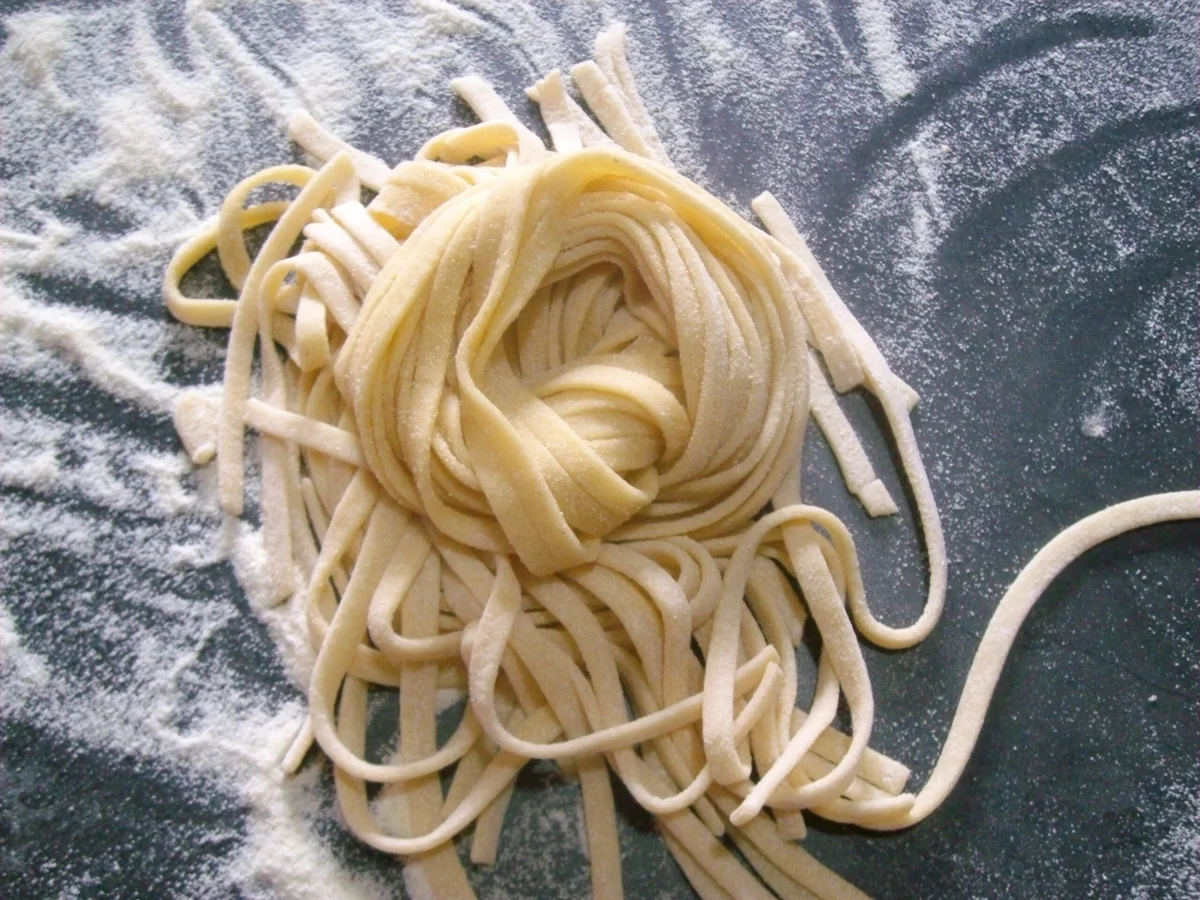
This fresh fettuccine dough combines semolina and stone-ground plain flour instead of relying on Tipo 00 flour. It is a practical way to make pasta at home with a pasta machine and a handful of everyday ingredients.
Ingredients
- 150 g, plus extra for dustingsemolina flour
- 150 gstone-ground plain flour
- 3 largeeggs
- 1 tbspolive oil
- to tastesalt
Instructions
- 1
Mix the flours
On a clean work surface, combine the semolina flour, plain flour and salt.
- 2
Add wet ingredients
Make a well in the centre of the flour mixture and add the eggs and olive oil.
- 3
Bring together
Break the yolks with a fork, then use your fingers to mix the ingredients, working from the centre outwards.
- 4
Knead the dough
Knead for about 10 minutes, until the dough is pliable.
- 5
Rest the dough
Shape the dough into a ball, wrap it in cling film and chill for 15 minutes.
- 6
Flatten the dough
On a lightly floured surface, roll the dough to 1 cm thick so it is easier to feed through the machine.
- 7
Divide the dough
Cut the dough into 2 or 3 equal pieces for easier handling. Work with one piece at a time, keeping the rest wrapped and refrigerated.
- 8
Start rolling
Pass the dough through the machine on its thickest setting. Fold both ends of the sheet into the middle and pass it through again on the thickest setting.
- 9
Repeat folding
Repeat the folding and rolling process 3 or 4 times, until the dough fills the width of the machine.
- 10
Join the sheet
Dust both sides lightly with flour and pass the sheet through once more, stopping before it goes all the way through. Bring the two ends together; a drop of water rubbed on the dough will help them stick.
- 11
Roll the seam
Pass the joined seam through the machine, then change to a lower setting.
- 12
Thin the dough
Keep passing the dough through at progressively lower settings until it reaches your preferred thickness. Setting no. 3 is recommended for fettuccine.
- 13
Cut into sheets
Remove the pasta sheet from the machine and cut it into smaller, equal sections. These are lasagne sheets at this stage.
- 14
Cut fettuccine
Dust the sheets with semolina flour, then feed them through the fettuccine cutter.
- 15
Separate the strands
Dust the fettuccine with semolina flour, using a sweeping motion to help prevent the strands sticking together.
- 16
Cook the pasta
Cook the pasta in salted boiling water until al dente, about 4 minutes.
What is fettuccine?
Fettuccine is a ribbon-shaped pasta associated with Italian cooking. This version is made from scratch and cut from rolled sheets of fresh dough.
Flour blend: The recipe combines semolina with stone-ground plain flour in equal amounts, offering an alternative when Tipo 00 flour is difficult to find.
Nutrition and macros by portion
The nutrition label shows one serving as written: 355 calories, 0g protein, 0g carbs, 0g fat.
| Portion | Adjustment | kcal | Protein | Carbs | Fat |
|---|---|---|---|---|---|
| Lighter | Smaller pasta portion | 248 kcal | 0g | 0g | 0g |
| This serving | As written | 355 kcal | 0g | 0g | 0g |
| Hungry | Larger pasta portion | 533 kcal | 0g | 0g | 0g |
The eggs provide most of the protein and fat, while the semolina and plain flour contribute most of the carbohydrates. Serve a portion with vegetables and a protein-rich accompaniment to make a more balanced plate.
Choosing the flour
Semolina: This gives the dough a distinctive grain and helps make a pasta sheet that can be handled and cut.
Plain flour: Stone-ground plain flour makes up the other half of the blend. Weigh both flours carefully to keep the stated 50/50 ratio.
Making a pliable dough
Well method: Keeping the eggs and oil in a hollow in the flour lets you gradually draw the dry ingredients into the wet ones.
Kneading: Work the dough for about 10 minutes, until it feels pliable. Resting it in the fridge for 15 minutes follows the kneading and gives you a pause before rolling.
Rolling with a pasta machine
Thickest setting: Begin with the machine at its widest setting, folding the ends towards the centre and passing the dough through again. Repeat this step 3 or 4 times until the sheet fills the machine's width.
Gradual thinning: Once the seam has been rolled through, move down to lower settings until the sheet reaches the desired thickness. The recipe recommends no. 3 for fettuccine.
Cutting neat ribbons
Even sections: Cut the rolled sheet into smaller, equal pieces before using the fettuccine cutter. At this point the pieces are also suitable as lasagne sheets.
Semolina dusting: Lightly coat the sheets and then the cut strands with semolina. Use a sweeping motion to separate the ribbons and help keep them from sticking.
Cooking and serving
Doneness: Cook the fresh pasta in salted boiling water for about 4 minutes, checking that it is al dente.
Serving idea: Pair the fettuccine with a sauce of your choice and vegetables for a more rounded plate. Cook only the amount you need and keep the remaining dough wrapped and refrigerated while you work.
Recipe notes & tips
- Keep the unused dough wrapped and refrigerated while rolling each piece.
- Dust the pasta sheet lightly before sending it through the cutter.
- Use a drop of water on the dough if the joined ends do not stick together.
- Cut the sheet into equal sections so the fettuccine strands are easier to handle.
- Start checking the pasta at about 4 minutes for an al dente texture.
Variations
- Change the shape: Cut the rolled sheets into lasagne-sized pieces instead of fettuccine ribbons.
- Use another sauce: Toss the cooked pasta with a sauce that suits your meal.
- Add vegetables: Serve with cooked vegetables alongside or stirred through the pasta.
- Adjust the thickness: Roll the sheet further or less far through the machine to suit your preference.
Common mistakes to avoid
- Adding all the flour at once: Mix from the centre outwards so the eggs incorporate the flour gradually.
- Skipping the folds: Repeat the folding and rolling on the thickest setting 3 or 4 times before thinning the sheet.
- Leaving dough uncovered: Keep the pieces you are not rolling wrapped and refrigerated.
- Using too little dusting flour: Lightly coat the sheets and strands with semolina to help prevent sticking.
- Overcooking the pasta: Begin checking at about 4 minutes and stop once it is al dente.
How to store
Keep unused dough wrapped and refrigerated while you work. The method does not specify storage times for leftover dough or cooked pasta, so refrigerate leftovers promptly in a covered container and reheat gently.
Frequently asked questions
Can I make this without Tipo 00 flour?
Yes. This recipe uses equal amounts of semolina flour and stone-ground plain flour instead.
How long should I knead the dough?
Knead it for about 10 minutes, until it becomes pliable.
How long does the dough rest?
Wrap the dough and chill it in the fridge for 15 minutes.
Which pasta machine setting is right for fettuccine?
The recipe recommends setting no. 3 for fettuccine. Start at the thickest setting and work down gradually.
How long does fresh fettuccine take to cook?
Cook it in salted boiling water for about 4 minutes, checking for an al dente texture.
Can I make another pasta shape with this dough?
Yes. Before cutting it into fettuccine, the rolled dough can be cut into equal sections and used as lasagne sheets.
Cook it from the original
This recipe comes from cheflouisnel.co.za. Their page has the author’s own photos, notes and tips — the best place to cook it from.
Open the recipe on cheflouisnel.co.za