
Crème Brûlée
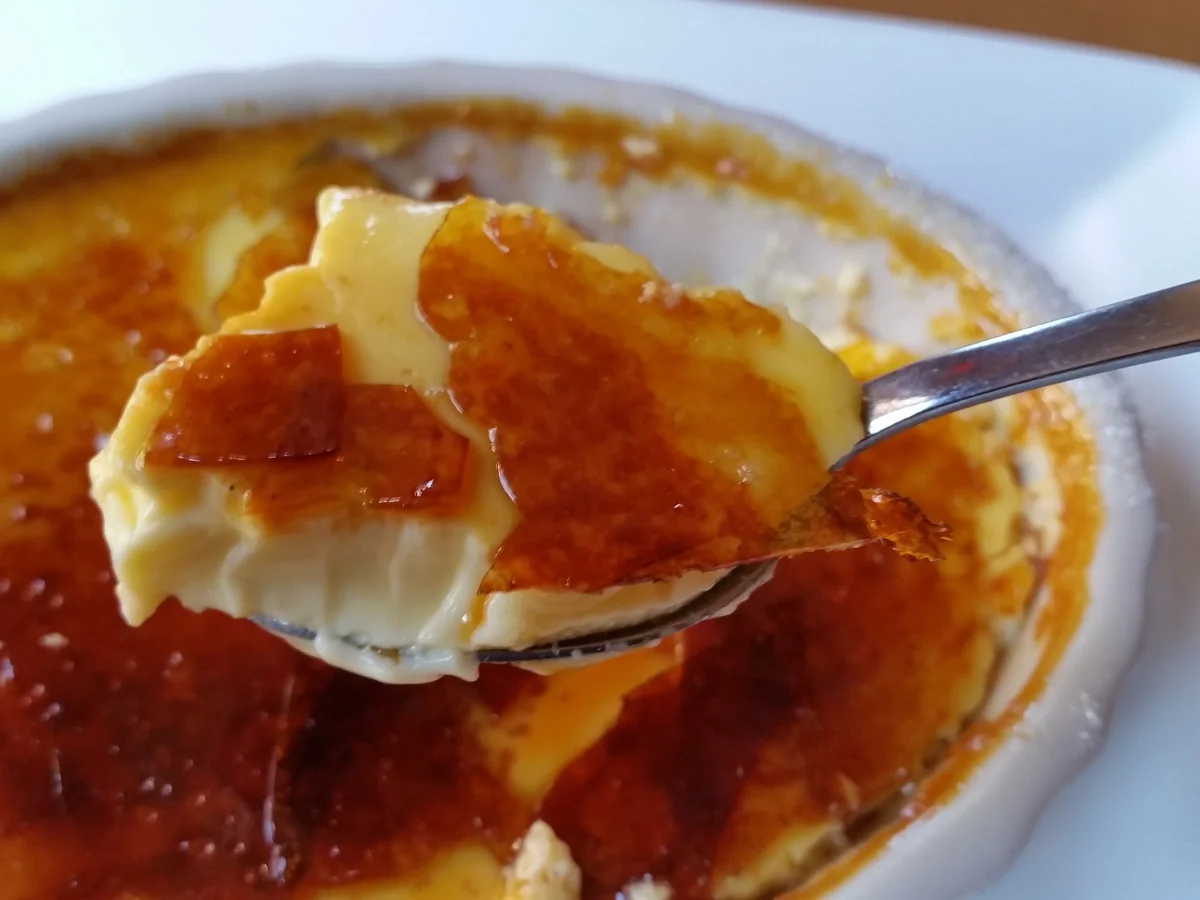
Crème brûlée is a smooth baked custard finished with a thin, crisp layer of caramelised sugar. This French classic takes a little time to chill, but its creamy centre and crackable topping make it a rewarding make-ahead dessert.
Ingredients
- 600 mlcream
- 4egg yolks
- 5 mlcornflour
- 100 gsugar
- 5 mlvanilla extract
Instructions
- 1
Mix the yolks
In a small bowl, whisk the cornflour into the egg yolks until it has dissolved.
- 2
Warm the cream
Heat the cream in a saucepan until warm, taking care not to let it boil.
- 3
Add flavourings
Take the pan off the heat. Add 50 g of the sugar and the vanilla extract, then stir until the sugar dissolves.
- 4
Combine and strain
Slowly pour the warm cream into the yolk mixture, stirring with a wooden spoon as you go. Pass the mixture through a fine sieve.
- 5
Fill the ramekins
Scoop off any foam, then divide the custard mixture between the ramekins.
- 6
Prepare the water bath
Set the ramekins in a deep oven dish and pour in warm water until it comes halfway up their sides.
- 7
Cover the dish
Cover the dish with foil and pierce the foil with a small knife. This shields the custard tops while allowing steam to escape.
- 8
Bake the custards
Bake at 150°C until just set, about 45 minutes. Ovens vary, so the custards may need longer. One option is to bake for 45 minutes, switch off the oven and leave the custards inside for 30 minutes as it cools.
- 9
Chill the custards
Once cooked, cool the custards to room temperature, then refrigerate for at least 4 hours.
- 10
Caramelise the tops
To serve, sprinkle the remaining sugar over the custards and caramelise it with a crème brûlée torch. Roll each ramekin from side to side to spread the caramel evenly.
What is crème brûlée?
Crème brûlée, meaning “burnt cream”, is a French dessert of baked custard topped with caramelised sugar. An early version appears in the French cookbook Le Cuisinier Royal, published in 1691.
This version uses a water bath and a covered baking dish to help the custards cook gently. A final sprinkle of sugar gives each serving its crisp top.
Nutrition and macros by portion
The nutrition label shows one serving as written: 152 calories, 0g protein, 0g carbs, 0g fat.
| Portion | Adjustment | kcal | Protein | Carbs | Fat |
|---|---|---|---|---|---|
| Lighter | Smaller ramekin portion | 106 kcal | 0g | 0g | 0g |
| This serving | As written | 152 kcal | 0g | 0g | 0g |
| Hungry | Larger ramekin portion | 228 kcal | 0g | 0g | 0g |
Cream supplies most of the fat, the sugar provides the carbohydrates, and the egg yolks contribute protein as well as fat. Serve a ramekin with fresh fruit on the side for a simple way to balance the dessert.
Choosing the ingredients
Cream: It gives the custard its rich, silky texture, so use cream rather than substituting milk if you want the intended result.
Egg yolks: These help the mixture set while keeping its texture tender. Whisk them with the cornflour until it is fully dissolved before adding the cream.
Sugar and vanilla: Half of the sugar sweetens the custard, while the rest is reserved for the topping. Vanilla extract adds flavour without changing the simple method.
Mixing a smooth custard
Warm cream: Heat it gently and stop before it boils; boiling is not needed for this recipe.
Combining: Add the cream gradually while stirring the yolks. Pouring slowly helps bring the mixtures together without leaving streaks of yolk.
Straining: Pass the mixture through a fine sieve to catch any lumps. Removing the foam before filling the ramekins also helps keep the tops smooth.
Using a water bath
Water level: Add warm water to the oven dish until it reaches halfway up the ramekins. This lets them bake in a gentler, more even environment.
Foil cover: Pierce the foil with a small knife so steam can escape while the cover protects the custard tops from scalding.
Careful handling: Take care when moving the dish, as the water will be hot after baking.
Checking when they are set
The recipe gives about 45 minutes at 150°C as a guide, but baking time can vary between ovens. The custards should be just set rather than baked until firm.
For the suggested alternative, bake for 45 minutes, switch off the oven and leave the ramekins inside for a further 30 minutes as it cools. Cool to room temperature before chilling for at least 4 hours.
Getting the caramel top right
Sprinkle the reserved sugar over the chilled custards shortly before serving, then use a crème brûlée torch to caramelise it. Roll each ramekin gently from side to side to help distribute the sugar evenly.
The topping is best served soon after caramelising, while it is crisp and the custard beneath is cold.
Serving crème brûlée
Serve the custards in their ramekins so the crisp sugar layer stays intact. A small spoon lets each person crack through the top and scoop up custard in the same bite.
The dessert is rich, so fresh berries or sliced fruit make a simple accompaniment. Keep the fruit on the side to preserve the contrast between the cold custard and the caramel top.
Recipe notes & tips
- Measure out 50 g of the sugar for the custard so the remainder is ready for the topping.
- Use a fine sieve to strain the custard before dividing it between the ramekins.
- Remove foam from the surface before filling the ramekins for a smoother finish.
- Pour warm water carefully into the oven dish after arranging the ramekins.
- Allow the custards to chill for at least 4 hours before serving.
- Caramelise the sugar shortly before serving for the crispest topping.
Variations
- Citrus note: Add finely grated citrus zest to the warm cream, then strain it out with the custard.
- Coffee flavour: Infuse the warm cream with coffee, then strain before combining it with the yolks.
- Fruit side: Serve with fresh berries or sliced seasonal fruit.
- Vanilla bean: Use the seeds from a vanilla pod in place of the vanilla extract.
- Smaller servings: Divide the custard among more, smaller ramekins and check them as they bake.
Common mistakes to avoid
- Boiling the cream: Heat it gently and remove it from the hob before it boils.
- Adding cream too quickly: Pour it in gradually while stirring the yolk mixture.
- Skipping the sieve: Strain the custard to remove lumps before filling the ramekins.
- Overbaking: Check around 45 minutes and take the custards out when they are just set.
- Insufficient chilling: Refrigerate for at least 4 hours so the custards have time to chill.
- Caramelising too early: Torch the sugar close to serving so the top remains crisp.
How to store
Cover and refrigerate the uncaramelised custards, and aim to eat them within 2 days for the best texture. Add and torch the sugar just before serving; the caramel topping softens in the fridge. This dessert is best served chilled rather than reheated.
Frequently asked questions
How can I tell when the custards are ready?
Use the recipe’s 45-minute baking time as a guide, as ovens vary. The custards should be just set, not firm.
Can I make crème brûlée ahead?
Yes. Bake and chill the custards in advance, then caramelise the sugar just before serving.
Why is there a water bath?
The warm water surrounds the ramekins and helps the custards bake gently. Fill the oven dish to halfway up their sides.
What if I do not have a crème brûlée torch?
The supplied method uses a crème brûlée torch to caramelise the sugar. Without one, you can serve the chilled custards without the brûléed topping.
Can I use caster sugar for the topping?
The recipe specifies sugar without giving a type. Use the remaining sugar from the measured 100 g for the topping.
How long should the custards chill?
Cool them to room temperature first, then refrigerate for at least 4 hours.
Cook it from the original
This recipe comes from cheflouisnel.co.za. Their page has the author’s own photos, notes and tips — the best place to cook it from.
Open the recipe on cheflouisnel.co.za