
Mom's Potato Masala for Pooris
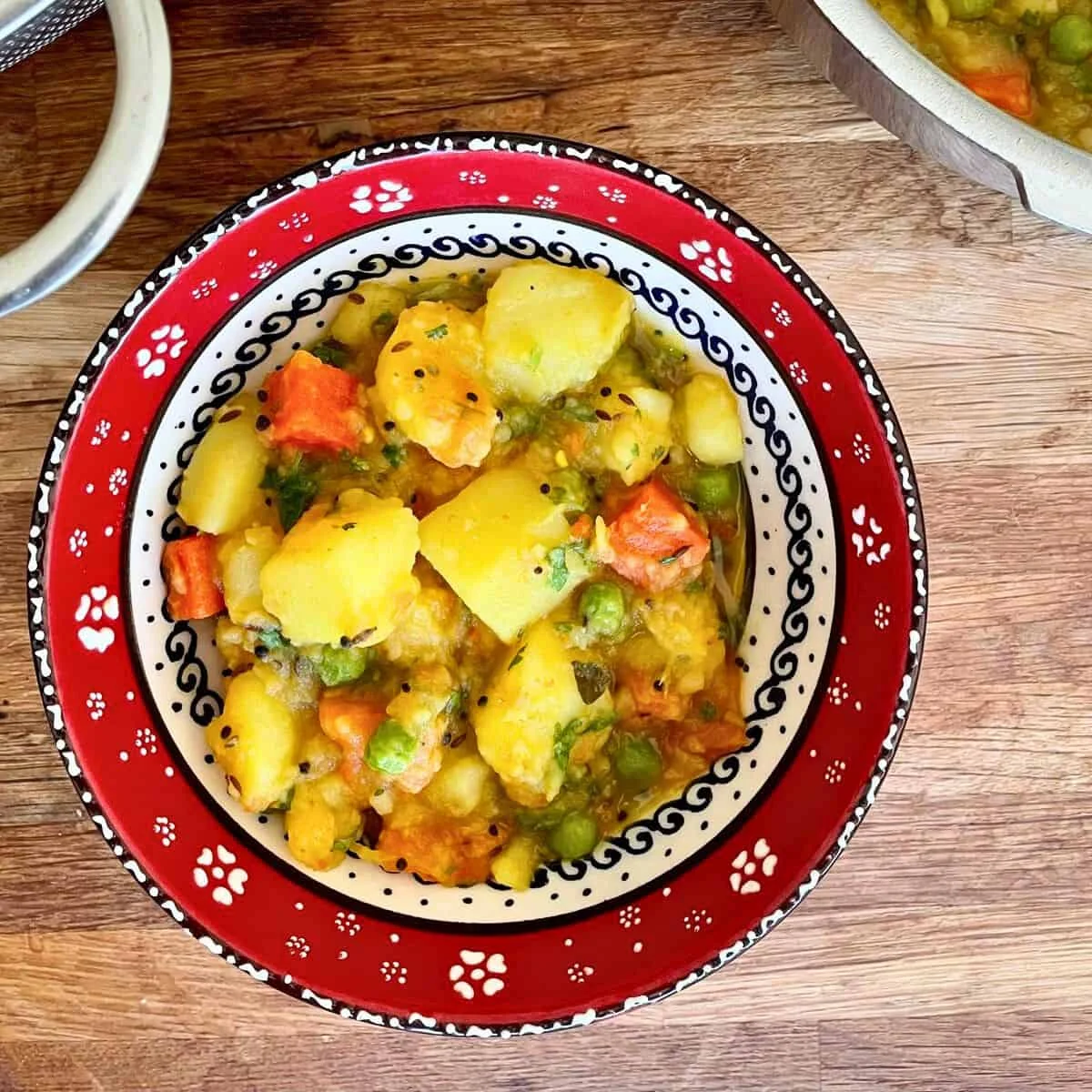
A gently spiced South Indian potato masala with carrots and peas, cooked until creamy and tender. Serve it warm with fluffy pooris, chapati or dosa for a comforting breakfast or meal.
Ingredients
- 15 mlcooking oil (coconut oil, ghee or sunflower oil)
- 2.5 mlmustard seeds
- 1.25 mlcumin seeds (optional)
- 1 sprigcurry leaves
- 2 mediumred onions
- 1.3 cmginger
- 3–5green chillies
- 1 largetomato
- 500 g (about 4–5 small)potatoes
- 1carrot
- 80 mlfrozen or boiled green peas
- 2.5 mlturmeric powder
- 120–180 mlwater
- to tastesalt
- to tastefresh coriander leaves
Instructions
- 1
Prepare the vegetables
Finely slice the onions, chop the green chillies and grate the ginger. Roughly chop the tomato, then cut the potatoes and carrot into similar-sized cubes of about 1.3 cm. If using frozen peas, place them in a bowl of water to thaw; alternatively, use peas that have already been boiled. Chop the washed coriander leaves.
- 2
Temper the spices
Heat the oil in a pressure cooker over a medium-low heat. Add the mustard seeds and let them splutter, then add the cumin seeds, if using, and a few curry leaves.
- 3
Cook the aromatics
Add the onions and sauté until translucent. Stir in the green chillies and grated ginger and cook until their raw smell fades. Add the tomato with a dash of salt and sauté.
- 4
Add vegetables
Stir in the potatoes, carrot and turmeric. Pour in just enough water to barely cover the potatoes, and add a little salt if you like.
- 5
Pressure cook
Close the cooker and cook over a medium-high heat for one long whistle. Switch off the heat before a second whistle, then leave the pressure to release naturally.
- 6
Simmer the peas
Open the cooker and add the thawed green peas, along with a little more water if needed. Boil for 5 minutes or until the peas are cooked.
- 7
Finish and serve
Stir in the chopped coriander leaves and serve warm with fresh pooris.
What is poori masala?
Poori masala is a South Indian potato curry commonly served alongside pooris, puffed deep-fried breads. The soft vegetables and mild, fragrant seasoning make it a familiar breakfast pairing, though it also works for a simple lunch.
This version combines potatoes with carrot and peas, then cooks them in a tempering of mustard seeds, curry leaves, ginger and chilli. Pressure cooking helps the potatoes soften and gives the curry its creamy, home-style texture.
Nutrition and macros by portion
The nutrition label shows one serving as written: 198 calories, 5g protein, 33g carbs, 5g fat.
| Portion | Adjustment | kcal | Protein | Carbs | Fat |
|---|---|---|---|---|---|
| Lighter | Serve with chapati | 139 kcal | 4g | 23g | 4g |
| This serving | As written | 198 kcal | 5g | 33g | 5g |
| Hungry | Larger portion with pooris | 297 kcal | 8g | 50g | 8g |
The potatoes provide most of the carbohydrate, while the oil contributes most of the fat; the peas and other vegetables add a little protein. Pair a serving with chapati or dosa rather than pooris if you want a less rich plate, or add another vegetable alongside it.
Build flavour in the cooker
Mustard seeds: let them splutter in the hot oil before adding the other aromatics; this is the first layer of flavour in the masala.
Onion and ginger: cook the onions until translucent, then sauté the ginger and chillies until their raw smell fades. The tomato goes in afterwards with a little salt.
Cut the vegetables evenly
Potatoes and carrot: aim for cubes of about 1.3 cm so they cook at a similar rate. Keeping the pieces close in size also makes the finished masala easier to serve.
Peas: add them after pressure cooking, as the recipe directs. Their short simmer keeps them from becoming overcooked while the potatoes finish softening.
Watch the pressure-cooking stage
The recipe calls for one long whistle over a medium-high heat, with the cooker switched off before a second whistle. Let the pressure release naturally before opening it.
Cooker behaviour can vary, so use the specified whistle cue rather than forcing the lid open. Once open, simmer the peas for 5 minutes, or until cooked.
Adjust the consistency
Water: add just enough at the start to barely cover the potatoes. After pressure cooking, add a little more only if the masala needs loosening before the peas simmer.
Texture: the potatoes should be tender, while the peas remain distinct. Stir in the coriander at the end so it stays fresh and fragrant.
Choose a serving partner
Pooris: serve the masala warm with freshly made pooris for the classic pairing. The soft curry is easy to scoop up with the puffed bread.
Other breads: chapati or dosa also make a good match. For a lighter plate, serve the masala with one of these instead of deep-fried pooris.
Recipe notes & tips
- Cut the potatoes and carrot into similarly sized cubes so they cook evenly.
- Use the lower end of the chilli range for a milder masala.
- If using frozen peas, thaw them in water while you prepare the other ingredients.
- Add water sparingly before pressure cooking; you can loosen the masala later if needed.
- Wait for the pressure to release naturally before opening the cooker.
- Add the coriander just before serving for a fresh finish.
Variations
- Use ghee: choose it instead of cooking oil for a richer flavour.
- Skip the cumin: leave it out for a simpler tempering.
- Adjust the heat: use fewer green chillies for a milder curry.
- Use boiled peas: add them in place of thawed frozen peas.
- Serve with dosa: spoon the masala alongside dosa instead of pooris.
Common mistakes to avoid
- Uneven vegetable pieces: cut the potatoes and carrot to similar sizes so they cook at the same pace.
- Too much water: add only enough to barely cover the potatoes, then loosen the curry after pressure cooking if needed.
- Opening too soon: allow the pressure to release naturally before opening the cooker.
- Overcooking the peas: add them after pressure cooking and simmer for 5 minutes or until cooked.
- Adding coriander early: stir it in at the end to keep its flavour fresh.
How to store
Cool leftovers promptly and store them in an airtight container in the fridge for up to 3 days. Reheat gently in a saucepan until piping hot, adding a splash of water if the masala has thickened.
Frequently asked questions
Can I make this without a pressure cooker?
The method provided uses a pressure cooker. For a stovetop version, cook the vegetables in a covered pan until tender, checking them and adding water as needed.
How spicy is this potato masala?
It is described as mildly spiced, but 3–5 green chillies can make a noticeable difference. Use fewer chillies if you prefer less heat.
Can I use boiled potatoes?
This recipe adds raw cubed potatoes to the cooker. Boiled potatoes will soften more quickly, so the pressure-cooking timing in the recipe may not suit them.
When should I add the peas?
Add thawed frozen peas, or previously boiled peas, after opening the pressure cooker. Simmer for 5 minutes or until they are cooked.
What can I serve with poori masala?
Fresh pooris are the classic choice, and the recipe also suggests chapati or dosa.
Cook it from the original
This recipe comes from butfirstchai.com. Their page has the author’s own photos, notes and tips — the best place to cook it from.
Open the recipe on butfirstchai.com