
Feijoada
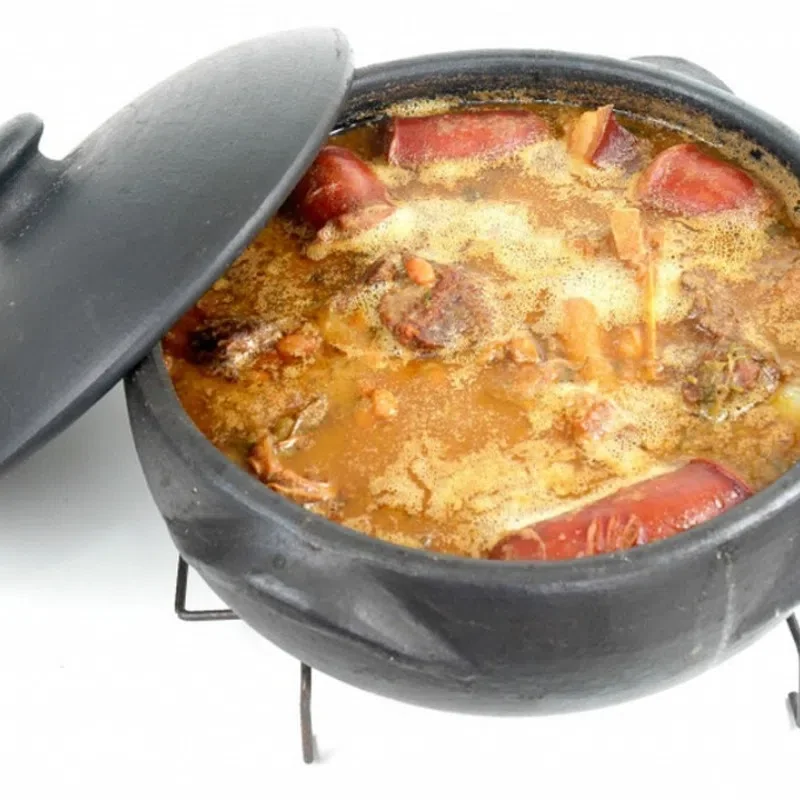
Feijoada is a slowly simmered Portuguese bean and meat stew, here made with pork, sausages and smoky ham. It is a hearty dish to serve with white rice, though the supplied ingredient list does not give quantities or include the beans and rice mentioned in the method.
Ingredients
- to tastepork ears
- to tastepork shank
- to tastePortuguese pork sausage
- to tastesalpicão
- to tastesmoked presunto ham
- to tasteolive oil
- to tasteonion
- to tastefresh parsley
- to tastebay leaf
- to tastegarlic
- to tastewhite pepper
- to tastesweet paprika
- to tastepiri-piri
- to tastesalt
Instructions
- 1
Soak the beans
Soak the beans for 12 hours, then cook them in the same soaking water. The ingredient list does not specify an amount of beans.
- 2
Cook the meats
In a separate pan, cook the meat ingredients. Cut the cooked meat into small pieces and slice the sausages into rings.
- 3
Brown the onion
Heat the olive oil in a large pan and lightly brown the onion.
- 4
Combine beans and meat
Add the beans with half of their cooking broth. Add the meat and half of its cooking liquid.
- 5
Add the seasonings
Stir in the bay leaf, piri-piri and fresh parsley, along with the other listed ingredients.
- 6
Simmer until creamy
Cook until the mixture reaches a creamy consistency.
- 7
Serve with rice
Serve the stew with white rice, as suggested in the method.
What is feijoada?
Feijoada is a Portuguese bean stew cooked with a range of meats and sausages. Its ingredients and character vary by region; this version is described as coming from northern Portugal.
The method builds flavour by cooking the beans and meats separately, then bringing them together with their cooking liquids. The list supplied for this recipe omits the beans and rice named in the method, so add those before cooking.
Nutrition and macros by portion
The nutrition label shows one serving as written: 1050 calories, 65g protein, 80g carbs, 48g fat.
| Portion | Adjustment | kcal | Protein | Carbs | Fat |
|---|---|---|---|---|---|
| Lighter | Use leaner pork cuts | 735 kcal | 46g | 56g | 34g |
| This serving | As written | 1050 kcal | 65g | 80g | 48g |
| Hungry | Serve with extra rice | 1575 kcal | 98g | 120g | 72g |
The pork, sausages and presunto are the main sources of protein and fat, while the beans named in the method would provide much of the carbohydrate and additional protein. The supplied ingredient list has no quantities and omits both beans and rice, so a reliable per-serving macro estimate is not possible; serve with rice and a generous portion of vegetables to round out the plate.
The beans and cooking liquid
Soaking: The method calls for a 12-hour soak, followed by cooking the beans in their soaking water. Allow for that soaking time in addition to the stated 120-minute total.
Broth: Keep the bean and meat cooking liquids, as the method uses half of each in the stew. Their starch and flavour help the mixture become creamy as it cooks.
Preparing the meat
Cutting: Once cooked, cut the pork into small pieces and slice the sausages into rings. Similar-sized pieces are easier to serve and distribute through the beans.
Variety: Pork ears, shank, Portuguese sausage, salpicão and presunto provide different textures and savoury notes. The ingredient list gives no quantities, so it cannot establish the intended balance between them.
Building the stew
Onion: Brown it lightly in olive oil in a large pan before adding the beans. Keep the heat moderate so it softens and colours without scorching.
Seasonings: Bay leaf, parsley and piri-piri go in after the beans and meat. Add white pepper, sweet paprika, garlic and salt from the ingredient list to suit your taste.
Getting the texture right
Consistency: The stated cue is a creamy texture. Let the stew cook gently so the flavours meld, checking it regularly as it thickens.
Adjustment: If it becomes thicker than you want, loosen it with a little reserved cooking liquid. Stir carefully to keep the beans and meat intact.
Timing and serving
Planning: The recipe states a total time of 120 minutes, but the 12-hour bean soak is additional. Start soaking the beans well ahead of the cooking session.
To serve: The method pairs feijoada with white rice. Rice is not listed among the supplied ingredients, so make sure to have it ready separately.
Recipe notes & tips
- Begin soaking the beans 12 hours before you plan to cook.
- Cook the beans and meats separately, as directed, and reserve both cooking liquids.
- Cut the cooked meat into small, even pieces for easier serving.
- Brown the onion gently rather than letting it become dark or bitter.
- Add piri-piri gradually, tasting as you go.
- Check the stew as it thickens and loosen it with reserved broth if needed.
Variations
- Adjust the heat: Use less piri-piri for a milder stew.
- More parsley: Add extra fresh parsley at the end for a brighter finish.
- Change the sausage balance: Use more Portuguese sausage or salpicão to shift the smoky, savoury flavour.
- Serve simply: Keep white rice on the side so it can be added to taste.
- Thicker finish: Simmer gently for longer if the stew needs to reduce further.
Common mistakes to avoid
- Skipping the soak: The method calls for 12 hours; plan ahead before cooking the beans.
- Discarding the broth: Keep the cooking liquids, since the method uses them in the stew.
- Cutting the meat too large: Small pieces are easier to combine and serve.
- Browning the onion too hard: Keep it lightly coloured to avoid a burnt flavour.
- Adding too much piri-piri at once: Start with a little and adjust after tasting.
- Expecting the listed total time to include soaking: The 12-hour soak is additional to the stated 120 minutes.
How to store
Cool leftovers promptly and store them in a covered container in the fridge for up to 3 days. Reheat gently in a pan until piping hot, adding a splash of water or reserved broth if the stew has thickened.
Frequently asked questions
How long do the beans need to soak?
The method specifies 12 hours. This soaking time is in addition to the stated 120-minute total cooking time.
Can I cook the meat and beans together?
The method cooks them in separate pans first, then combines them with some of each cooking liquid. Following that sequence keeps the preparation in line with the recipe.
What does salpicão mean here?
It is listed as one of the meats, but the recipe gives no further description or quantity. Use the product you can identify as salpicão from your local shop.
How do I know when the feijoada is ready?
Cook it until it has a creamy consistency, the doneness cue given in the method. If it thickens too much, stir in some reserved cooking liquid.
What should I serve with feijoada?
The method recommends white rice. Rice is not included in the supplied ingredient list, so prepare it separately.
Why are beans missing from the ingredient list?
The method clearly calls for beans, including a 12-hour soak, but the supplied list does not include them or give an amount. Add beans before cooking, using a quantity appropriate for the number of portions.
Cook it from the original
This recipe comes from bonduelle.am. Their page has the author’s own photos, notes and tips — the best place to cook it from.
Open the recipe on bonduelle.am