
Purslane Leaves Flatbread | Kulfa Paratha
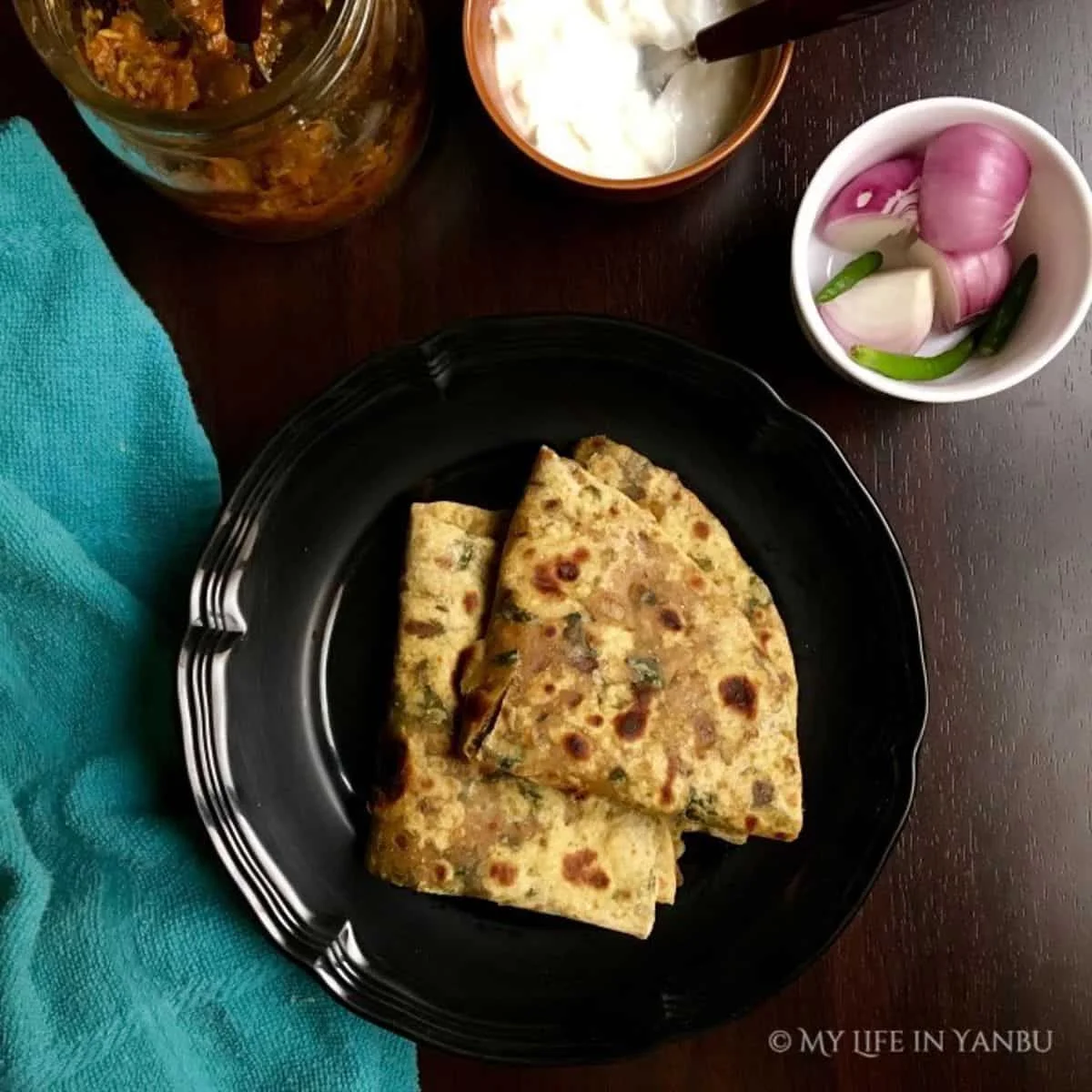
Kulfa paratha is an Indian flatbread made with purslane leaves, whole wheat flour and warming spices. The greens are cooked into a savoury mixture before being worked into the dough, making these parathas a flavourful choice with curd and pickle.
Ingredients
- 2 teaspoonscooking oil
- 1 teaspooncumin seeds
- 1 mediumonion, finely diced
- 4 to 5 clovesgarlic, minced
- 1/2 teaspoonturmeric powder
- 2green chillies, finely chopped
- about 80 g (2 cups)purslane leaves, rinsed and drained
- 1/2 teaspoon, optionalchaat masala
- about 240 g (2 cups)whole wheat flour
- to tastesalt
- as neededwater, for the dough
- as neededghee
Instructions
- 1
Temper the spices
Heat the oil in a shallow pan over medium heat. Add the cumin seeds and let them splutter, then add the onion, garlic and green chillies. Fry until the garlic begins to brown and the onion is golden.
- 2
Cook the greens
Stir in the turmeric and cook for a few seconds. Add the purslane and chaat masala. Taste before adding salt, since the chaat masala may already be salty. Cook over medium heat until the leaves wilt and their moisture reduces.
- 3
Cool the mixture
Turn off the heat, transfer the mixture to a bowl and leave it to cool completely.
- 4
Rub into flour
Once cool, add the purslane mixture to the whole wheat flour. Rub it into the flour between your palms until combined.
- 5
Knead the dough
Add a little water at a time and knead until the dough comes together and is slightly sticky. If it is difficult to handle, grease your hands with oil or work in a little more flour.
- 6
Divide and cover
Divide the dough into equal-sized balls and keep them covered.
- 7
Roll and cook
Heat a tawa and roll each ball into a flat paratha. Cook on the hot tawa, turning to cook both sides with ghee. Serve hot with curd and pickles.
What is kulfa paratha?
Paratha is a South Asian flatbread, and kulfa is the name used for purslane in parts of the region. This version folds cooked, seasoned greens into whole wheat dough rather than using a separate filling.
Cooking the leaves first softens them and reduces their moisture, while cumin, garlic, chilli and turmeric bring savoury flavour to the dough.
Nutrition and macros by portion
The nutrition label shows one serving as written: 145 calories, 4g protein, 27g carbs, 4g fat.
| Portion | Adjustment | kcal | Protein | Carbs | Fat |
|---|---|---|---|---|---|
| Lighter | Use less ghee | 102 kcal | 3g | 19g | 3g |
| This serving | As written | 145 kcal | 4g | 27g | 4g |
| Hungry | Serve an extra paratha | 218 kcal | 6g | 40g | 5g |
The whole wheat flour provides most of the carbohydrates, while the cooking oil and ghee contribute fat; the flour and purslane contribute some protein. Serve a paratha with curd and a portion of vegetables for a more varied plate.
Choosing and preparing the greens
Purslane leaves: Rinse and drain them well before cooking. They wilt down in the pan, so the mixture becomes easier to work into the flour.
Chaat masala: It is optional, but adds a tangy seasoning. Taste the mixture before adding salt because the masala can already contain salt.
Build flavour in the pan
Cumin: Let the seeds splutter in the hot oil to release their aroma before adding the onion.
Onion and garlic: Cook until the onion is golden and the garlic begins to brown, then add turmeric briefly before the greens. Keep the heat at medium so the garlic does not burn.
Get the dough texture right
Rub first: Combine the cooled greens with the flour between your palms before adding water. This spreads the mixture through the flour and helps you judge how much water the dough needs.
Add water gradually: The recipe calls for a slightly sticky dough, so pour in a little at a time and stop when it comes together. Oil on your hands can make kneading easier; a little extra flour is another option if it is too sticky.
Roll and cook evenly
Keep covered: Cover the dough balls while you work so they do not dry out.
Watch the heat: Cook each rolled paratha on a hot tawa and turn it to cook both sides. Use ghee while cooking, and serve the flatbreads hot.
What to serve alongside
Curd: Its cool, creamy texture makes a simple accompaniment to the spiced flatbread.
Pickles: A small serving adds a sharp, tangy contrast. You can also pair the parathas with other dishes already on the table.
Recipe notes & tips
- Drain the rinsed purslane well so excess water does not make the dough difficult to handle.
- Let the cooked greens cool completely before adding them to the flour.
- Add water in small amounts because the greens may still contribute some moisture.
- Keep the divided dough covered while rolling each paratha.
- Taste the greens before seasoning with salt if using chaat masala.
Variations
- Adjust the chilli: Use fewer green chillies for a milder paratha.
- Skip the masala: Leave out the optional chaat masala and season with salt to taste.
- Change the cooking fat: Use butter instead of ghee when cooking the parathas, as suggested in the method.
- Add a side: Serve with curd and pickle for a simple accompaniment.
- Make smaller breads: Divide the dough into more, smaller balls and roll each one out.
Common mistakes to avoid
- Adding salt too soon: Chaat masala can be salty, so taste the greens first.
- Using warm greens: Cool the mixture completely before rubbing it into the flour.
- Pouring in too much water: Add it gradually and stop once the dough comes together.
- Leaving dough uncovered: Keep the dough balls covered while you roll the others.
- Burning the garlic: Cook over medium heat and add the greens once the garlic just begins to brown.
How to store
Let leftover parathas cool, then refrigerate them in an airtight container for up to 3 days. Reheat on a hot tawa until warmed through.
Frequently asked questions
Can I leave out the chaat masala?
Yes. It is optional; taste the greens and add salt to suit your preference.
How much water should I use for the dough?
The recipe does not specify an exact amount. Add it a little at a time until the dough comes together and is slightly sticky.
Why should the purslane mixture cool before mixing?
Cooling it completely makes it easier to rub into the flour and prevents you from handling a hot mixture while preparing the dough.
What if the dough is too sticky?
Grease your hands with oil while kneading or work in a little more flour, as the recipe suggests.
What can I serve with kulfa paratha?
Serve it hot with curd and pickles.
Cook it from the original
This recipe comes from butfirstchai.com. Their page has the author’s own photos, notes and tips — the best place to cook it from.
Open the recipe on butfirstchai.com