
Sweet Corn Paratha Recipe
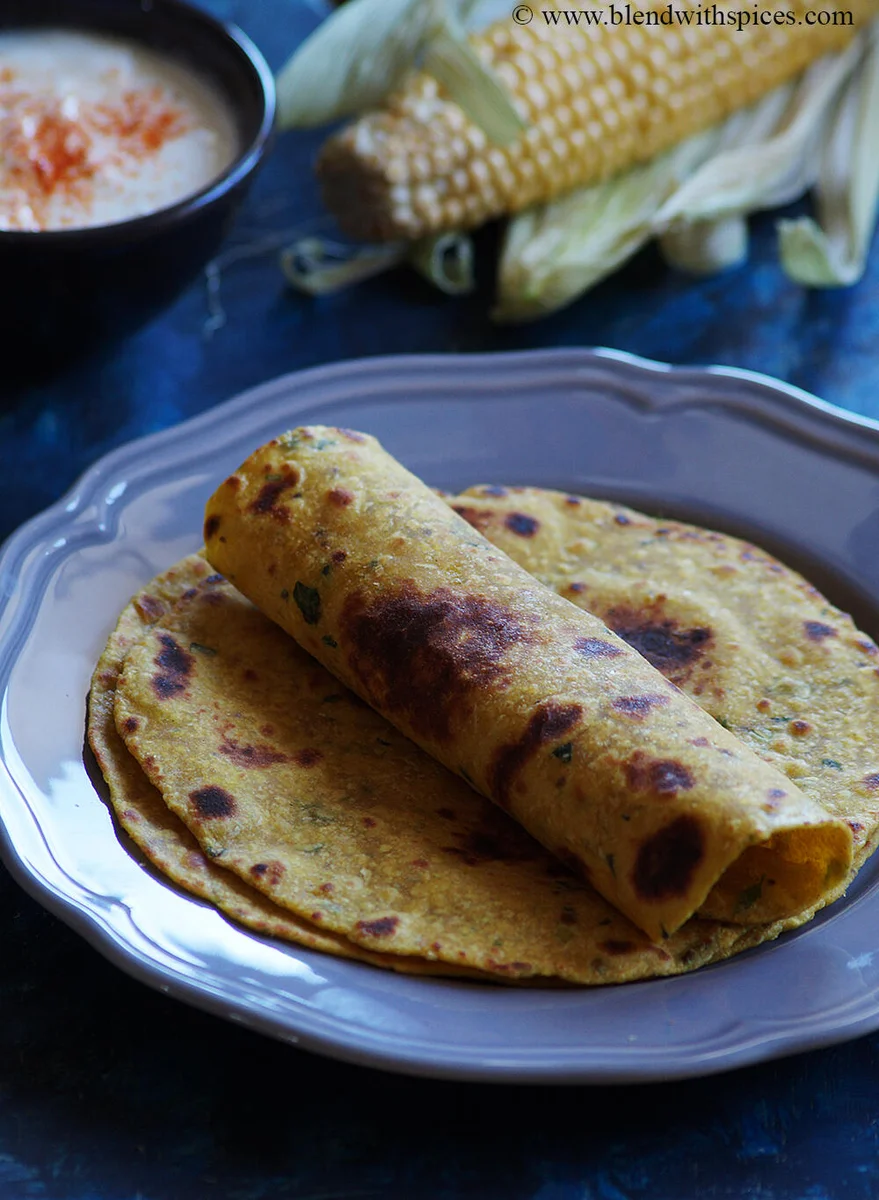
Sweet corn parathas are soft Indian flatbreads made with whole wheat flour, a smooth corn and chilli paste, and fragrant spices. They make a quick, savoury accompaniment for raita, dal or curry.
Ingredients
- 150 g (1 cup)sweet corn
- 180 g (1½ cups)wholemeal flour
- 2green chillies
- 8 g (2 tbsp)coriander leaves
- ½ tspcarom seeds (ajwain)
- ¼ tspturmeric
- to tastesalt
- 1 tbspoil, for the dough
Instructions
- 1
Blend the corn
Put the sweet corn and green chillies in a blender or food processor and blend to a smooth paste.
- 2
Mix the ingredients
In a mixing bowl, combine the wholemeal flour, corn paste, carom seeds, turmeric, salt and coriander leaves.
- 3
Knead the dough
Mix and knead until the dough is smooth and soft. Add a little water if needed.
- 4
Rest the dough
Cover the dough and leave it to rest for 15–30 minutes.
- 5
Shape the portions
Divide the dough into 10 equal-sized balls and flatten each one slightly.
- 6
Roll the parathas
Dust each ball with wholemeal flour and roll it into a round flatbread.
- 7
Cook the first side
Place a rolled paratha on a hot pan. Press it gently and cook for 1 minute.
- 8
Flip and finish
Flip the paratha, drizzle with a little oil or ghee, and cook on both sides.
- 9
Keep them covered
Remove each hot paratha from the pan and place it in a bowl, then cover with a lid.
- 10
Serve the parathas
Serve hot with raita, dal or curry.
What is sweet corn paratha?
Paratha is a South Asian flatbread with many regional and household variations. This version mixes wholemeal flour with sweet corn, chilli and spices for a soft, savoury bread.
Blending the corn helps it work into the dough, while carom seeds and coriander add aromatic flavour. The flatbreads cook quickly on a hot pan and suit a range of Indian meals.
Nutrition and macros by portion
The nutrition label shows one serving as written: 92 calories, 2g protein, 16g carbs, 2g fat.
| Portion | Adjustment | kcal | Protein | Carbs | Fat |
|---|---|---|---|---|---|
| Lighter | Use less cooking oil | 64 kcal | 1g | 11g | 1g |
| This serving | As written | 92 kcal | 2g | 16g | 2g |
| Hungry | Serve extra parathas | 138 kcal | 3g | 24g | 3g |
The wholemeal flour and sweet corn provide most of the carbohydrate, while the small amount of oil contributes fat; the flour supplies some protein. Pair a paratha with dal or a vegetable-rich curry and raita for a more rounded plate.
The corn and flour
Corn paste: Blend the sweet corn and chillies until smooth so the mixture combines evenly with the flour. If the paste is very thick, add water only when kneading the dough calls for it.
Wholemeal flour: It gives the parathas their hearty texture and forms the structure of the dough. Dust lightly when rolling to stop the dough sticking without making the finished bread dry.
Seasoning the dough
Carom seeds: These small seeds have a distinct, savoury aroma; crush them lightly between your fingers as you add them if you want to release more fragrance.
Chilli and herbs: Green chillies bring heat, while coriander leaves add freshness. The amount of chilli can be adjusted to suit your preference.
Resting and rolling
Rest: Cover the dough and leave it for 15–30 minutes, as directed. This gives the flour time to hydrate and can make the dough easier to roll.
Rolling: Divide the dough into 10 even balls for consistent portions. Roll each one into a round, even disc; avoid pressing so hard that the dough tears.
Cooking cues
Hot pan: Start with a properly heated pan so the paratha cooks promptly. Press gently while it cooks, especially around the edges.
Doneness: Flip after about 1 minute on the first side, then cook the other side with a little oil or ghee. Look for cooked, lightly coloured patches and a bread that feels cooked through rather than doughy.
Serving ideas
With a meal: Serve the parathas hot alongside raita, dal or curry, as the recipe suggests. Their mild sweetness and spice work well with cooling or saucy accompaniments.
For a simple plate: Add a bowl of yoghurt-based raita and a vegetable curry, or serve them as a side with lentils.
Recipe notes & tips
- Blend the corn and chillies until smooth so larger pieces do not interrupt rolling.
- Add water sparingly while kneading; the corn paste already brings moisture to the dough.
- Keep the dough covered during its 15–30-minute rest so the surface does not dry out.
- Dust the work surface lightly rather than adding lots of flour to each paratha.
- Keep cooked parathas covered in a bowl to help them stay soft until serving.
Variations
- Milder chilli: Remove the seeds from the green chillies before blending.
- More herbs: Add extra coriander leaves for a fresher flavour.
- Ghee finish: Use ghee instead of oil when cooking the parathas.
- Spicier dough: Add a little more green chilli to the corn paste.
- Serve with yoghurt: Pair the parathas with plain yoghurt or raita for a cooling accompaniment.
Common mistakes to avoid
- Coarse corn paste: Blend until smooth so the dough rolls more evenly.
- Too much water: Add it gradually while kneading to avoid a sticky dough.
- Dry dough surface: Cover the dough while it rests to prevent a crust forming.
- Heavy flouring: Use only a light dusting when rolling so the parathas do not turn dry.
- Pan not hot enough: Heat the pan before cooking so the bread cooks rather than drying out slowly.
How to store
Cool the parathas, then refrigerate in an airtight container for up to 3 days. Reheat in a hot pan until warmed through, adding a little oil or ghee if desired.
Frequently asked questions
Can I use frozen sweet corn?
Yes. Thaw it first and drain away excess liquid before blending.
How do I know if the dough needs water?
Knead the corn mixture and flour first. Add a little water only if the dough will not come together or feels dry.
Can I make the dough ahead?
You can prepare it ahead and keep it covered in the fridge. Bring it closer to room temperature before dividing and rolling.
What can I use instead of carom seeds?
The flavour will differ, but you can leave them out if needed. The corn, chilli and coriander will still season the parathas.
Can I cook these without ghee?
Yes. Use oil for cooking, or cook them with little or no added fat in a suitable non-stick pan.
Why are my parathas breaking as I roll them?
The dough may be too dry or the corn pieces may be too coarse. Knead in a little water if needed and make sure the corn is blended smoothly.
Cook it from the original
This recipe comes from blendwithspices.com. Their page has the author’s own photos, notes and tips — the best place to cook it from.
Open the recipe on blendwithspices.com