
Sourdough Bread with Zucchini
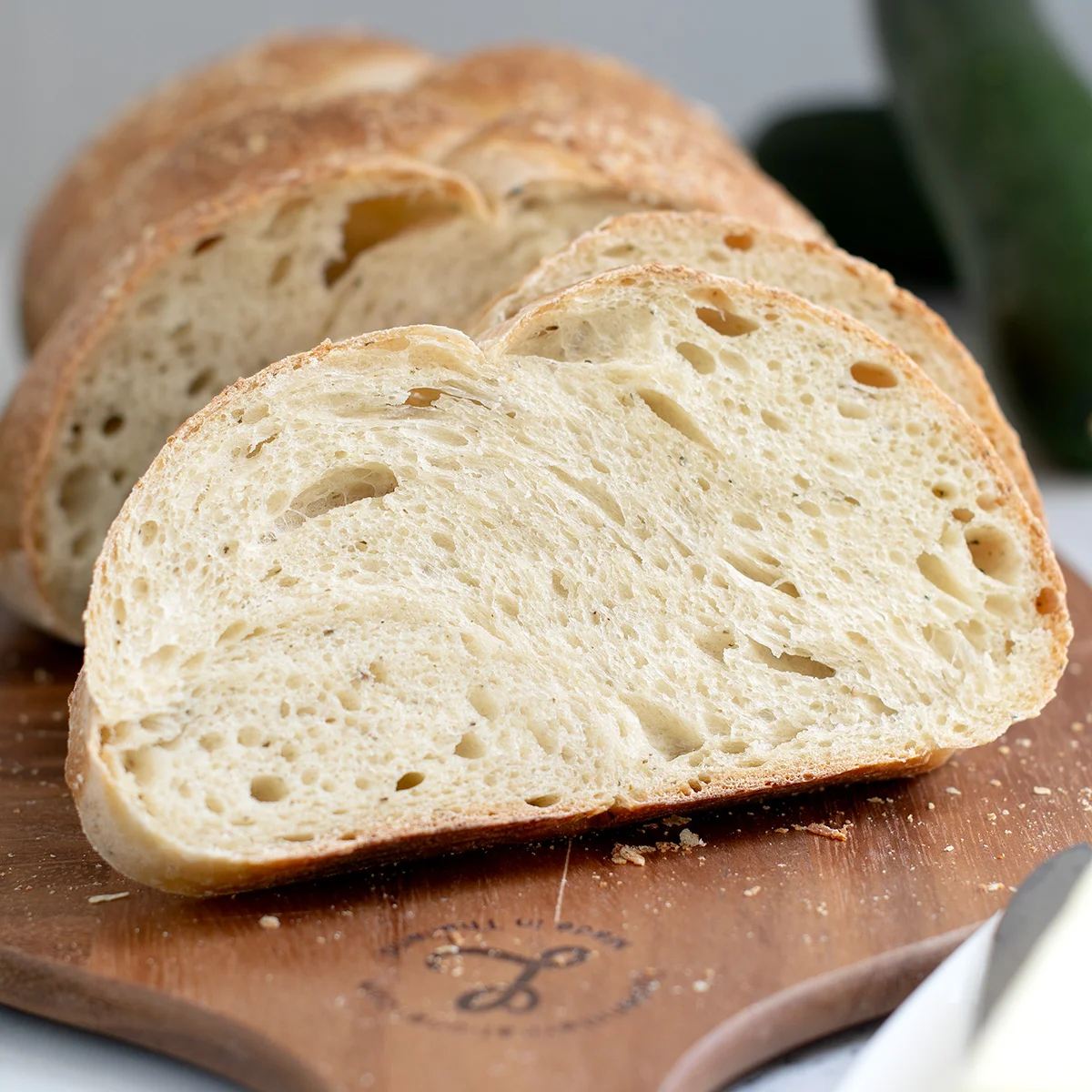
A soft, savoury sourdough loaf with fresh courgette purée folded into the dough and Parmesan on top. Braiding gives the loaf an attractive shape, while the slow fermentation develops its flavour and texture.
Ingredients
- 227 g (8 oz; 1 cup)active sourdough starter
- 57 g (2 oz; 1/4 cup)warm water
- 496 g (17 1/2 oz; 3 1/2 cups; see note)bread flour
- 227 g (8 oz; about 1 large)courgette
- 1 1/2 teaspoonssalt
- 1/4 teaspoonblack pepper
- 1 large, at room temperatureegg
- 1egg, for egg wash
- 2 tablespoonsshredded Parmesan cheese, for garnish
Instructions
- 1
Make the sponge
In a mixer bowl, stir together the active sourdough starter, warm water and 71 g (2.5 oz; 1/2 cup) of the bread flour. Cover and leave to rise for 30–60 minutes.
- 2
Purée the courgette
Meanwhile, process the courgette until it resembles apple sauce, scraping down the bowl as needed when the pieces cling to the sides.
- 3
Mix and knead
Add the courgette purée, salt, pepper and 1 large egg to the sponge, then mix on low speed to combine. Add 142 g (5 oz; 1 cup) of the bread flour and mix until you have a thick batter. Fit the dough hook and add the remaining flour gradually. Knead for 5 minutes, until the dough clings to the hook and clears the sides of the bowl. To work by hand, mix in as much flour as possible with a wooden spoon, then turn the dough onto a floured surface and knead in the rest.
- 4
Ferment the dough
Turn the dough onto a floured surface and knead it into a smooth ball. Put it in an oiled bowl, turning once to coat, then cover and leave at room temperature for 1 hour. Keeping the dough in the bowl, lift one edge over the middle, repeat with the other three sides, then turn the dough over and cover. Repeat these folds every hour until the dough has fermented for 3 hours in total. It should look lively, elastic and airy; if it still seems sluggish, leave it at room temperature for another 1–2 hours. After the initial fermentation, refrigerate it for up to 2 days, or shape and bake it the same day.
- 5
Braid the loaf
Turn the dough onto a floured surface, knead it a few times and divide it into 3 equal pieces. Roll each piece into a 36 cm (14-inch) rope, then braid the ropes. Pinch the ends together to seal and place the loaf on a baking sheet lined with parchment paper. Cover with oiled plastic wrap to prevent sticking and leave in a warm place for about 1–2 hours, until nearly doubled in volume and slow to spring back when poked. The rise will take longer if the dough is cold from the refrigerator.
- 6
Bake the bread
Meanwhile, preheat the oven to 190°C (375°F). Brush the loaf with egg wash and sprinkle with grated Parmesan or your chosen garnish. Bake for about 30–35 minutes, until golden brown and the centre reaches about 93°C (200°F).
What is courgette sourdough bread?
This is a savoury, braided loaf made with sourdough starter and fresh courgette purée. Sourdough bread has a long history across many baking traditions; this American-style version combines that fermentation method with a tender, vegetable-enriched dough.
Courgette: Puréeing it distributes moisture and flavour through the loaf, while the braid gives the dough a decorative shape. Parmesan on top adds a savoury finish.
Nutrition and macros by portion
The nutrition label shows one serving as written: 131 calories, 5g protein, 26g carbs, 1g fat.
| Portion | Adjustment | kcal | Protein | Carbs | Fat |
|---|---|---|---|---|---|
| Lighter | Thinner slices | 92 kcal | 4g | 18g | 1g |
| This serving | As written | 131 kcal | 5g | 26g | 1g |
| Hungry | Larger slices | 197 kcal | 8g | 39g | 2g |
The bread flour supplies most of the carbohydrates and some of the protein, while the starter and eggs also contribute protein. The egg and Parmesan add some fat; serve a slice with a generous portion of vegetables or a protein-rich dish for a more balanced plate.
Why start with a sponge?
Starter: Mixing it with warm water and a small amount of flour first gives it time to become active before the rest of the dough is added. Use a lively starter for a more dependable rise.
Flour: Bread flour forms the structure of this dough. The recipe divides it between the sponge, the thick batter and the final kneading, so adding it in stages helps you mix it evenly.
How to judge the dough
Kneading: The finished dough should cling to the dough hook and clear the bowl's sides. Add the remaining flour gradually, as the courgette's moisture can affect how the dough comes together.
Fermentation: After the folds, look for dough that is airy, elastic and lively. If it still seems sluggish after 3 hours, the method allows another 1–2 hours at room temperature.
Why fold the dough?
Folds: Lifting each edge over the centre and turning the dough over gives it repeated handling during the initial fermentation. Keep the dough in the bowl for this process and cover it between folds.
Timing: Repeat the folds every hour for a total of 3 hours of fermentation. A cool room or cold dough may slow the process, so use the dough's appearance and feel alongside the clock.
Shaping and proving the braid
Ropes: Divide the dough into three equal pieces and roll each into a rope about 36 cm long. Braid them without pulling the dough tight, then pinch the ends closed.
Final rise: The loaf is ready for the oven when it is nearly twice its original volume and a poke springs back slowly. Dough taken from the fridge will need longer to reach this point.
Baking and serving
Doneness: Bake at 190°C for about 30–35 minutes, looking for a golden-brown crust and a centre temperature of about 93°C. The thermometer reading is a useful check for a loaf this size.
To serve: Let the bread cool before slicing so the crumb can settle. It works well alongside soup, salad or a savoury spread.
Recipe notes & tips
- Use a ripe, active starter so the dough can rise well.
- Add the remaining flour a little at a time, since the courgette adds moisture.
- Keep the dough covered between folds and during the final rise to prevent it drying out.
- Oil the plastic wrap before covering the shaped loaf so it lifts away without sticking.
- Check the loaf's centre temperature near the end of baking rather than relying on colour alone.
Variations
- Herb topping: Sprinkle chopped dried herbs over the egg-washed loaf with the Parmesan.
- Different cheese: Replace the Parmesan garnish with another finely grated hard cheese.
- Peppery finish: Add a little extra black pepper to the dough for a more pronounced pepper flavour.
- Shaped loaf: Bake the dough as a simple round instead of braiding it, keeping an eye on its rise and doneness.
- Chilled fermentation: Refrigerate the dough for up to 2 days after the initial fermentation, then allow extra time for the final rise.
Common mistakes to avoid
- Adding flour too quickly: The dough may become stiff; incorporate the remaining flour gradually.
- Skipping the folds: Repeat them every hour during the 3-hour initial fermentation as directed.
- Rushing the final rise: Wait until the loaf is nearly doubled and springs back slowly when poked.
- Using un-oiled wrap: The cover can stick to the dough; oil it lightly before covering.
- Taking the loaf out too soon: Check for a golden crust and a centre temperature of about 93°C.
How to store
Once cool, store the loaf in an airtight bag or container at room temperature and use within about 2 days. Reheat slices briefly in a toaster or warm oven; the initial dough fermentation can be refrigerated for up to 2 days before shaping and baking.
Frequently asked questions
Can I make the dough by hand?
Yes. Mix in as much flour as you can with a wooden spoon, then turn the dough onto a floured surface and knead in the remaining flour.
Can I refrigerate the dough overnight?
Yes. After the initial fermentation, the dough can be refrigerated for up to 2 days. If it is cold when shaped, allow extra time for the final rise.
How do I know when the shaped loaf is ready to bake?
It should be nearly doubled in volume and spring back slowly when poked. The rise may take longer if the dough is cold.
Do I need to peel the courgette?
The recipe calls for puréeing the courgette but does not specify peeling it. Process it until it resembles apple sauce, scraping down the bowl as needed.
How can I tell when the bread is done?
The loaf should be golden brown, and the centre should reach about 93°C (200°F). The stated baking time is about 30–35 minutes.
Can I use a different garnish?
Yes. The method allows a garnish of your choice in place of the grated Parmesan.
Cook it from the original
This recipe comes from baking-sense.com. Their page has the author’s own photos, notes and tips — the best place to cook it from.
Open the recipe on baking-sense.com