
Donuts
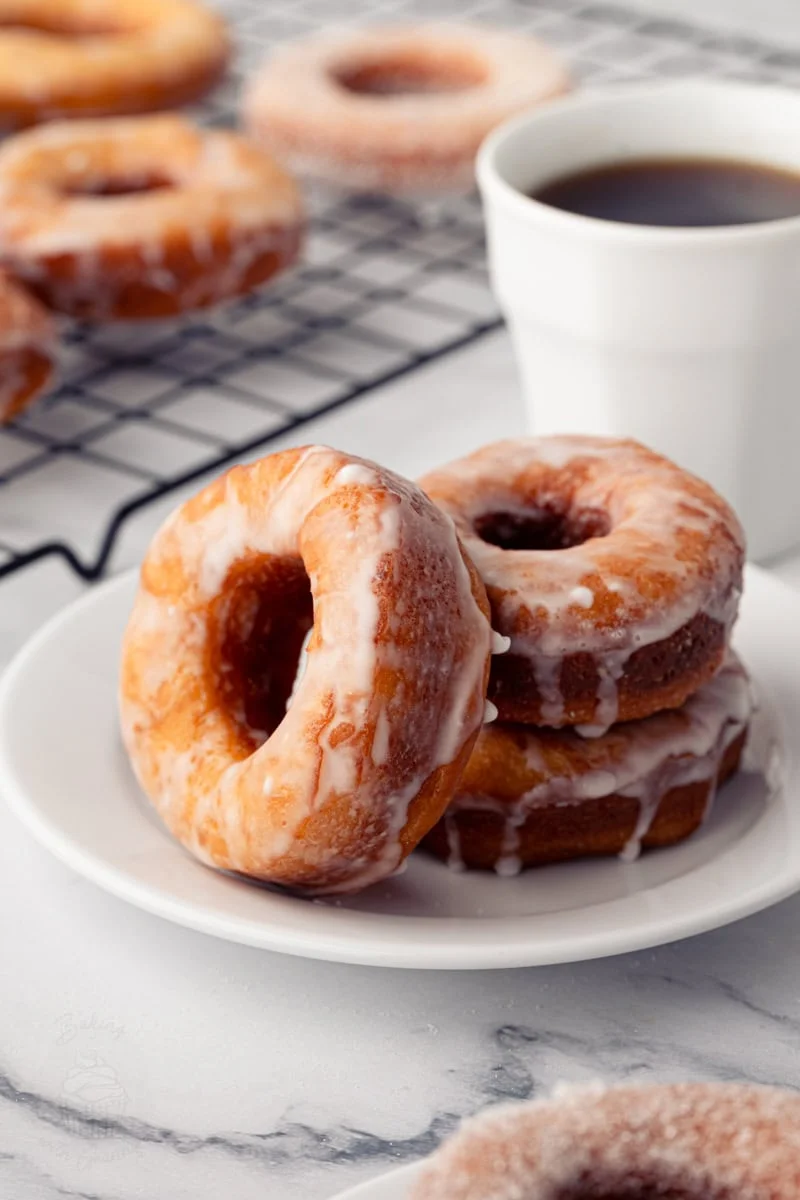
These soft, yeasted doughnuts are kneaded, left to rise twice and fried until golden. Make them for a weekend baking project, then finish them with sugar or a glaze.
Ingredients
- 120 mlmilk
- 60 gblock margarine or butter
- 275 gstrong white flour, plus extra for dusting
- 40 gcaster sugar
- 7 geasy-bake instant yeast
- 1free-range egg
- as neededvegetable, rapeseed or sunflower oil, for frying
Instructions
- 1
Warm the milk
Put the milk and butter or margarine in a small saucepan. Warm over a low heat until the fat begins to melt, then take the pan off the heat and let the mixture cool slightly.
- 2
Mix the dough
Sift the flour and sugar into a large bowl. Add the yeast and mix gently, then make a well in the centre. Pour in the milk mixture and add the egg; mix until a soft, slightly sticky dough forms.
- 3
Knead until smooth
Turn the dough onto a well-floured surface and knead with floured hands, adding flour as needed. Knead for about 10 minutes, until the dough is smooth and stretchy.
- 4
Let it rise
Put the dough in an oiled bowl and cover with oiled cling film or a damp tea towel. Leave it in a draught-free place for about 1 hour, or until doubled in size.
- 5
Shape the doughnuts
Knock back the risen dough and knead it lightly on a floured surface. Roll it to about 1 cm thick and cut out doughnuts with a doughnut cutter or two round cutters. Set them on individual squares of greaseproof paper, spaced apart, cover again and leave in a draught-free place for about 1 hour, until roughly doubled in size.
- 6
Heat the oil
Heat enough oil in a large pan for the doughnuts to fry without touching the bottom. Bring it to 180 °C (350 °F), checking with a food thermometer.
- 7
Fry in batches
Use the greaseproof paper squares to lift the doughnuts and carefully lower them into the oil. Fry each for about 90 seconds, turn it over and fry the other side for about 90 seconds. Work in small batches so the pan is not crowded and the oil temperature does not drop too quickly.
- 8
Drain and finish
When golden on both sides, lift each doughnut out with a slotted spoon and hold it above the pan for about 10 seconds to drain. Transfer to a wire rack and repeat, monitoring and adjusting the oil temperature. If coating with sugar, turn the doughnuts in it while warm; glaze them while warm, or let them cool completely before adding an icing topping.
What are American doughnuts?
Doughnuts are sweet fried pastries, and yeasted versions are known for a light, airy crumb. Doughnuts are popular in the United States, though the spelling varies between “donut” and “doughnut”.
This version uses a simple enriched dough with milk, butter or margarine, sugar and egg. Two rises give the dough time to become puffy before frying.
Nutrition and macros by portion
The nutrition label shows one serving as written: 130 calories, 3g protein, 14g carbs, 7g fat.
| Portion | Adjustment | kcal | Protein | Carbs | Fat |
|---|---|---|---|---|---|
| Lighter | Skip the sugar coating | 91 kcal | 2g | 10g | 5g |
| This serving | As written | 130 kcal | 3g | 14g | 7g |
| Hungry | Serve two doughnuts | 195 kcal | 5g | 21g | 11g |
The flour and sugar provide most of the carbohydrates, while butter or margarine and oil absorbed during frying contribute much of the fat. The egg, milk and flour provide some protein. Pair a doughnut with fruit and an unsweetened drink for a more balanced snack.
A soft, workable dough
Milk mixture: warming it helps soften the butter or margarine, but let it cool a little before mixing it with the yeast and egg.
Flour and kneading: strong white flour gives the dough structure. It may feel sticky at first; add flour gradually as you knead rather than making the dough stiff.
The two rises
First rise: cover the dough and leave it somewhere draught-free for about an hour. Look for it to double in size rather than relying only on the clock.
Second rise: after shaping, give the doughnuts another hour to puff up. Handle them gently when transferring them so they keep as much of that air as possible.
Cutting and shaping
Thickness: roll the dough to about 1 cm so the cut shapes have enough height to puff as they cook.
Paper squares: placing each doughnut on its own square of greaseproof paper makes it easier to lower into the oil without pulling or squashing the dough.
Frying to golden
Oil temperature: aim for 180 °C and use a thermometer to check it. If the oil is too cool, the doughnuts can absorb more oil; if it is too hot, they may colour before the centres cook.
Batch size: leave room around each doughnut and allow the oil to return to temperature between batches. The recipe gives about 90 seconds per side; use the golden colour as a visual cue too.
Choosing a finish
Sugar: turn the doughnuts in sugar while they are still warm so it adheres to the surface.
Glaze or icing: glaze while warm, or let the doughnuts cool completely before adding an icing topping. Allow any finish to settle before serving.
What to serve alongside
These doughnuts work well with coffee, tea or a glass of milk. For a more filling spread, serve them with fresh fruit and keep the toppings simple.
Recipe notes & tips
- Use a thermometer to keep the frying oil close to 180 °C.
- Dust your hands and work surface lightly when kneading, adding more flour only as needed.
- Cover the dough during both rises so the surface does not dry out.
- Keep the shaped doughnuts spaced apart while they rise.
- Fry in small batches and let the oil regain its temperature between them.
- Turn doughnuts in sugar while warm, but wait until they are fully cool before adding icing.
Variations
- Sugar finish: roll the warm doughnuts in caster sugar.
- Glazed finish: dip the doughnuts in a sweet glaze while warm.
- Icing topping: let the doughnuts cool completely before adding icing.
- Butter swap: use block margarine instead of butter, or butter instead of margarine.
- Different cutters: use a large and a small round cutter if you do not have a doughnut cutter.
Common mistakes to avoid
- Overheating the milk: very hot liquid can affect the yeast, so let it cool slightly before mixing.
- Adding too much flour: a stiff dough will be less soft, so add extra flour sparingly while kneading.
- Skipping the second rise: allow the cut shapes about an hour to puff before frying.
- Crowding the pan: too many doughnuts can stick together and lower the oil temperature, so fry in small batches.
- Guessing the oil temperature: use a food thermometer and adjust the heat as needed.
- Moving the doughnuts roughly: lift them with their paper squares to help keep their shape.
How to store
Once cool, store the doughnuts in an airtight container at room temperature and eat within 1–2 days for the softest texture. Warm them briefly before serving; sugar-coated doughnuts are best eaten soon after coating.
Frequently asked questions
Can I use butter instead of margarine?
Yes. The recipe allows either block margarine or butter in the same amount.
How do I know when the dough has risen enough?
After the first rise it should have doubled in size. The shaped doughnuts should look puffy, roughly twice their original size.
Do I need a doughnut cutter?
No. Use two round cutters, one larger and one smaller, to cut the outside and centre.
Why should I fry the doughnuts in batches?
Crowding can make them stick together and cause the oil temperature to drop too quickly. Leave enough space for them to fry comfortably.
When should I add sugar or icing?
Turn the doughnuts in sugar while they are warm. You can glaze them warm, but let them cool completely before adding an icing topping.
Cook it from the original
This recipe comes from bakingwithgranny.co.uk. Their page has the author’s own photos, notes and tips — the best place to cook it from.
Open the recipe on bakingwithgranny.co.uk