
Easy Bread
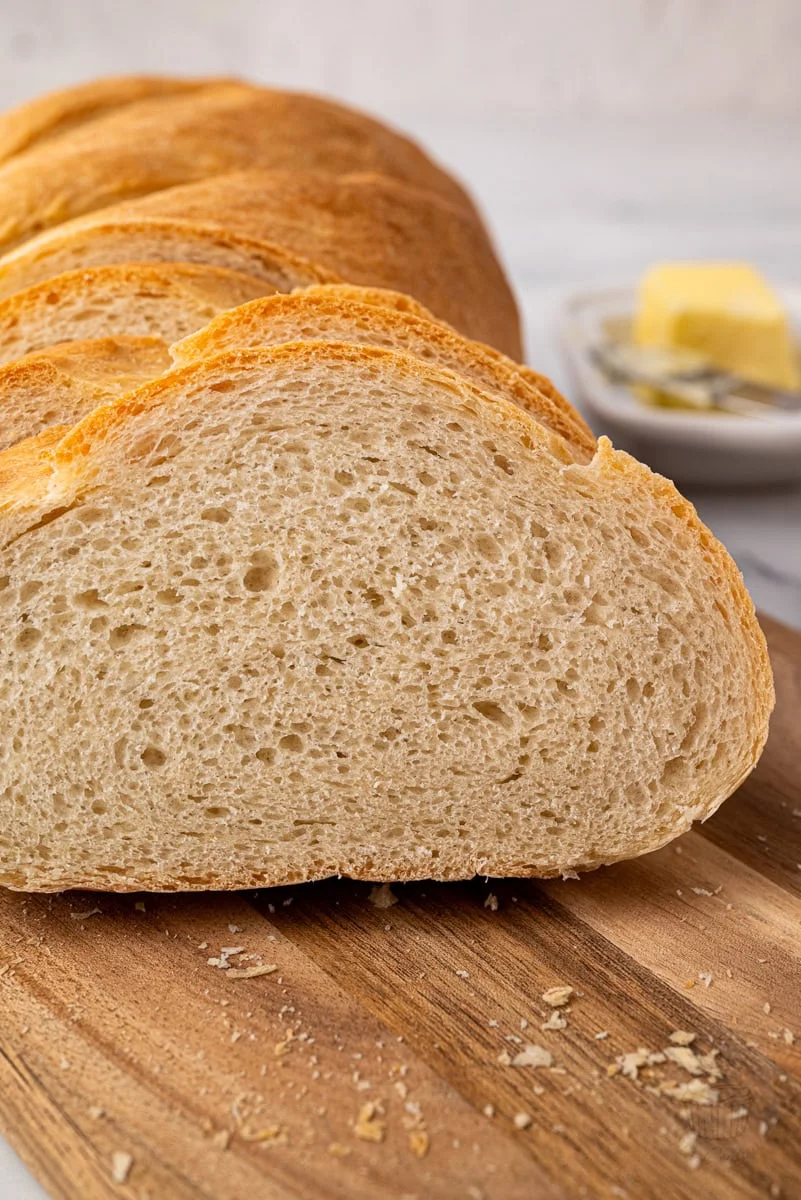
This straightforward white loaf uses flour, instant yeast, salt, fat and water to make a soft, versatile homemade bread. It needs no machine, just time to rise and a good knead by hand.
Ingredients
- 500 gstrong white flour
- 7 geasy-bake instant yeast (usually 1 sachet)
- 2 tspsea salt
- 3 tbspbutter, margarine or oil, whichever you prefer
- 300 mlwarm water
Instructions
- 1
Mix the dough
Combine the flour, yeast and salt in a large bowl. Make a well in the centre, add the butter, margarine or oil and the warm water, then mix. Add a little more water if needed and use your hands to bring everything together into a soft, lumpy, slightly sticky dough.
- 2
Knead the dough
Turn the dough onto a floured surface and knead for around 10 minutes, until smooth and elastic.
- 3
First rise
Put the dough in an oiled bowl and cover it with oiled cling film or a damp tea towel. Leave it to rise for at least 1 hour, or until doubled in size.
- 4
Shape the loaf
Line a baking sheet with greaseproof paper. Gently punch the dough to knock out the air, then pull it back on itself and shape it into your desired loaf.
- 5
Prove and preheat
Set the loaf on the prepared baking sheet and cover it again with oiled cling film or a damp tea towel. Leave to prove for a further 1 hour, or until doubled in size. Preheat the oven to 220°C, or 200°C for a fan-assisted oven (Gas Mark 7 or 425°F).
- 6
Score and bake
Use a sharp knife to make a few scores across the top of the loaf so it can expand as it bakes. Bake for 25–30 minutes, until golden brown and hollow-sounding when tapped underneath.
- 7
Cool the loaf
Transfer the loaf to a wire rack and leave it to cool before slicing.
What is a simple white loaf?
A white loaf is a yeast-raised bread made with wheat flour, water and salt. This everyday style of bread is familiar in British kitchens, where it is often sliced for toast or sandwiches.
This version keeps the ingredient list short and uses instant yeast, so there is no need to activate the yeast separately. Its two rises help build the loaf’s structure and give the dough time to expand.
Nutrition and macros by portion
The nutrition label shows one serving as written: 545 calories, 16g protein, 95g carbs, 9g fat.
| Portion | Adjustment | kcal | Protein | Carbs | Fat |
|---|---|---|---|---|---|
| Lighter | Thinner slices | 382 kcal | 11g | 67g | 6g |
| This serving | As written | 545 kcal | 16g | 95g | 9g |
| Hungry | Larger slices | 818 kcal | 24g | 143g | 14g |
Most of the carbohydrates and much of the protein come from the strong white flour; the butter, margarine or oil supplies most of the fat. Serve a slice with a protein-rich topping and vegetables or soup to make a more rounded plate.
Choosing the ingredients
Strong flour: its higher gluten-forming potential helps the dough stretch and hold its shape as it rises. Ordinary plain flour may give a softer, less structured loaf.
Fat: butter, margarine or oil all work here, with small differences in flavour and texture. Measure the chosen fat as 3 tbsp.
Warm water: use water that feels warm rather than hot. Too much heat can interfere with the yeast, while the recipe allows a little extra water if the dough feels dry.
Kneading by hand
Develop the dough: knead it on a lightly floured surface for around 10 minutes, as directed. At first it may feel uneven, but it should become smoother and more elastic as you work it.
Use flour sparingly on the surface. Adding a lot can make the dough stiffer than intended, so dust only enough to stop it sticking badly.
Letting the dough rise
First rise: cover the dough and leave it for at least 1 hour, checking for the visual cue of roughly doubled size. The time can vary with the warmth of the room.
Second prove: after shaping, cover the loaf and give it another hour, or until doubled. Keep it covered so the surface does not dry out while it proves.
Shaping and scoring
Knock back: gently punch out the air and fold the dough back on itself before shaping. This prepares it for its second rise.
Score the top: make a few cuts with a sharp knife just before baking. They give the loaf a place to expand in the oven, rather than leaving its surface unmarked.
Checking when it is baked
Use colour and sound: the loaf should be golden brown after 25–30 minutes, and sound hollow when tapped underneath. If it does not seem ready at 25 minutes, continue baking within the stated time range and check again.
Cool it on a wire rack before slicing. Cutting while it is still hot can make the crumb seem compressed or gummy.
Serving the loaf
Once cooled, slice it for sandwiches, toast or alongside soup. Its plain flavour also makes it a useful base for savoury toppings and spreads.
For a simple meal, serve slices with eggs, cheese or a bowl of soup, and add fruit or vegetables on the side.
Recipe notes & tips
- Use a large bowl so there is room to mix the dough comfortably.
- Keep the dough slightly sticky rather than adding lots of flour while kneading.
- Cover the dough during both rises to stop its surface drying out.
- Judge each rise by the dough doubling in size as well as by the clock.
- Score the loaf just before it goes into the oven.
- Let the loaf cool fully on a wire rack before slicing.
Variations
- Make rolls: divide the shaped dough into smaller portions and keep an eye on them as they bake.
- Try a pizza base: shape the dough into a round base instead of a loaf.
- Use another flour: replace some of the strong white flour with a different flour, adding water as needed to bring the dough together.
- Choose your fat: use butter, margarine or oil according to the flavour you prefer.
- Add seeds: work seeds into the dough before its first rise for extra texture.
Common mistakes to avoid
- Water too hot: use warm rather than hot water so the yeast can work.
- Adding too much flour: dust the surface lightly and keep the dough a little sticky.
- Rushing the rise: wait until the dough has doubled rather than relying only on the minimum time.
- Dry dough surface: keep the bowl and shaped loaf covered during proving.
- Skipping the score: cut a few lines across the top just before baking to let the loaf expand.
- Slicing too soon: cool the loaf on a wire rack before cutting.
How to store
Once completely cool, store the loaf in an airtight bag or bread bin at room temperature and use within a few days. Refresh slices in a toaster, or warm the loaf briefly in the oven.
Frequently asked questions
Can I use plain flour instead of strong white flour?
Strong white flour is the recipe’s intended choice and helps give the dough structure. Plain flour may work, but the loaf can be softer and less robust.
How can I tell if the dough has risen enough?
Look for the dough to have roughly doubled in size. The recipe gives at least 1 hour for the first rise and a further hour for the shaped loaf, but the visual cue matters too.
Can I use fresh yeast?
This recipe specifies 7 g easy-bake instant yeast. Fresh yeast is not a direct measure-for-measure substitute, so use a conversion suitable for the product you have.
Why is the dough slightly sticky?
The recipe describes the dough as soft and slightly sticky. Add only a little extra water if it feels too dry, and avoid working in too much flour while kneading.
How do I know when the loaf is baked?
It should be golden brown after 25–30 minutes and sound hollow when tapped underneath.
Can I make rolls or a pizza base with this dough?
Yes. The recipe notes that the dough can be adapted into rolls or pizza bases; shape it accordingly and check the bake as the size and form differ from a loaf.
Cook it from the original
This recipe comes from bakingwithgranny.co.uk. Their page has the author’s own photos, notes and tips — the best place to cook it from.
Open the recipe on bakingwithgranny.co.uk