
Irish Soda Farls
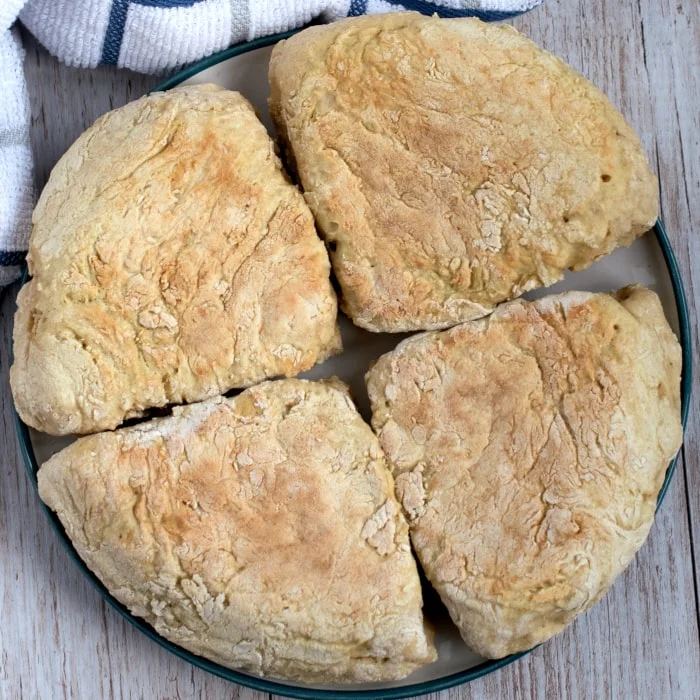
Irish soda farls are soft, lightly risen griddle breads made with flour, bicarbonate of soda, salt and buttermilk. They cook on the hob, so they are ready without an oven and are lovely served warm with butter or alongside breakfast.
Ingredients
- 300 gplain flour
- 1 tspbicarbonate of soda
- 1/2 tspground sea salt
- 250 mlbuttermilk
Instructions
- 1
Warm the pan
Set a griddle or frying pan over a low heat so it can warm while you prepare the dough.
- 2
Combine dry ingredients
Sift the flour, bicarbonate of soda and salt into a large bowl. Make a well in the centre and pour in the buttermilk.
- 3
Make the dough
Stir gently, taking care not to overmix. When the ingredients come together and a spoon or spatula is no longer useful, use floured hands to form a soft, slightly sticky dough.
- 4
Shape the dough
Turn the dough onto a well-floured surface and gently bring it into a loose ball, kneading only 2–4 turns.
- 5
Cut into farls
Flatten the dough by hand into a circle about 20–25 cm (8–9 inches) across, then cut it into four triangles.
- 6
Cook on the griddle
Place the farls on the dry, preheated griddle or frying pan. Cook over a low heat for 8–10 minutes on one side, until golden, then turn and cook the other side. They should rise a little as they cook.
- 7
Cool and serve
When both sides are cooked, move the farls to a wire rack to cool briefly, then serve while still warm.
What are soda farls?
Soda farls are a traditional Irish griddle bread, cut into four wedges before cooking. The name reflects their shape: “farl” is associated with a quarter or portion.
This version uses buttermilk and bicarbonate of soda for a quick rise, with no yeast or oven baking. Gentle mixing and a low griddle heat help the wedges cook through while staying soft.
Nutrition and macros by portion
The nutrition label shows one serving as written: 300 calories, 10g protein, 60g carbs, 2g fat.
| Portion | Adjustment | kcal | Protein | Carbs | Fat |
|---|---|---|---|---|---|
| Lighter | Smaller farl, less butter | 210 kcal | 7g | 42g | 1g |
| This serving | As written | 300 kcal | 10g | 60g | 2g |
| Hungry | Two farls per person | 450 kcal | 14g | 90g | 2g |
Most of the energy and carbohydrates come from the flour, while the buttermilk contributes some protein and a little fat. Serve a farl with eggs or another protein-rich breakfast item and fruit or vegetables to make the meal more balanced.
The ingredients that matter
Bicarbonate of soda: it provides the lift in this quick bread, so measure it carefully and sift it with the flour to spread it evenly.
Buttermilk: its acidity works with the bicarbonate of soda and brings moisture to the dough. Add the amount given, then handle the dough gently rather than trying to make it firm.
Keep the mixing gentle
Stir only until the wet and dry ingredients begin to come together. Once the mixture is too stiff for a spoon, switch to floured hands and gather it into a soft dough.
Knead for just 2–4 turns when shaping the loose ball. More handling can make the farls less tender.
Shape and cut evenly
Flatten the dough by hand into a circle 20–25 cm (8–9 inches) in diameter, keeping the thickness as even as you can. Cut it into four triangles so the pieces cook at a similar pace.
Use enough flour on the work surface to prevent sticking, but avoid working extra flour into the dough as you shape it.
Cook low and steady
A low heat gives the centres time to cook before the outside becomes too dark. The recipe calls for 8–10 minutes on the first side, followed by the same process on the other side.
Look for a golden surface and a slight rise as cues that the farls are cooking. If they colour quickly, lower the heat rather than shortening the cooking time too much.
Serve them warm
A short rest on a wire rack lets excess steam escape while the farls stay warm. Serve with butter, or add them to a traditional Irish breakfast.
They also work as a simple bread alongside soup or eggs. Split or break them open at the table while they are still warm.
Recipe notes & tips
- Sift the bicarbonate of soda with the flour to help distribute it evenly.
- Keep a little flour on your hands and work surface because the dough is meant to be slightly sticky.
- Use a dry pan; the recipe does not call for oil or butter for cooking.
- Keep the heat low so the farls have time to cook through without browning too quickly.
- Rest the cooked farls briefly on a wire rack rather than stacking them while steaming.
Variations
- Buttermilk substitute: Use a suitable buttermilk alternative if needed, as noted in the source recipe.
- Butter topping: Serve warm with butter for a simple, richer finish.
- Breakfast side: Pair the farls with eggs as part of a traditional-style breakfast.
- Soup companion: Serve a warm farl alongside soup in place of another bread.
- Smaller wedges: Divide the dough into more pieces for smaller portions, allowing for their changed cooking size.
Common mistakes to avoid
- Overmixing: Stir only until the ingredients come together to help keep the crumb soft.
- Too much kneading: Limit kneading to 2–4 turns when forming the ball.
- Sticky dough sticking: Flour your hands and work surface lightly before shaping.
- Pan too hot: Keep the griddle on low so the outside does not brown before the centre cooks.
- Skipping the turn: Cook both sides for 8–10 minutes over low heat, checking for a golden surface.
How to store
Cool the farls completely and store them in an airtight container at room temperature for up to 2 days. Reheat in a dry frying pan over low heat until warmed through.
Frequently asked questions
Can I make soda farls without buttermilk?
The recipe notes that alternatives are possible, but does not specify one here. Choose a buttermilk substitute suitable for quick breads and keep the stated quantity at 250 ml.
Why is the dough slightly sticky?
That is the intended texture. Flour your hands and the surface enough to shape it without adding lots of extra flour to the dough.
How do I know when the farls are cooked?
The surfaces should be golden and the farls should have risen a little. Cook them over low heat for 8–10 minutes per side as directed.
Do I need to grease the pan?
No. The method calls for a dry, preheated griddle or frying pan.
Can I prepare the dough ahead?
The method is designed for cooking the dough after mixing and shaping. For the best result, cook the farls soon after making the dough.
Cook it from the original
This recipe comes from bakingwithgranny.co.uk. Their page has the author’s own photos, notes and tips — the best place to cook it from.
Open the recipe on bakingwithgranny.co.uk