
Meringue for Piping & Baking
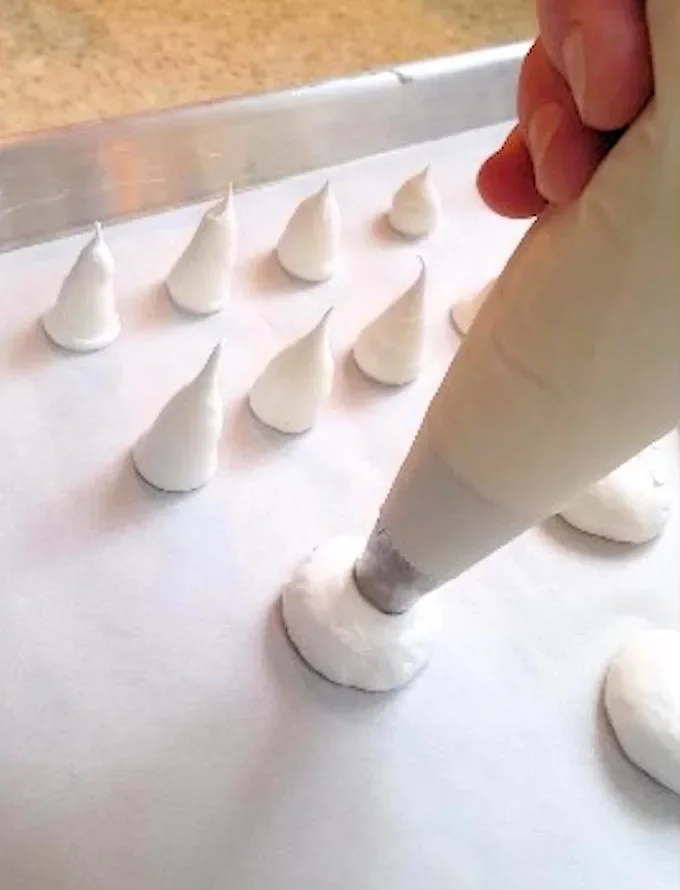
These crisp, dry meringues are made by whipping egg whites with sugar, then baking them slowly at a low temperature. Pipe them into shapes for decorating or serve them as a light, crunchy sweet.
Ingredients
- 3 largeegg whites, at room temperature
- 170 g (6 oz; ¾ cup)granulated sugar
Instructions
- 1
Prepare the oven
Heat the oven to 95°C (200°F). Line a half-sheet pan with parchment paper.
- 2
Whip the meringue
Using a mixer on medium speed, whip the 3 egg whites until they reach soft peaks. Keep the mixer running as you gradually add the 170 g sugar. Raise the speed to medium-high and whip until the meringue reaches full peaks.
- 3
Shape and bake
Pipe or spread the meringue onto the prepared pan in your chosen shapes. Bake for about 2 hours, adjusting for the size and shape, until completely dry.
- 4
Keep them pale
After about 1 hour, prop the oven door open with a wooden spoon to help prevent browning, or switch off the oven and leave the door closed.
- 5
Check and store
The finished meringues should feel very light and completely firm, and release easily from the parchment. Store them at room temperature in an airtight container.
What is piping meringue?
Meringue is a foam of whipped egg whites and sugar, used in a range of French and European-style desserts. This version is made firm enough to pipe into decorative shapes, then baked until dry and crisp.
The simple ingredient list lets the texture do the work: whipped whites give the mixture its volume, while sugar helps make a stable, sweet meringue.
Nutrition and macros by portion
The nutrition label shows one serving as written: 29 calories, 0g protein, 7g carbs, 0g fat.
| Portion | Adjustment | kcal | Protein | Carbs | Fat |
|---|---|---|---|---|---|
| Lighter | Smaller piped meringues | 20 kcal | 0g | 5g | 0g |
| This serving | As written | 29 kcal | 0g | 7g | 0g |
| Hungry | Larger portion | 44 kcal | 1g | 11g | 0g |
Most of the carbohydrates come from the granulated sugar, while the egg whites contribute a small amount of protein. The recipe contains virtually no fat; serve a meringue alongside fruit or yoghurt for a more balanced plate.
Why room-temperature whites help
Egg whites: starting at room temperature helps them whip into a lofty foam. Separate the eggs carefully; even a trace of yolk can make it harder for the whites to whip well.
Sugar: add it gradually while the mixer runs, rather than all at once. This gives it time to blend into the foam.
Watch the peaks
Soft peaks: first whip the whites until they lift into peaks that bend over. This is the cue to begin adding the sugar.
Full peaks: after all the sugar is added, continue whipping at medium-high speed until the meringue holds firm peaks. Stop once it is firm rather than continuing to whip indefinitely.
Pipe evenly for consistent results
Shape: pipe or spread the mixture into your desired forms on the lined pan. Keep pieces a similar size so they dry at roughly the same rate.
Doneness: the meringues are ready when they feel completely firm and dry and lift cleanly from the parchment. Larger shapes may need longer than smaller ones.
Low heat and patience
The oven is set to 95°C (200°F), and the meringues bake for about 2 hours. The goal is to dry them without letting them brown.
After about an hour, follow the recipe’s option of propping the door open with a wooden spoon or switching the oven off and leaving the door closed. Check for dryness rather than relying only on the clock.
Serving ideas
Serve the meringues on their own with tea or coffee, or use them to decorate cakes and other desserts. Their crisp texture also works well alongside soft fruit or a creamy dessert.
Add them just before serving when pairing with moist toppings, so they have less time to soften.
Recipe notes & tips
- Use a clean, grease-free bowl and beaters so the egg whites can whip properly.
- Separate each egg over a small bowl before adding its white to the mixing bowl, in case a yolk breaks.
- Add the sugar slowly while the mixer is running to help it incorporate evenly.
- Pipe shapes of similar size on the same tray for more even drying.
- Let the meringues dry fully before storing them, or trapped moisture can make them sticky.
Variations
- Add vanilla: fold in a little vanilla extract once the meringue is whipped.
- Add colour: use a small amount of gel food colouring for tinted shapes.
- Add cocoa: sift in a little cocoa powder for a chocolate-flavoured version.
- Make mini kisses: pipe small, evenly sized rounds and check them for dryness sooner.
- Make larger nests: shape shallow rounds for serving with fruit and cream.
Common mistakes to avoid
- Greasy bowl: the whites may not whip well; wash and dry the bowl and beaters thoroughly.
- Yolk in the whites: even a small amount can hinder whipping; separate eggs individually and remove any stray yolk before beating.
- Sugar added too quickly: the foam can lose volume; pour it in gradually with the mixer running.
- Uneven shapes: pieces may finish drying at different times; pipe similar sizes together.
- Browning: the meringues may be colouring before they dry; use the recipe’s oven-door option after about an hour.
How to store
Cool the meringues completely, then keep them at room temperature in an airtight container. Protect them from humidity, which can make them soft or sticky.
Frequently asked questions
How can I tell when the meringues are done?
They should feel completely dry and firm, and release easily from the parchment. If they still feel sticky or soft, they need more time to dry.
Can I make the meringues without a piping bag?
Yes. Spread or spoon the meringue onto the lined baking sheet in your preferred shapes.
Why are my meringues browning?
They may be colouring before they have dried. Follow the method’s option after about an hour: prop the oven door open with a wooden spoon or switch the oven off and leave the door closed.
Can I make the mixture ahead of time?
It is best to shape and bake the meringue soon after whipping, while it is still stable and airy.
How should I store baked meringues?
Once completely cool, store them at room temperature in an airtight container. Keep them away from damp conditions so they stay crisp.
Cook it from the original
This recipe comes from baking-sense.com. Their page has the author’s own photos, notes and tips — the best place to cook it from.
Open the recipe on baking-sense.com