
Petticoat Tail Shortbread
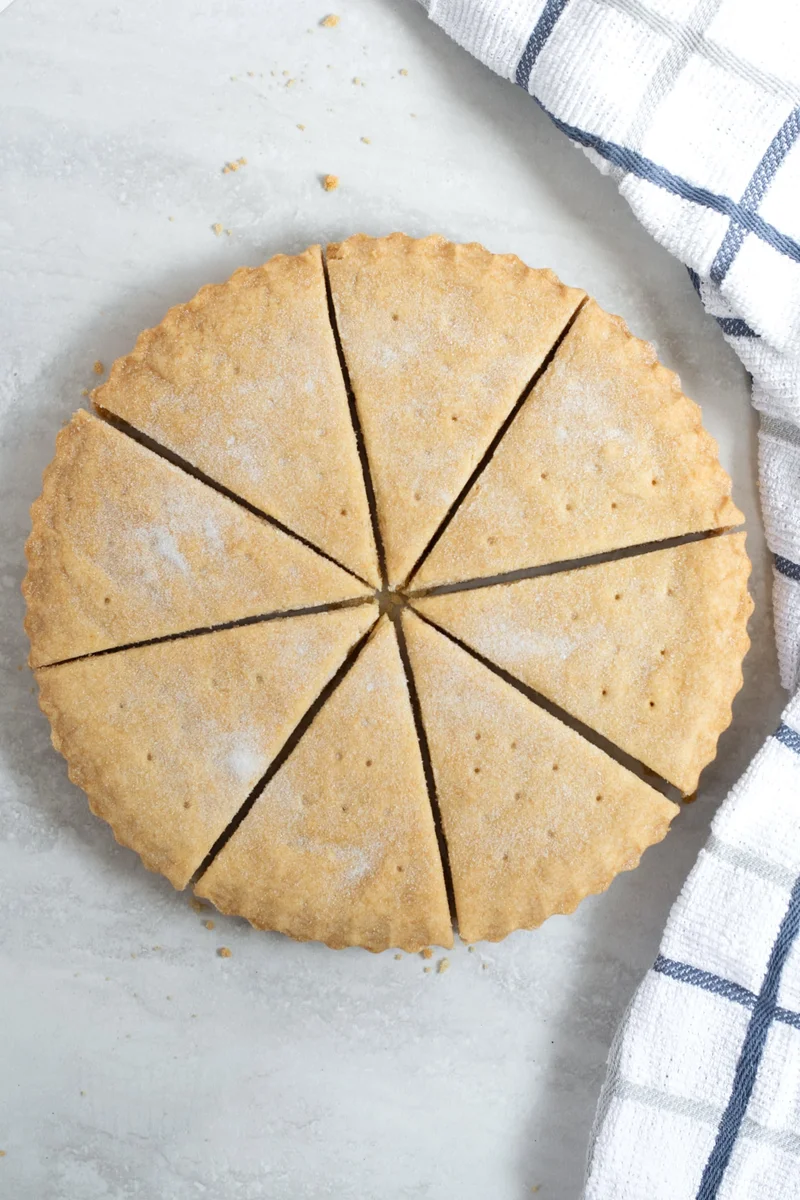
Petticoat tails are buttery Scottish shortbread baked as a round and cut into chunky wedges. This simple version uses plain flour and cornflour for a tender, crisp biscuit that is lovely with tea.
Ingredients
- 100 gcaster sugar, plus a little extra to sprinkle
- 250 gblock margarine or butter, at room temperature
- 250 gplain flour, plus extra for dusting
- 30 gcornflour
Instructions
- 1
Prepare the oven
Heat the oven to 160°C (140°C fan, Gas Mark 3 or 325°F). Lightly grease an 8-inch (20 cm) loose-bottomed tart tin and set it aside.
- 2
Cream sugar and fat
In a large bowl, beat the sugar with the room-temperature butter or margarine until the mixture is light and fluffy.
- 3
Make the dough
Sift in the plain flour and cornflour, then mix until a dough forms; use your hands if needed. Turn it onto a lightly floured worktop and knead gently until smooth.
- 4
Shape and score
Put the dough in the prepared tin and press it out evenly to the edges with your hands or the back of a spoon. For a decorative edge, press around the rim with a finger. Score the top into triangles without cutting all the way through, then prick each triangle with a fork or toothpick.
- 5
Bake and cut
Bake for 45–55 minutes, until light golden. Take the shortbread from the oven and, while it is still warm and in the tin, cut through the scored lines. Sprinkle over a little caster sugar.
- 6
Cool in tin
Leave the petticoat tails to cool completely in the tin before serving.
What are petticoat tails?
Petticoat tails are a traditional Scottish form of shortbread, baked as a large round and divided into triangular wedges. Their name is often linked to the fan-like shape of the pieces.
This version keeps to the classic buttery, sweet biscuit style. Cornflour alongside plain flour helps give the wedges a delicate, crisp texture.
Nutrition and macros by portion
The nutrition label shows one serving as written: 400 calories, 4g protein, 40g carbs, 25g fat.
| Portion | Adjustment | kcal | Protein | Carbs | Fat |
|---|---|---|---|---|---|
| Lighter | Smaller shortbread wedge | 280 kcal | 2g | 28g | 18g |
| This serving | As written | 400 kcal | 4g | 40g | 25g |
| Hungry | Larger shortbread wedge | 600 kcal | 5g | 60g | 38g |
The flour and sugar provide most of the carbohydrates, while the butter or margarine supplies most of the fat; the shortbread contains only a modest amount of protein from the flour. Serve one wedge with fruit or alongside a more protein-rich snack to make a more balanced plate.
Choosing the fat
Butter: use it at room temperature so it creams smoothly with the sugar. It gives the shortbread its characteristic rich flavour.
Block margarine: this is an alternative specified in the recipe. Choose block margarine rather than a soft spread, which can make the dough too loose.
Getting a smooth dough
Mix gently: once the flours go in, combine them only until the mixture comes together. Knead lightly on a floured surface to smooth it without overworking.
Dry mix: shortbread dough can seem crumbly at first. Press it together with your hands rather than adding liquid.
Shaping and scoring
Even base: press the dough to the edges of the tin and smooth it to an even thickness so it bakes consistently.
Clear wedges: score the triangles before baking, but do not cut through the dough. Pricking the sections with a fork or toothpick completes the traditional look.
Knowing when it is baked
Colour: look for a light golden surface after 45–55 minutes. The shortbread should not become deeply browned.
Warm cutting: cut through the score lines while the shortbread is still warm and in the tin. It will be fragile until it cools completely, so leave the wedges in place to set.
Serving the wedges
Tea-time pairing: serve a wedge with a pot of tea or coffee, letting the simple buttery flavour take centre stage.
For a dessert plate: pair a piece with fresh berries or stewed fruit. The fruit adds a fresh contrast to the rich biscuit.
Recipe notes & tips
- Bring the butter or block margarine to room temperature before creaming.
- Sift the flours to break up lumps before mixing them into the creamed mixture.
- Dust the worktop lightly so the dough does not stick while you shape it.
- Score the triangles clearly enough to guide the cuts after baking, but do not cut through the dough.
- Use the full baking time as a guide and remove the shortbread when it is light golden.
- Cut the wedges while warm, then leave them undisturbed in the tin until completely cool.
Variations
- Vanilla note: mix a little vanilla extract into the creamed butter and sugar.
- Citrus edge: add finely grated lemon zest to the sugar before creaming.
- Chocolate finish: drizzle the cooled wedges with melted dark chocolate.
- Spiced version: add a pinch of ground cinnamon to the sifted flours.
- Sugar topping: use a light sprinkle of caster sugar after cutting, as in the recipe.
Common mistakes to avoid
- Using soft spread: the dough may become greasy or slack; choose block margarine or butter.
- Overworking the dough: this can make the shortbread less tender; knead only until smooth.
- Uneven shaping: thick and thin areas bake differently; press the dough into an even layer.
- Scoring too deeply: the wedges may separate during baking; score the surface without cutting through.
- Browning too far: the flavour can turn overly toasted; take the tin out when the surface is light golden.
- Moving it while hot: the shortbread can break before it sets; cool it completely in the tin.
How to store
Once fully cool, store the wedges in an airtight container at room temperature for up to a week. They are best served as biscuits rather than reheated.
Frequently asked questions
Can I use butter instead of margarine?
Yes. The recipe allows either block margarine or butter, and butter gives the shortbread a classic rich flavour.
Why is my dough crumbly?
Shortbread dough can look crumbly before it is pressed together. Bring it together gently with your hands and knead lightly; avoid adding liquid.
Do I have to use a loose-bottomed tin?
It makes it easier to release the baked round, but another 20 cm tart tin can work. Grease it well and take care when removing the cooled shortbread.
When should I cut the triangles?
Score the triangles before baking, then cut through those lines while the shortbread is still warm. Leave it in the tin to cool fully.
How do I know the shortbread is ready?
It should look light golden after 45–55 minutes in the oven. Avoid waiting for a deep brown colour.
Can I freeze the petticoat tails?
Yes. Once cool, pack the wedges in a freezer-safe airtight container and freeze for up to 2 months. Defrost at room temperature before serving.
Cook it from the original
This recipe comes from bakingwithgranny.co.uk. Their page has the author’s own photos, notes and tips — the best place to cook it from.
Open the recipe on bakingwithgranny.co.uk