
The Best Cinnamon Babka
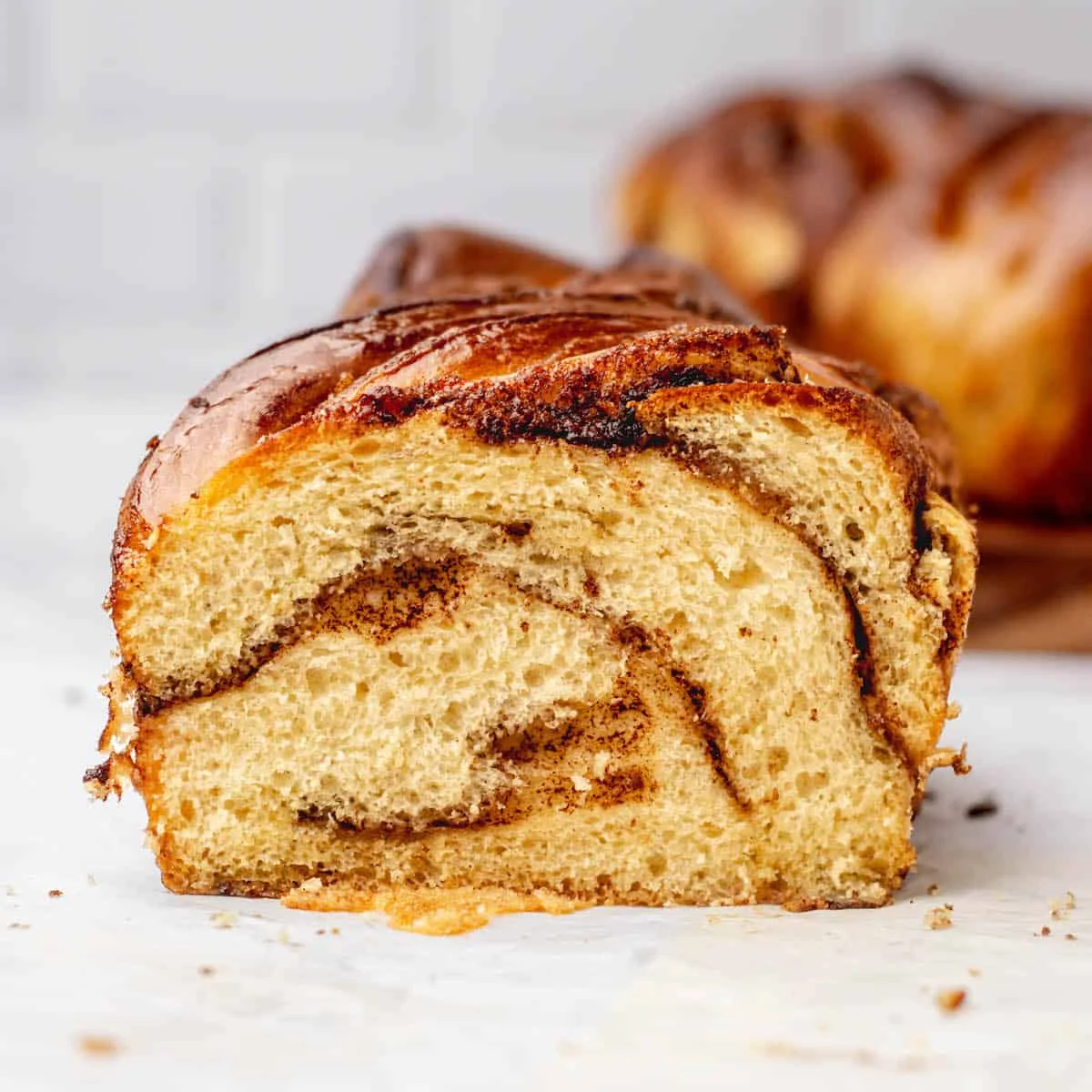
Cinnamon babka is a soft, enriched yeast bread with a sweet cinnamon filling twisted through its layers. This recipe makes two loaves, finished with a simple syrup for a glossy, tender crust.
Ingredients
- 120 gwhole milk, lukewarm
- About 8 g (2 1/2 teaspoons)instant yeast or active dried yeast
- 50 ggranulated sugar
- 500 gplain flour
- 4 largeeggs
- 5 ml (1 teaspoon)vanilla paste or extract
- About 5 g (1 teaspoon)salt
- 170 gunsalted butter, at room temperature and cubed
- 113 gunsalted butter, softened
- 150 gsoft brown sugar
- About 12 g (1 1/2 tablespoons)ground cinnamon
- A pinchsalt
- 50 ggranulated sugar
- 60 gwater
Instructions
- 1
Mix the yeast
Put the lukewarm milk, yeast and 50 g sugar in the bowl of a stand mixer fitted with a dough hook. If using active dried yeast, leave it for 5–10 minutes, until foamy.
- 2
Make the dough
Add the eggs, flour, vanilla and 1 teaspoon salt to the milk mixture. Mix until a thick dough forms.
- 3
Add the butter
Add the 170 g room-temperature butter a few cubes at a time, mixing as you go so it incorporates into the dough.
- 4
Develop the dough
Mix on medium speed until the sticky dough strengthens, pulls away from the sides of the bowl and passes the windowpane test. Mix for at least 15 minutes for good gluten development; the dough should remain very soft but feel strong.
- 5
First proof
Shape the dough into a ball on a lightly floured surface and place it in a lightly oiled bowl. Cover with a lid or plastic wrap and leave in a warm place until doubled in size.
- 6
Chill overnight
For an optional longer proof, let the dough rise at room temperature for 1 hour, then cover it tightly and refrigerate for 8–16 hours. It will be firm when cold and soften as you shape it.
- 7
Prepare the pans
Beat the softened 113 g butter with the brown sugar and cinnamon into a creamy paste. Set aside, then grease and line two 23 × 13 cm (9 × 5 inch) loaf pans with baking paper.
- 8
Divide the dough
Deflate the dough and turn it out onto a lightly floured surface. Weigh it, then cut it into two equal pieces.
- 9
Roll the dough
Roll one piece into a rectangle about 27 × 35 cm (11 × 14 inches).
- 10
Fill and roll
Dollop half the cinnamon mixture over the rectangle and spread it with an offset spatula, leaving a 1 cm (½ inch) border on every side. Roll it up from a long side into a log, place it in the fridge for 15 minutes to make it easier to cut, then repeat with the remaining dough and filling.
- 11
Braid the loaves
Once chilled, cut one log in half lengthways with a sharp knife. Cross the left half over the right in the middle, then repeat along the length to form a braid. Tuck the ends underneath to compact the loaf and place it in a prepared pan.
- 12
Proof the braids
Repeat the cutting and braiding with the second log. Leave both babkas to rise until they have nearly doubled, about 1–2 hours depending on the room temperature.
- 13
Heat the oven
Preheat the oven to 180°C (350°F), with a rack in the middle.
- 14
Bake the babka
Bake the risen loaves for about 35–40 minutes, until deep golden brown. If they brown too quickly, loosely cover the tops with foil.
- 15
Make the syrup
Combine the 50 g sugar and 60 g water in a small saucepan over medium heat. Bring to a simmer until the sugar dissolves, then take the pan off the heat.
- 16
Brush with syrup
As soon as the babkas come out of the oven, brush them generously with the syrup.
- 17
Cool and serve
Leave the loaves in their pans for 20 minutes, then transfer them to a wire rack to cool further. Serve at room temperature or slightly warm.
What is cinnamon babka?
Babka is a rich, yeasted bread associated with Jewish baking traditions in Eastern Europe. Its distinctive twisted shape reveals ribbons of filling when sliced.
This version layers a soft, butter-enriched dough with brown sugar and cinnamon, then finishes the baked loaves with syrup. Making two loaves gives you a pair to serve or share.
Nutrition and macros by portion
The nutrition label shows one serving as written: 331 calories, 6g protein, 41g carbs, 16g fat.
| Portion | Adjustment | kcal | Protein | Carbs | Fat |
|---|---|---|---|---|---|
| Lighter | Smaller slice, less syrup | 232 kcal | 4g | 29g | 11g |
| This serving | As written | 331 kcal | 6g | 41g | 16g |
| Hungry | Larger slice | 497 kcal | 9g | 62g | 24g |
The flour and sugar provide most of the carbohydrates, while the butter contributes much of the fat and the eggs and milk add protein. Pair a slice with fruit or yoghurt for a more rounded snack or breakfast.
Building a soft dough
Butter: Add the room-temperature cubes gradually so they work into the dough rather than sitting in greasy patches.
Mixing: Give the dough at least 15 minutes on medium speed. It should become elastic enough to pull from the bowl and stretch thinly without tearing easily.
Choosing the proof
Warm rise: Let the dough rise in a warm place until doubled; the time depends on how warm the room is.
Overnight option: The fridge proof is optional and adds time to the schedule. Allow an hour at room temperature first, then chill the covered dough for 8–16 hours.
Filling and shaping
Border: Leave 1 cm clear around the rectangle so the filling is less likely to squeeze out as you roll.
Chilling: A 15-minute rest in the fridge firms the filled log, making it easier to slice cleanly lengthways.
Braid: Cross the two strands repeatedly, then tuck the ends underneath to keep the loaf compact in its tin.
Proofing and baking cues
Second rise: The shaped loaves are ready when they have nearly doubled, usually after 1–2 hours. A cooler room may mean a longer wait.
Baking: Look for a deep golden-brown top after 35–40 minutes. If the surface colours too fast, cover it loosely with foil while the loaves finish baking.
Syrup and serving
Syrup: Simmer the sugar and water just until the sugar dissolves, then brush it over the babkas straight from the oven.
Serving: Let the loaves cool in their tins for 20 minutes before moving them to a rack. Slice at room temperature or serve slightly warm, on its own or with coffee or tea.
Recipe notes & tips
- Use lukewarm rather than hot milk to avoid overheating the yeast.
- Keep the butter for the dough at room temperature so it blends in more readily.
- If the dough is sticky, use only a light dusting of flour while shaping.
- Chill each filled log for the full 15 minutes to make the lengthwise cut easier.
- Cover the tops loosely with foil if they brown before the bake is complete.
- Brush on the syrup while the babkas are still hot so it coats the surface easily.
Variations
- More spice: Add a little extra cinnamon to the filling for a stronger flavour.
- Citrus note: Mix finely grated orange zest into the cinnamon paste.
- Chocolate swirl: Scatter chopped chocolate over the filling before rolling.
- Nutty filling: Add chopped walnuts or pecans over the cinnamon paste.
- Less syrup: Brush on only as much syrup as you like after baking.
Common mistakes to avoid
- Adding butter too quickly: Incorporate the room-temperature cubes a few at a time.
- Under-mixing the dough: Keep mixing for at least 15 minutes, until it strengthens and stretches.
- Rolling without a border: Leave 1 cm clear around the edges to help contain the filling.
- Cutting a warm log: Chill it for 15 minutes first to make a cleaner cut.
- Rushing the second rise: Wait until the braided loaves have nearly doubled before baking.
- Over-browning the top: Loosely cover the loaves with foil if they colour too quickly.
How to store
Once fully cool, wrap the babka or keep it in an airtight container at room temperature for up to 3 days. Rewarm slices briefly in a low oven or microwave; freeze well-wrapped portions for longer storage.
Frequently asked questions
Can I make the dough the night before?
Yes. After its initial room-temperature rise of 1 hour, cover it tightly and refrigerate for 8–16 hours. The chilled dough will be firm but will soften as you shape it.
Can I use active dried yeast?
Yes. Stir it into the lukewarm milk and sugar, then leave the mixture for 5–10 minutes until foamy before continuing.
How do I know when the dough is mixed enough?
It should pull away from the bowl and feel soft but strong. It should also stretch thinly for the windowpane test without tearing straight away.
Why chill the filled dough logs?
The brief 15-minute chill firms the dough and filling, making the lengthwise cut easier to control.
How can I tell when the babkas are baked?
The recipe's cue is a deep golden-brown colour after about 35–40 minutes. If the tops brown too much before then, cover them loosely with foil.
Can I freeze cinnamon babka?
Yes. Once cool, wrap the loaves or individual slices well and freeze them. Thaw before serving and warm briefly if you prefer.
Cook it from the original
This recipe comes from bakingwithbutter.com. Their page has the author’s own photos, notes and tips — the best place to cook it from.
Open the recipe on bakingwithbutter.com