
Whipped Caramel Doughnuts
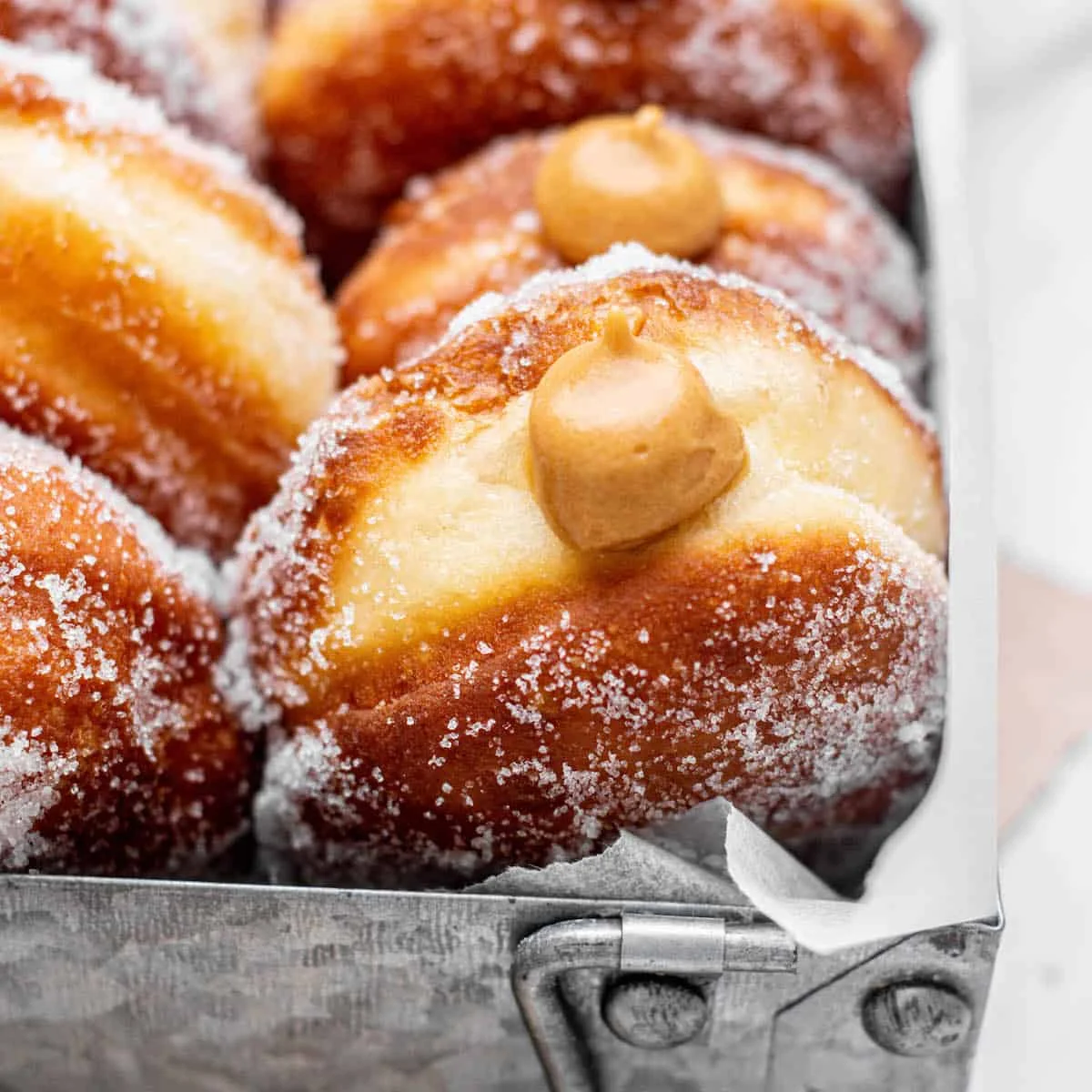
These American-style fried doughnuts have a soft, pillowy crumb, a coating of sugar and a centre filled with whipped caramel. They take time to prepare and chill, but the separate caramel and dough stages make the work easy to plan.
Ingredients
- 200 ggranulated sugar
- 42 gbutter, at room temperature and cut into cubes
- 160 gdouble cream, at room temperature
- 1/2 teaspoonvanilla extract
- 1/4 teaspoonsalt
- 7 ginstant yeast or active dried yeast
- 25 ggranulated sugar
- 180 gmilk, lukewarm
- 405 gplain flour
- 2 largeeggs
- 3/4 teaspoonsalt
- 45 gbutter, softened
- 946–1,893 ml (1–2 quarts)neutral oil, enough to fill the pot to a depth of about 7.5 cm
- 100 ggranulated sugar
Instructions
- 1
Melt the sugar
Measure and cube the butter, then set it aside. Put the 200 g granulated sugar in a deep, medium saucepan over low-medium heat. Stir gently with a wooden spoon or heatproof spatula as it melts; it may clump before becoming an amber liquid. Keep the heat steady and do not let the sugar darken too much.
- 2
Finish the caramel
Once the sugar has fully melted, whisk in the butter cubes straight away and continue until they melt. Slowly add the double cream while whisking; the mixture will bubble and rise. Keep cooking and whisking until the sauce comes together, then take it off the heat and stir in the 1/4 teaspoon salt and vanilla.
- 3
Chill the caramel
Let the sauce cool for 5–10 minutes, then transfer it to a clean jar or bowl. Refrigerate for 4–5 hours, until thick and scoopable.
- 4
Mix the dough
In a stand mixer fitted with a dough hook, combine the lukewarm milk, yeast and 25 g sugar. If using active dried yeast, leave the mixture for 5–10 minutes until foamy. Add the eggs, flour and 3/4 teaspoon salt, then mix on low or by hand until a sticky, thick dough forms. Mix for about 2 minutes.
- 5
Develop the dough
Add the softened butter and mix at medium speed until the dough strengthens and pulls cleanly away from the sides of the bowl. Mix for at least 10 minutes, until it feels smooth, soft and strong.
- 6
Proof the dough
Shape the dough into a ball and place it in a lightly greased large bowl. Cover with plastic wrap and leave in a warm spot until doubled in size, or proof it overnight in the refrigerator.
- 7
Cut the rounds
Punch down the dough and turn it out onto a lightly floured surface. If chilled, it will be stiff; shape it into a mound and lightly flour the top. Roll it into a rectangle about 1.3 cm thick, then cut rounds about 9 cm across with a cookie cutter or jar lid. Set each round on parchment paper.
- 8
Rest the scraps
Knead the scraps into a ball and leave them to rest for a few minutes before rolling them out again, so the dough is less likely to spring back.
- 9
Proof the rounds
Leave the doughnut rounds for 30–60 minutes, until puffy. If their surfaces begin to dry, lightly brush them with water. Use kitchen scissors to cut the parchment so each doughnut rests on its own piece.
- 10
Heat the oil
When the doughnuts are nearly ready, pour the oil into a deep fryer or deep pot and heat it to 171–175°C.
- 11
Fry the doughnuts
Carefully lower 1–2 doughnuts into the oil and use tongs to remove their parchment. Fry for 2 minutes on one side, turn and fry for 2 minutes on the other. Keep the oil hot and below 177°C so the doughnuts do not brown too quickly before cooking through.
- 12
Drain the doughnuts
Lift the doughnuts out with a slotted spoon and let them drain for 20–30 seconds. Transfer them to paper towels to absorb excess oil.
- 13
Coat with sugar
Toss the doughnuts in the 100 g granulated sugar and set them aside.
- 14
Whip the caramel
Scoop the chilled caramel into a mixing bowl. Beat with an electric mixer for about 3–4 minutes, until lighter in colour, thick and airy.
- 15
Fill the doughnuts
Spoon the whipped caramel into a piping bag fitted with a round tip. Make a hole in the side of each cooled doughnut with the tip of a small knife, then pipe caramel into each one.
What are whipped caramel doughnuts?
These are yeast-raised, fried doughnuts filled with caramel that has been chilled and whipped until airy. They draw on the American doughnut tradition of enriched dough, hot-oil frying and a sweet finish.
Caramel is made separately and chilled while the dough rises, then whipped for the filling. That gives the doughnuts a soft centre and a light, creamy caramel inside.
Nutrition and macros by portion
The nutrition label shows one serving as written: 266 calories, 4g protein, 35g carbs, 12g fat.
| Portion | Adjustment | kcal | Protein | Carbs | Fat |
|---|---|---|---|---|---|
| Lighter | Smaller doughnuts | 186 kcal | 3g | 25g | 8g |
| This serving | As written | 266 kcal | 4g | 35g | 12g |
| Hungry | Larger portion | 399 kcal | 6g | 53g | 18g |
The doughnuts' carbohydrates come mainly from the flour and sugars, while the butter, cream and frying oil provide most of the fat. Flour, eggs, milk and cream contribute some protein. Serve one with fruit, or alongside a less sweet drink, for a more balanced plate.
Making the caramel
Melted sugar: Keep the heat moderate and stir gently as the sugar liquefies. An amber colour gives the sauce its caramel character; very dark sugar can taste bitter.
Cream and butter: Have both at room temperature, as specified, and add the cream carefully because the mixture bubbles up. Whisk continuously to bring the sauce together.
Building a strong dough
Yeast: Lukewarm milk helps start the dough without adding excessive heat. Active dried yeast gets a 5–10 minute foamy start; instant yeast can be mixed in as directed.
Kneading: The dough begins sticky, then the butter and continued mixing help it become smooth and elastic. Look for dough that pulls away from the bowl and feels soft but strong.
Shaping and proofing
Even rounds: Roll the dough to about 1.3 cm thick and cut rounds around 9 cm across. Resting the scraps before rerolling helps them relax instead of springing back.
Puffy doughnuts: Give the rounds 30–60 minutes to rise after cutting. They should look puffy before frying; keep an eye on them if the room is warm.
Frying without burning
Oil temperature: Aim for 171–175°C and keep it below 177°C. Too-hot oil can colour the outside before the middle has cooked.
Small batches: Fry only 1–2 at a time as the method specifies. Use the parchment to lower the rounds carefully, then remove it with tongs once they are in the oil.
Filling and serving
Whipped caramel: Beat the cold sauce for 3–4 minutes, until it looks lighter and airy. If it is too warm, it may not hold the same thick, scoopable texture.
To serve: Fill the cooled doughnuts after coating them in sugar. They are especially appealing on their own with coffee or alongside fresh fruit.
Recipe notes & tips
- Measure the butter and cube it before starting the caramel so it is ready to add.
- Let the caramel chill for the full 4–5 hours so it becomes thick enough to whip and pipe.
- Use a thermometer to keep the frying oil between 171°C and 175°C.
- Cut individual parchment squares so the proofed rounds are easier to lower into the oil.
- Let the doughnuts cool before filling so the caramel stays thick.
- Use a slotted spoon to lift each batch out, then let excess oil drain before setting them on paper towels.
Variations
- Add a pinch of spice: Stir a little cinnamon into the coating sugar.
- Use a different extract: Replace the vanilla with another extract that pairs well with caramel.
- Try a smaller cutter: Make smaller rounds and keep an eye on their frying time.
- Serve with fruit: Add berries or sliced fruit alongside the doughnuts.
- Make the dough ahead: Proof it overnight in the refrigerator for extra flavour.
Common mistakes to avoid
- Overheating the sugar: Keep the heat at low-medium and stop before the caramel becomes very dark.
- Adding cream too quickly: Pour it in carefully while whisking because the caramel will bubble up.
- Under-kneading the dough: Mix for at least 10 minutes after adding the butter, until the dough is smooth and strong.
- Skipping the second rise: Wait until the cut rounds look puffy before frying.
- Letting the oil get too hot: Keep it below 177°C so the outside does not burn before the centre cooks.
- Filling while hot: Allow the fried doughnuts to cool before piping in the whipped caramel.
How to store
Keep leftover doughnuts in an airtight container in the refrigerator and eat within 2 days. Bring them towards room temperature before serving; the texture is best fresh, and reheating can soften the sugar coating.
Frequently asked questions
Can I make the dough the night before?
Yes. The method allows for an overnight proof in the refrigerator. Shape the chilled dough as directed; it will be stiffer to handle.
How do I know the caramel is ready to whip?
After chilling for 4–5 hours, it should be thick and scoopable. Beat it for about 3–4 minutes until lighter in colour and airy.
Can I use active dried yeast?
Yes. Stir it into the lukewarm milk with the sugar and let it stand for 5–10 minutes, until foamy, before adding the other dough ingredients.
Why are my doughnuts springing back when I roll them?
The dough may need to relax. Let the scraps rest for a few minutes before rolling them out again.
How can I tell if the oil is hot enough?
Use a thermometer and aim for 171–175°C. Keep the oil below 177°C while frying.
Can I fill the doughnuts before frying?
No. Fry and cool them first, then make a small hole in each side and pipe in the whipped caramel.
Cook it from the original
This recipe comes from bakingwithbutter.com. Their page has the author’s own photos, notes and tips — the best place to cook it from.
Open the recipe on bakingwithbutter.com