
Basic Swiss Meringue Recipe
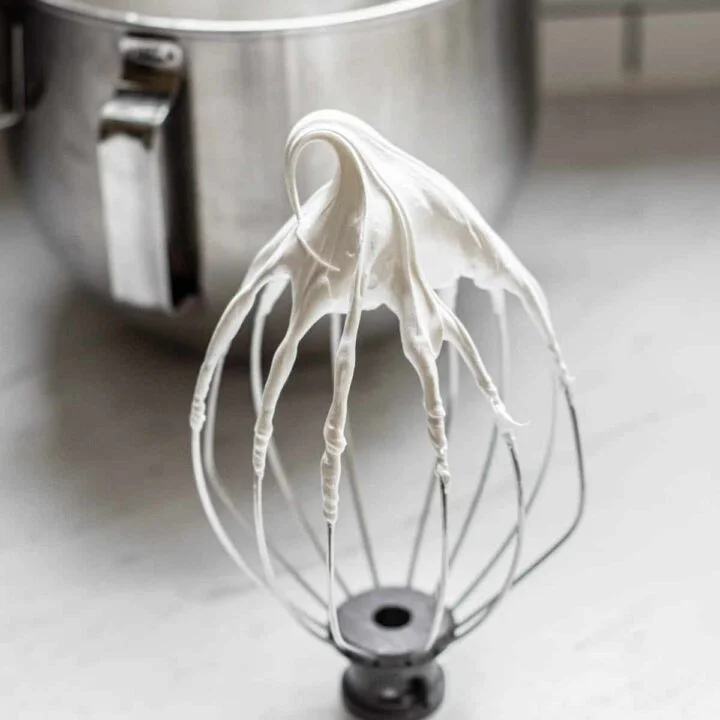
Swiss meringue is a smooth, glossy mixture of egg whites and sugar gently heated together before whipping. Use it to top tarts and sweet pies, or bake it into crisp meringues.
Ingredients
- 3 largeegg whites
- 150 ggranulated sugar
- 1/2 teaspoonvanilla paste or extract
- Pinchsalt
Instructions
- 1
Combine whites and sugar
Put the egg whites and sugar in a metal stand-mixer bowl or another heatproof bowl. Set it over a saucepan of simmering water, ensuring the bowl's base does not touch the water.
- 2
Warm the mixture
Whisk constantly by hand until the sugar dissolves, or until a food thermometer reads 71°C (160°F).
- 3
Whip to peaks
Take the bowl off the pan. Add the vanilla and salt, then fit the stand mixer with a whisk attachment and beat on high speed until the meringue is thick, glossy and forms stiff peaks with a slight bend.
- 4
Use the meringue
The Swiss meringue is ready to use.
What is Swiss meringue?
Swiss meringue is made by warming egg whites and sugar together over simmering water, then whipping the mixture until glossy and firm. The name refers to this style of preparation rather than a particular flavour.
This version keeps the ingredient list simple, with vanilla for aroma and a pinch of salt. The gentle heating helps dissolve the sugar before the whites are whipped.
Nutrition and macros by portion
The nutrition label shows one serving as written: 80 calories, 1g protein, 19g carbs, 0g fat.
| Portion | Adjustment | kcal | Protein | Carbs | Fat |
|---|---|---|---|---|---|
| Lighter | Use a thinner topping | 56 kcal | 1g | 13g | 0g |
| This serving | As written | 80 kcal | 1g | 19g | 0g |
| Hungry | Make a larger batch | 120 kcal | 2g | 29g | 0g |
Most of the carbohydrates and calories in a serving come from the granulated sugar; the egg whites contribute most of the protein, while fat is negligible in the listed nutrition. For a more balanced plate, serve a modest amount with fruit or alongside a dessert that includes fresh fruit.
Why heat the egg whites and sugar?
Gentle heat: warming the mixture over a pan of simmering water gives the sugar time to dissolve. Keep the bowl above the water rather than letting it sit in the pan.
Constant whisking: moving the mixture as it warms helps it heat evenly and prevents the egg whites from setting against the sides of the bowl.
How to judge the temperature
Thermometer cue: heat the mixture to 71°C (160°F), as specified in the method. Keep whisking while you check it.
Sugar cue: if you are checking by touch, rub a little mixture between clean fingers; it should feel smooth rather than grainy. Take care, as the mixture is hot.
Getting glossy, stiff peaks
Whipping: once the bowl is off the heat, beat at high speed with the whisk attachment. The meringue is ready when it looks thick and shiny and holds a stiff peak that bends just slightly at the tip.
Clean equipment: make sure the bowl and whisk are free of grease, which can make it harder for the egg whites to build volume.
Vanilla and salt
Vanilla: add the paste or extract after taking the bowl off the heat, as directed. It gives the meringue a gentle flavour without changing its basic character.
Salt: a pinch rounds out the sweetness. Measure it modestly so it does not take over the delicate flavour.
Ways to use it
Topping: spread or pipe the meringue over a tart or sweet pie once it has reached stiff, glossy peaks. Follow the instructions for the dessert you are topping.
Baked meringues: the mixture can also be shaped and baked. Baking temperature and time depend on the size and style of meringue, so use a recipe suited to the shape you want.
Recipe notes & tips
- Use a heatproof bowl that sits securely over the saucepan without touching the water.
- Keep the water at a simmer rather than a vigorous boil.
- Whisk continuously while the egg whites and sugar warm.
- Add the vanilla and salt after removing the bowl from the heat.
- Stop whipping when the meringue is glossy and forms stiff peaks with a slight bend.
Variations
- Vanilla paste: use it instead of extract for visible vanilla flecks.
- Citrus aroma: add finely grated lemon zest after taking the bowl off the heat.
- Almond note: replace the vanilla with a small amount of almond extract.
- Piped topping: transfer the finished meringue to a piping bag for a decorative finish.
- Baked shapes: pipe the meringue into small shapes and bake using a recipe designed for baked meringues.
Common mistakes to avoid
- Bowl touching the water: the egg whites may heat too quickly; keep the bowl above the water.
- Skipping the whisking: the mixture can heat unevenly; whisk constantly over the pan.
- Stopping before the sugar dissolves: the meringue may feel grainy; continue warming and whisking until smooth or 71°C (160°F).
- Adding flavourings over the heat: remove the bowl from the pan before adding the vanilla and salt.
- Under-whipping: a loose mixture will not hold its shape; continue beating until glossy, stiff peaks form.
How to store
For the best texture, use the finished meringue soon after whipping. If you need to hold it briefly, cover and refrigerate it, then check its texture before using; whipped meringue can lose volume or release moisture as it stands.
Frequently asked questions
Can I make Swiss meringue without a stand mixer?
Yes. You can use a heatproof bowl and a hand-held electric mixer for the whipping stage, though it may take more effort.
How do I know when the sugar has dissolved?
The mixture should feel smooth rather than gritty when a small amount is rubbed between clean fingers. You can also use a food thermometer and heat it to 71°C (160°F).
Why are my peaks not stiff?
The mixture may need more whipping. Continue at high speed and look for thick, glossy peaks that hold their shape with just a slight bend.
Can I use vanilla paste instead of extract?
Yes. The ingredient list allows either vanilla paste or extract; add it after removing the bowl from the heat.
Can I bake this Swiss meringue?
Yes, it can be shaped into baked meringues. Baking time and temperature are not specified here, so follow a recipe for the size and style you plan to make.
Cook it from the original
This recipe comes from bakingwithbutter.com. Their page has the author’s own photos, notes and tips — the best place to cook it from.
Open the recipe on bakingwithbutter.com