
Christmas Cake
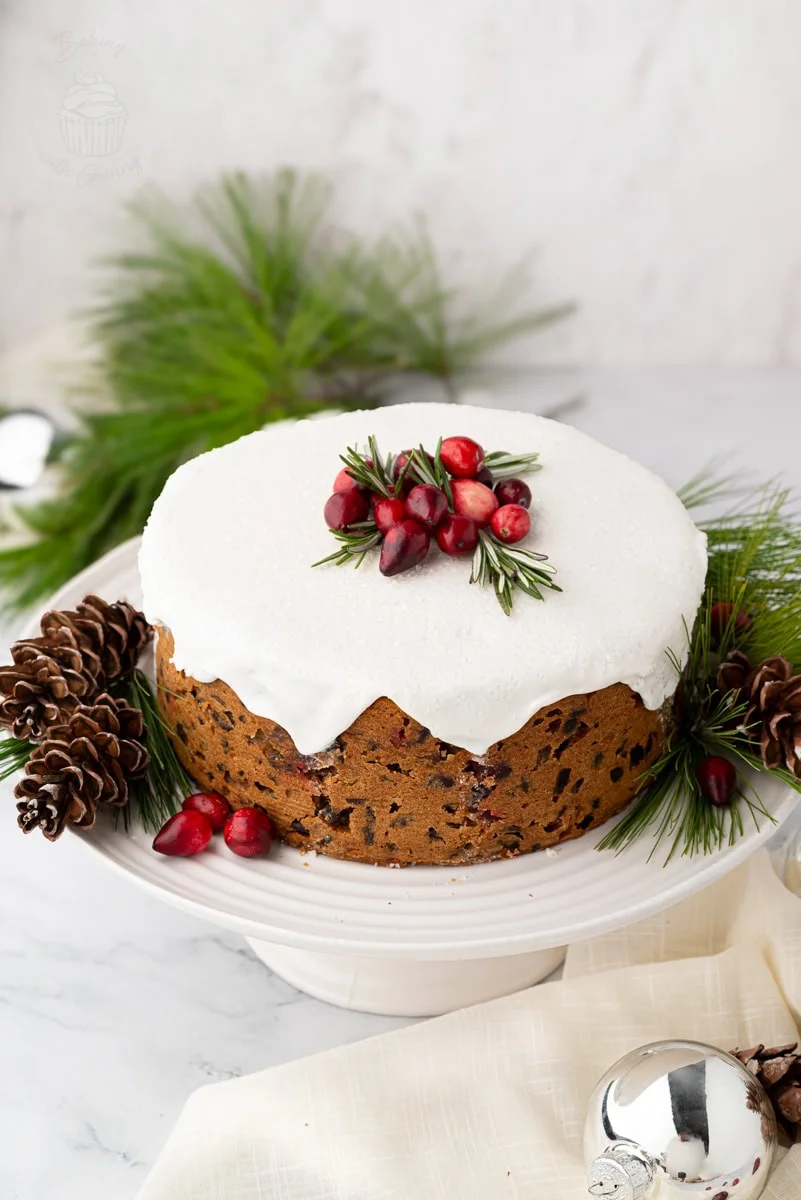
This traditional British Christmas cake is a dense, richly fruited bake, made with dried fruit soaked in orange juice or brandy and finished with marzipan and icing. It takes time to mature, so it’s a good choice to make ahead for the festive season.
Ingredients
- 450 gcurrants
- 200 gsultanas
- 200 graisins
- 150 gglacé cherries, halved
- 75 gdried mixed peel
- Zest of 1orange
- 100–200 mlorange juice or brandy
- 275 gsoft margarine or butter, at room temperature
- 275 gsoft dark brown sugar
- 5free-range eggs, at room temperature
- 75 gground almonds
- 350 gplain flour
- 1 tspmixed spice
- 1 tspground cinnamon
Instructions
- 1
Soak the fruit
Put the currants, sultanas, raisins, halved glacé cherries, mixed peel and orange zest in a large bowl. Pour over the orange juice or brandy and mix well. Cover and leave in a safe place overnight.
- 2
Prepare the tin
The next day, preheat the oven to 150°C, or 130°C for a fan-assisted oven. Grease and line an 8-inch cake tin with greaseproof paper.
- 3
Cream and combine
In a separate large bowl, cream the margarine or butter with the sugar. Beat in the eggs one at a time, mixing each in before adding the next, then stir in the ground almonds.
- 4
Make the batter
Sift in the flour, mixed spice and cinnamon, then mix to make a fairly thick batter.
- 5
Add the fruit
Mix the batter with the soaked fruit until the fruit is coated. Transfer it to the lined tin and spread it to the edges. Make a shallow dip in the centre with a spoon to help limit the rise.
- 6
Wrap the tin
Wrap brown parcel paper around the tin and secure it with string. Cover the top of the cake with a dampened piece of greaseproof paper. Place the tin on an oven tray, rather than directly on the oven shelf, and put it in the preheated oven.
- 7
Bake the cake
Bake for 3½–4 hours, checking after 3 hours. If it appears to be baking too quickly, lower the oven temperature slightly. Test the centre with a skewer; the cake is ready when it comes out clean.
- 8
Cool and store
Take the cake out of the oven and leave it to cool completely in its tin. Remove it from the tin but keep the greaseproof lining on. Cover the top with extra greaseproof paper, wrap the cake well in cling film and foil, and store it somewhere safe to mature before decorating.
- 9
Feed if desired
If you want to feed the cake, keep it wrapped for a couple of weeks, then unwrap it and poke a few holes in the top. Brush with a little extra brandy or orange juice, then wrap and store it again; this can be repeated a couple of times. Avoid feeding it during the week before decorating. Use caution with orange juice, as it can encourage mould if the cake is overfed or stored incorrectly.
- 10
Decorate the cake
For the finish, cover the cake with a layer of marzipan followed by fondant or royal icing, then add your chosen decoration.
What is Christmas cake?
Christmas cake is a traditional British rich fruit cake, usually prepared ahead so its dense crumb and dried fruit can mature before the festive season.
Soaked fruit: This version combines currants, sultanas, raisins, cherries and mixed peel with orange zest and either juice or brandy. The batter is baked slowly, then the cake can be topped with marzipan and icing.
Nutrition and macros by portion
The nutrition label shows one serving as written: 2070 calories, 35g protein, 365g carbs, 56g fat.
| Portion | Adjustment | kcal | Protein | Carbs | Fat |
|---|---|---|---|---|---|
| Lighter | Smaller slice with fruit | 1449 kcal | 25g | 255g | 39g |
| This serving | As written | 2070 kcal | 35g | 365g | 56g |
| Hungry | Larger slice | 3105 kcal | 53g | 548g | 84g |
Most of the carbohydrates come from the dried fruit, mixed peel, sugar and flour; the margarine or butter and ground almonds contribute much of the fat, while eggs and almonds provide some protein. The estimate is divided into four portions as specified, so each portion is substantial; serve a smaller slice with fresh fruit for a lighter plate.
Choosing the fruit and liquid
Fruit mix: The different dried fruits and glacé cherries bring a range of sweetness and texture, while mixed peel adds a citrus note. Halving the cherries helps distribute them through the cake.
Soaking liquid: Orange juice gives a fruity, non-alcoholic option, while brandy brings a different flavour. Use the amount needed to moisten the fruit, within the recipe’s 100–200 ml range.
Getting the batter right
Room-temperature ingredients: Soft margarine or butter and room-temperature eggs are easier to combine evenly. Add the eggs one at a time so each is mixed in before the next goes into the bowl.
Thick mixture: The batter is meant to be fairly thick before the soaked fruit is added. Fold and mix until the fruit is coated, then spread the mixture evenly into the tin.
Preparing for a long bake
Protective wrapping: The brown paper around the tin and the damp greaseproof paper on top help shield the cake during its lengthy bake. Set the tin on an oven tray as directed.
Centre dip: A shallow hollow in the batter helps limit a pronounced rise in the middle. Keep it slight, and avoid pressing the mixture down firmly.
Checking doneness
Timing: Begin checking after 3 hours, though the full bake may take 3½–4 hours. If the surface seems to be cooking too quickly, lower the oven temperature slightly.
Skewer test: Insert a skewer into the centre; it should come out clean when the cake is baked through. Let the cake cool fully in its tin before removing it.
Maturing and decorating
Resting: Once cool, keep the lining in place and wrap the cake well in cling film and foil. Store it somewhere safe while it matures, before adding the decoration.
Finishing layers: Marzipan can go beneath fondant or royal icing. Add the decorative finish of your choice after the cake has had time to mature.
Serving ideas
A small slice is rich, so serve it on its own or alongside tea or coffee. For a more balanced plate, add fresh fruit rather than another rich accompaniment.
If serving after decorating, cut with a sharp knife and wipe the blade between slices to keep the icing and marzipan layers neat.
Recipe notes & tips
- Soak the fruit overnight so it has time to absorb the orange juice or brandy.
- Line the tin before mixing the batter, as the fruit mixture is thick and ready to bake once combined.
- Use eggs and margarine or butter at room temperature to help them mix smoothly.
- Check the cake after 3 hours and reduce the oven temperature slightly if it is baking too quickly.
- Let the cake cool completely in its tin before removing it.
- If using orange juice to feed the cake, be sparing and store it carefully to reduce the risk of mould.
Variations
- Use butter: Choose butter instead of margarine for the fat in the batter.
- Choose brandy: Soak the fruit in brandy instead of orange juice for an alcoholic version.
- Choose orange juice: Use orange juice for a non-alcoholic soak.
- Use fondant: Cover the marzipan with fondant icing for a smooth finish.
- Use royal icing: Choose royal icing instead of fondant for the outer layer.
Common mistakes to avoid
- Skipping the soak: Leave the fruit covered overnight so it has time to absorb the liquid.
- Adding eggs all at once: Beat them in one at a time, mixing each through before adding the next.
- Overfilling the centre: Spread the batter to the edges and make only a slight dip in the middle.
- Baking without protection: Wrap the tin and cover the cake as directed to protect it during the long bake.
- Relying on time alone: Start checking after 3 hours and use a skewer to test the centre.
- Overfeeding with juice: Use orange juice sparingly and wrap and store the cake carefully.
How to store
After it has cooled completely, keep the cake in its greaseproof lining and wrap it well in cling film and foil. Store it somewhere safe while it matures before decorating; the recipe does not specify a fixed storage duration. If feeding with orange juice, use caution because it may encourage mould if overused or stored incorrectly.
Frequently asked questions
Can I use orange juice instead of brandy?
Yes. The recipe allows either orange juice or brandy for soaking the fruit. Take care if using orange juice later to feed the cake, as it can encourage mould if overused or stored incorrectly.
How long should I soak the fruit?
Cover the bowl and leave the fruit to soak overnight before making the cake.
How do I know when the cake is done?
Start checking after 3 hours. Insert a skewer into the centre; it should come out clean when the cake is baked through.
Why does the tin need paper around it?
The recipe wraps the tin in brown parcel paper and covers the cake with damp greaseproof paper for the long bake. The tin is also placed on an oven tray rather than directly on the oven shelf.
Can I feed the cake before decorating?
Yes, if you wish. After a couple of weeks, poke a few holes in the top, brush with a little extra brandy or orange juice, then wrap it again; stop feeding at least a week before decorating.
What icing goes on Christmas cake?
The suggested finish is a layer of marzipan followed by fondant icing or royal icing. You can then add decoration of your choice.
Cook it from the original
This recipe comes from bakingwithgranny.co.uk. Their page has the author’s own photos, notes and tips — the best place to cook it from.
Open the recipe on bakingwithgranny.co.uk