
Mango coconut pancakes
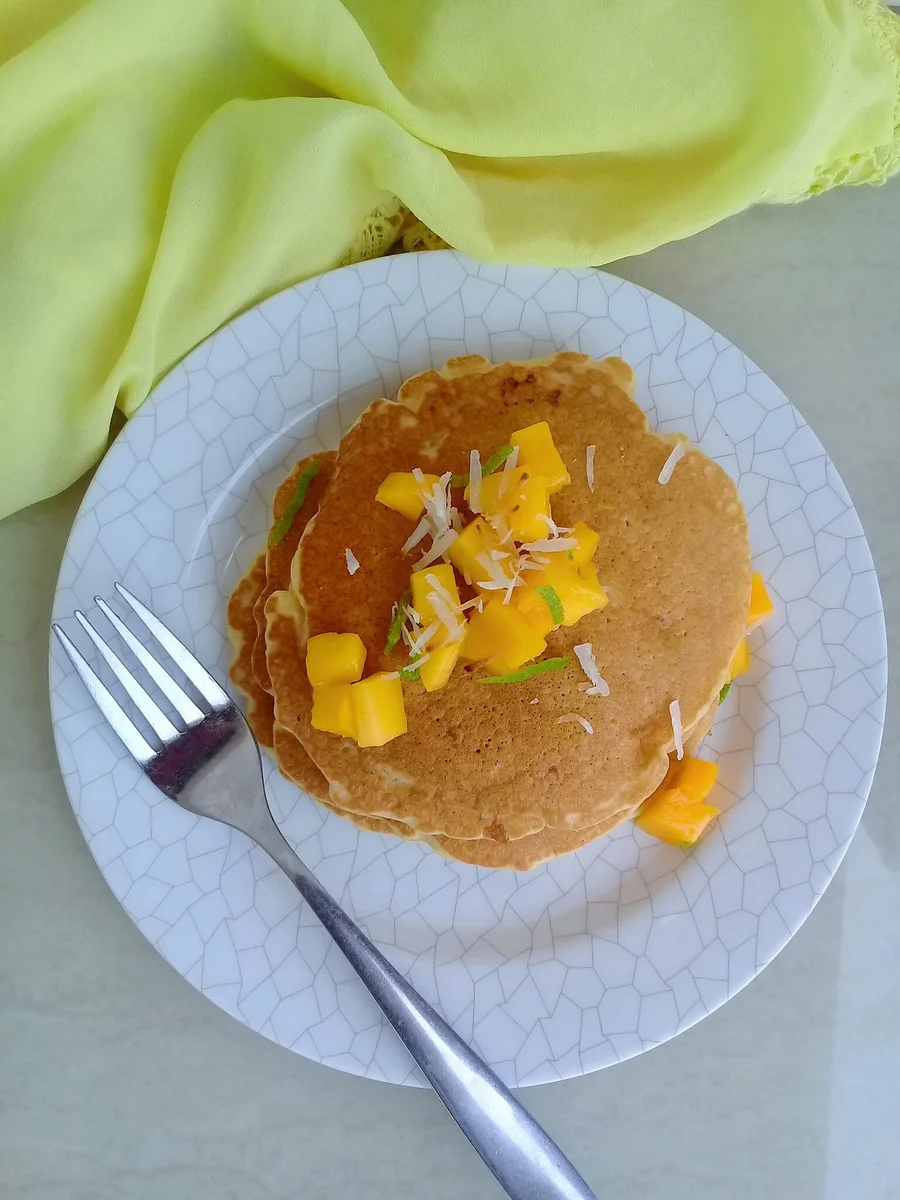
These soft, lightly sweet pancakes combine chopped mango with coconut in the batter. They make a quick breakfast or brunch, with fruit and coconut adding flavour to a simple pan-cooked stack.
Ingredients
- 120 g (1 cup)pastry flour
- 2 tablespoonssugar
- 1 teaspoonbaking powder
- ¼ teaspoonsalt
- 33 g (⅓ cup)shredded coconut, unsweetened if preferred
- About ½ cup (approximately 80 g)mango, finely chopped
- 1egg, beaten
- 255 ml (1 cup) plus 1 tablespoonlight coconut milk
- 1 tablespoonmargarine or butter, melted and cooled
Instructions
- 1
Prepare the dry ingredients
Pulse the shredded coconut in a blender or food processor until it is in very small pieces. Mix it with the flour, sugar, baking powder and salt.
- 2
Mix the batter
Beat together the coconut milk, melted and cooled margarine or butter, and beaten egg. Pour this over the dry ingredients and stir until combined, then fold in the chopped mango.
- 3
Heat the pan
Warm a pan over medium heat until a drop of water sizzles when it touches the surface.
- 4
Prepare the surface
Add a drop or two of oil to the pan and wipe it over the surface with kitchen paper. Skip this step if you are using a non-stick pan.
- 5
Cook the pancakes
Scoop the batter into the pan in ¼-cup portions. Cook for 1–2 minutes, until small bubbles appear on the surface, then flip with a spatula and cook the other side for 1–2 minutes. Repeat with the remaining batter and serve with syrup of your choice, or top with mango or coconut.
What are mango coconut pancakes?
Pancakes are pan-cooked rounds made from a pourable batter, with versions found in many food traditions. This recipe gives the familiar format a tropical flavour with coconut in the batter and pieces of mango folded through it.
The method keeps things simple: finely pulsed coconut mixes through the dry ingredients, while the mango brings soft fruit pockets to each pancake.
Nutrition and macros by portion
The nutrition label shows one serving as written: 135 calories, 4g protein, 20g carbs, 6g fat.
| Portion | Adjustment | kcal | Protein | Carbs | Fat |
|---|---|---|---|---|---|
| Lighter | Use less syrup | 95 kcal | 2g | 14g | 4g |
| This serving | As written | 135 kcal | 4g | 20g | 6g |
| Hungry | Serve a larger stack | 203 kcal | 5g | 30g | 8g |
The flour and sugar provide most of the carbohydrates, while the coconut milk, shredded coconut and margarine or butter contribute most of the fat. The egg adds some protein, though these pancakes are not especially protein-rich on their own; serve them with yoghurt or another protein-rich accompaniment to balance the plate.
The coconut in the batter
Fine pieces: Pulse the shredded coconut until it is chopped small, so it is easier to distribute through the batter.
Coconut milk: Light coconut milk keeps the batter pourable and contributes coconut flavour. Stir the tin or carton before measuring if the contents have separated.
Adding the mango
Small pieces: Chop the mango finely so it can be folded in without weighing down the batter or making the pancakes difficult to flip.
Gentle folding: Stir the fruit in after the wet and dry mixtures are combined, using a light hand to avoid overworking the batter.
Getting the pan ready
Medium heat: Wait until a drop of water sizzles on contact before adding batter. If it evaporates instantly or the pan smokes, lower the heat slightly.
Light coating: A drop or two of oil, wiped around with kitchen paper, helps prevent sticking in an ordinary pan. A non-stick pan can be used without oiling.
When to flip
First side: Cook each ¼-cup portion for 1–2 minutes, watching for small bubbles on the surface as the cue to turn it.
Second side: Cook for another 1–2 minutes. Adjust the heat if the outside browns too quickly before the pancake has cooked through.
Serving the pancakes
Toppings: Serve them with a syrup of your choice, or add mango or coconut on top as suggested in the method.
On the plate: Their sweet, fruity flavour also works well alongside plain yoghurt or fresh fruit if you want a more substantial breakfast.
Recipe notes & tips
- Use a ripe but firm mango so the pieces hold their shape when folded into the batter.
- Measure the batter in ¼-cup portions for pancakes that cook at a similar pace.
- Let the melted margarine or butter cool before mixing it with the egg and coconut milk.
- Keep the pan at medium heat and lower it if the pancakes brown before bubbles form.
- Wipe the pan with only a little oil to avoid a greasy surface.
Variations
- Extra mango: Add a little more chopped mango on top when serving.
- Toasted coconut: Toast some shredded coconut separately and scatter it over the cooked pancakes.
- Dairy-free option: Use margarine instead of butter, as specified in the recipe.
- Sweeter topping: Serve with your preferred syrup for extra sweetness.
- Fruit topping: Add fresh mango pieces to each serving.
Common mistakes to avoid
- Large mango pieces: They can make pancakes harder to turn; chop the fruit finely.
- Overmixing: Stir only until the ingredients are incorporated, then fold in the mango gently.
- Pan too hot: The outsides may brown before the centres cook; reduce the heat to medium or slightly lower.
- Flipping too soon: Wait until small bubbles form on the surface before turning each pancake.
- Crowding the pan: Leave enough room to turn each portion with a spatula, cooking in batches if needed.
How to store
Cool leftover pancakes, then store them in a covered container in the fridge for up to 3 days. Reheat in a pan over low heat or in the microwave until warmed through.
Frequently asked questions
Can I use canned coconut milk?
Yes. The recipe allows light coconut milk from a can or homemade coconut milk.
Do I need to oil a non-stick pan?
No. The method says oiling is unnecessary when using a non-stick pan.
How do I know when to flip the pancakes?
Cook the first side for 1–2 minutes, until small bubbles form on the surface, then flip.
Can I use butter instead of margarine?
Yes. The recipe lists either melted, cooled margarine or butter.
What can I serve on top?
The recipe suggests syrup of your choice, mango or coconut. Fresh fruit or yoghurt can also accompany the stack.
Cook it from the original
This recipe comes from biscuitsandladles.com. Their page has the author’s own photos, notes and tips — the best place to cook it from.
Open the recipe on biscuitsandladles.com