
Sourdough Baba au Rhum Recipe
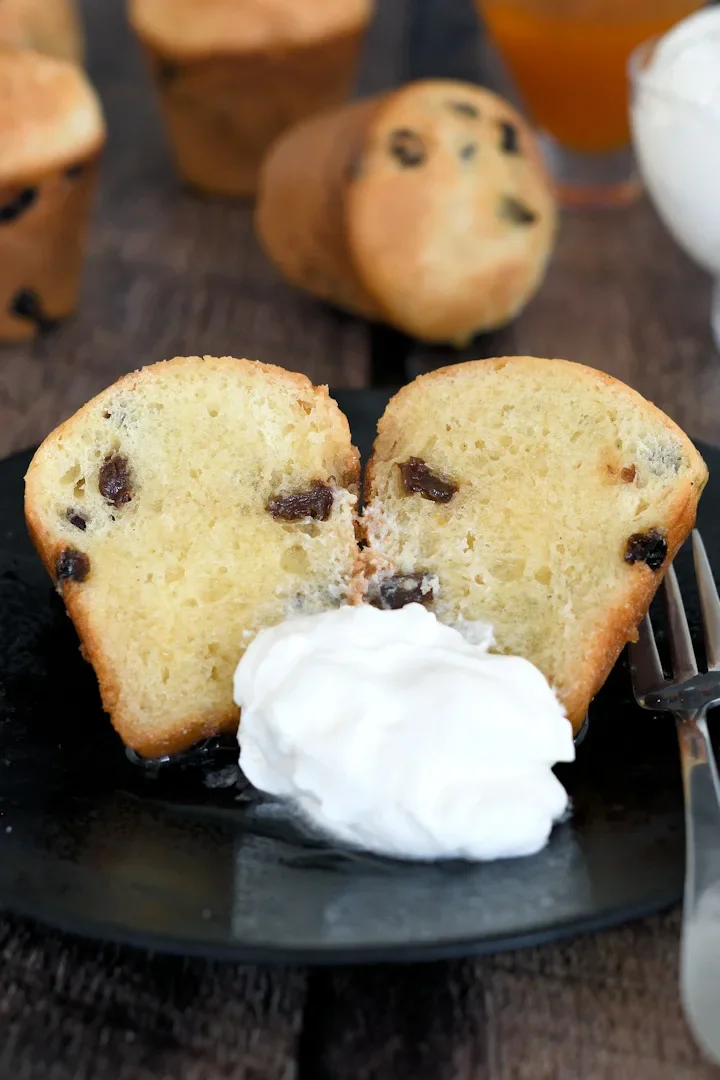
Sourdough baba au rhum is a light, enriched yeast cake soaked in vanilla rum syrup and finished with apricot glaze and whipped cream. The sourdough starter adds character to this French-inspired dessert, while the syrup keeps each baba moist and fragrant.
Ingredients
- 227 g (8 oz; 1 cup)active sourdough starter (100% hydration)
- 60 ml (2 oz; ¼ cup), scalded and cooled to 43°C (110°F)whole milk
- 354 g (12½ oz; 2½ cups; see note)plain flour
- 28 g (1 oz; 2 tablespoons)granulated sugar
- 4 large, at room temperatureeggs
- ½ teaspoontable salt
- 85 g (3 oz), softened to room temperatureunsalted butter
- ½ cupraisins or currants
- 120 ml (4 oz; ½ cup)dark rum
- 473 ml (16 oz; 2 cups)water
- 454 g (16 oz; 2 cups)granulated sugar
- ½, splitvanilla pod
- 340 g (12 oz; 1 cup)apricot preserves
- 240 ml (8 oz; 1 cup)double cream
- 2 tablespoonsicing sugar
- 1 teaspoonvanilla extract
Instructions
- 1
Mix starter and milk
Put the sourdough starter and milk in the bowl of a stand mixer fitted with the paddle. Alternatively, use a large bowl and a hand mixer or wooden spoon.
- 2
Start the dough
With the mixer on low, add 1 cup of the flour and mix until a shaggy dough forms. Cover and leave for 30–60 minutes.
- 3
Add eggs and flour
With the mixer on low, add the sugar, eggs and salt. Add the remaining flour and mix until it is incorporated.
- 4
Work in butter
With the mixer running, add the softened butter a tablespoon at a time, mixing until incorporated. The mixture will be a very thick batter or loose dough rather than a dough that gathers like bread dough.
- 5
Fold and ferment
Cover the bowl and leave at room temperature. After 30 minutes, uncover it and use a plastic bowl scraper to lift one side of the dough into the centre; repeat with the other three sides. Cover and repeat this folding after another 30 minutes, then after 60 minutes, and once more after a further 60 minutes. The dough should now look lively and airy; if it is still sluggish, leave it at room temperature for another hour or two. Refrigerate overnight. Meanwhile, soak the raisins in the rum.
- 6
Fill the moulds
The next day, generously butter 12 baba moulds and arrange them on a baking tray; non-stick moulds do not need buttering. Drain the raisins, reserving the rum, then take the dough from the fridge and stir in the raisins until evenly distributed. Divide the dough between the moulds, filling each no more than halfway. Cover the tray and leave until the dough rises to fill the moulds, about 1½ hours. Meanwhile, heat the oven to 190°C (375°F).
- 7
Bake the babas
Bake until well browned, about 25 minutes. Take the tray from the oven and turn the babas out onto a wire rack.
- 8
Make rum syrup
While the babas bake, combine the water and sugar in a medium saucepan. Scrape the seeds from the vanilla pod into the pan, add the pod, and bring the syrup to the boil. Turn off the heat. Add enough fresh rum to the reserved rum to make 120 ml (½ cup) in total, then stir it into the syrup.
- 9
Soak each baba
Put as many babas as will fit into the syrup. Leave them for 10 minutes, turning them after 5 minutes so the other side can soak. Lift them onto a wire rack set over a clean baking tray to drain, then repeat with the remaining babas. Keep any leftover syrup for serving.
- 10
Glaze and cool
Warm the apricot preserves and strain out the fruit pieces. Brush the tops and sides of each baba with the preserves, then leave the babas to cool completely before serving.
- 11
Whip and serve
Whip the cream with the icing sugar and vanilla. Set a baba on its side on a dessert plate, split it lengthways and open it like a book. Drizzle the centre with leftover syrup to taste, then pipe or spoon a generous dollop of whipped cream into the middle.
What is baba au rhum?
Baba au rhum is a French dessert of small, enriched cakes soaked in rum syrup and often served with cream. Its hallmark is a tender, airy crumb that can take up plenty of syrup without falling apart.
This version uses active sourdough starter in place of relying only on commercial yeast. Raisins steeped in rum bring extra fruitiness, while apricot glaze gives the finished babas a glossy surface.
Nutrition and macros by portion
The nutrition label shows one serving as written: 496 calories, 6g protein, 88g carbs, 15g fat.
| Portion | Adjustment | kcal | Protein | Carbs | Fat |
|---|---|---|---|---|---|
| Lighter | Use a smaller cream dollop | 347 kcal | 4g | 62g | 11g |
| This serving | As written | 496 kcal | 6g | 88g | 15g |
| Hungry | Serve a larger baba | 744 kcal | 9g | 132g | 23g |
The flour and sugar supply most of the carbohydrates, while butter and double cream contribute much of the fat. Eggs, starter and cream provide some protein; a serving of fruit alongside can add freshness and balance the rich, syrup-soaked cake.
The starter and the dough
Active starter: Use it when it is lively and ready to leaven, as this dough relies on fermentation for its rise. The initial rest after adding some of the flour gives the mixture time to begin developing before the eggs and remaining flour go in.
Soft texture: The butter is added gradually, and the finished mixture is much looser than bread dough. Do not add extra flour just to make it kneadable; the method is designed for a thick batter or loose dough.
Why the folds matter
Gentle folds: Each fold lifts the dough over itself rather than kneading it. Work around all four sides each time, then cover the bowl again so the dough can rest between folds.
Room-temperature rise: Watch for a lively, airy appearance rather than relying only on the clock. If the dough still seems sluggish after the final fold, give it another hour or two before refrigerating it overnight.
Soak the raisins
Rum-soaked fruit: The raisins or currants steep in the measured rum while the dough ferments. Drain them before adding them to the dough, but save the rum for the syrup.
Even distribution: Stir the drained fruit through the dough before dividing it between the moulds. This helps avoid moulds with all the fruit clustered in one place.
Fill and bake
Room to rise: Fill each mould no more than halfway, then cover the tray while the dough proofs. It should rise to fill the moulds, which takes about 1½ hours in the method.
Colour cue: Bake at 190°C until the babas are well browned, about 25 minutes. Turn them out onto a wire rack so they can be handled for soaking.
The syrup and glaze
Vanilla syrup: Bring the water and sugar to the boil with the scraped vanilla seeds and pod, then turn off the heat before adding the rum. The recipe brings the reserved rum back up to ½ cup with fresh rum before mixing it in.
Apricot finish: Give the babas 10 minutes in the syrup, turning them after 5 minutes, then let them drain on a rack. Strain the warmed preserves before brushing them over the cakes for a smooth glaze.
Serving the babas
Cream filling: Whip the double cream with icing sugar and vanilla, then split each baba lengthways and open it like a book. Add the cream just before serving so it stays light and distinct from the syrup-soaked cake.
Extra syrup: Keep any syrup left after soaking to drizzle into the centre of each baba. Serve the cakes fully cooled, with the cream and syrup added to taste.
Recipe notes & tips
- Start with active starter so the dough has a good chance of becoming airy during the long fermentation.
- Add the butter gradually and let each addition incorporate before adding the next.
- Keep the moulds no more than half full before proofing, as the dough needs room to rise.
- Turn the babas halfway through soaking so both sides absorb syrup.
- Strain the warmed apricot preserves for a smoother glaze.
- Whip the cream shortly before serving for the freshest texture.
Variations
- Use currants: Swap the raisins for currants while keeping the same quantity.
- Adjust the fruit: Use either raisins or currants, or a mixture of the two.
- Change the rum: Choose another dark rum with a flavour you enjoy.
- Serve extra syrup: Offer some reserved syrup at the table for guests to drizzle over their babas.
- Skip the fruit pieces: Strain the preserves thoroughly before glazing for a smooth finish.
Common mistakes to avoid
- Adding too much flour: The dough is meant to be very thick batter or loose dough, so do not try to make it behave like bread dough.
- Rushing fermentation: If the dough still looks sluggish after the folds, allow another hour or two at room temperature before chilling.
- Overfilling moulds: Keep the dough below halfway in each mould so it has space to rise.
- Forgetting to turn the babas: Flip them after 5 minutes in the syrup so both sides soak.
- Glazing before draining: Let the soaked babas drain on a rack before brushing them with preserves.
- Adding cream too early: Wait until serving to fill the cooled babas with whipped cream.
How to store
Keep the babas in an airtight container in the fridge and use within 2–3 days. Store whipped cream separately, then serve the babas at room temperature or warm them gently before adding freshly whipped cream; avoid reheating them with the cream in place.
Frequently asked questions
Can I make the dough ahead?
Yes. After the folds and room-temperature fermentation, the recipe calls for refrigerating the dough overnight. Shape and proof it the next day.
How do I know when the dough is ready to chill?
It should look lively and airy after the series of folds. If it still seems sluggish, leave it at room temperature for another hour or two before refrigerating.
Can I use a non-stick baba mould?
Yes. The method says non-stick moulds do not need buttering; butter other moulds generously before filling.
What if I do not have baba moulds?
The recipe specifies 12 baba moulds and does not give an alternative pan or baking time. Use moulds of a similar size if available, and check the cakes for the stated browned finish.
Can I make the babas without alcohol?
The rum is used both to soak the fruit and to flavour the syrup. The recipe does not specify a non-alcoholic substitute, so omitting it will change the intended flavour.
When should I add the whipped cream?
Whip it with the icing sugar and vanilla when you are ready to serve. Split each cooled baba, add syrup to taste, and fill the centre with cream.
Cook it from the original
This recipe comes from baking-sense.com. Their page has the author’s own photos, notes and tips — the best place to cook it from.
Open the recipe on baking-sense.com