
Yule Log
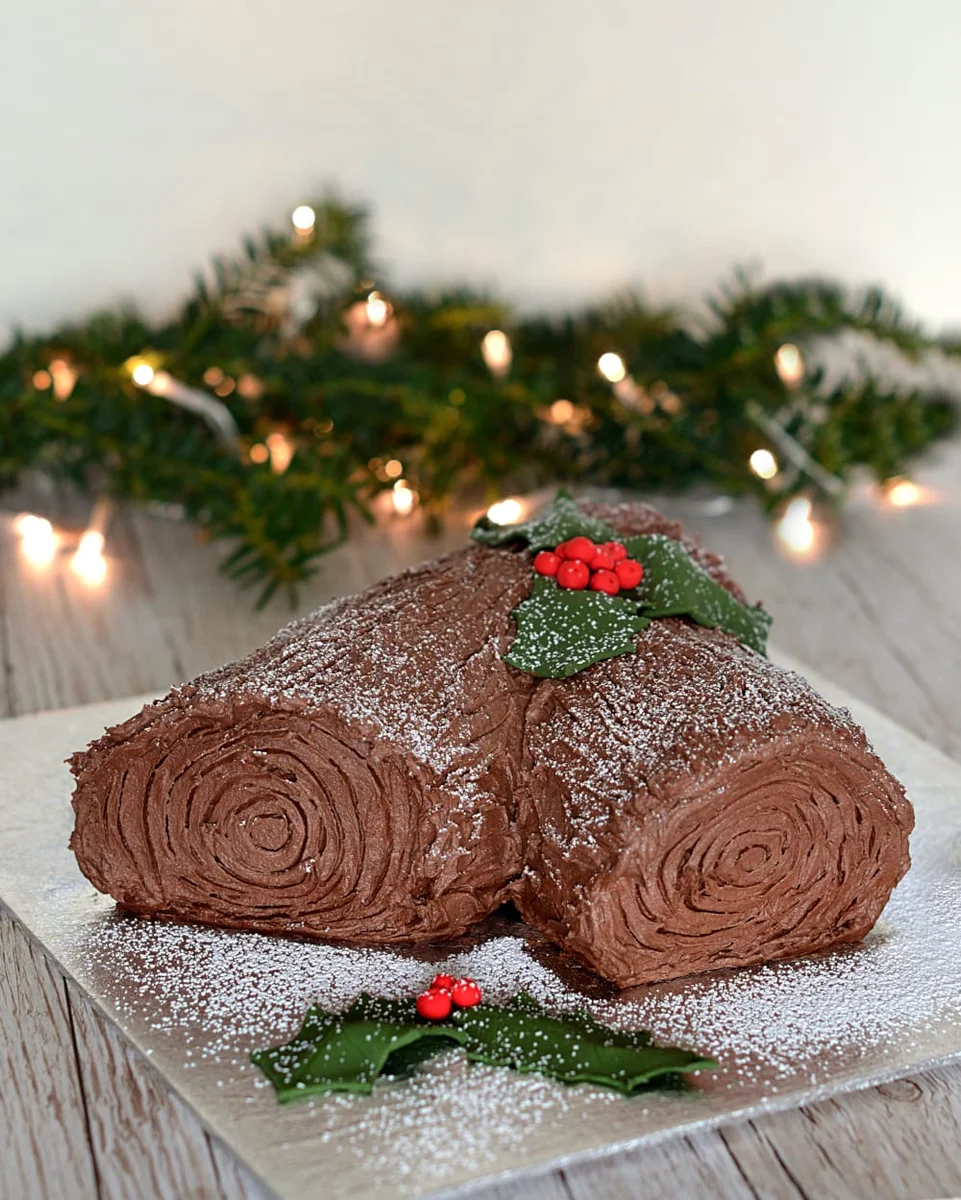
A chocolate sponge is rolled around a cocoa buttercream filling and finished with a bark-like coating to make this classic festive Yule log. Rolling the sponge while it is hot helps it take shape before the filling goes in.
Ingredients
- 4free-range eggs, at room temperature
- 125 gcaster sugar
- 100 gplain flour
- 30 gcocoa powder
- 1 tbsptepid water
- 160 gblock margarine or butter, at room temperature
- 180 gicing sugar
- 30 gcocoa powder
- 1 tspvanilla extract
- 2 tbspmilk
Instructions
- 1
Prepare the tin
Heat the oven to 190°C (170°C fan, Gas Mark 5). Line an approximately 35 × 25 cm Swiss roll tin with greaseproof paper, grease it with butter and dust it with flour.
- 2
Sift dry ingredients
Sift the flour and 30 g of cocoa powder together into a bowl, then set aside.
- 3
Whisk eggs and sugar
In a large, grease-free bowl, whisk the eggs briefly, then add the caster sugar. Whisk until the mixture is pale, creamy and thick; an electric mixer can make this easier.
- 4
Fold in flour
Gently fold the sifted flour and cocoa into the egg mixture to make a batter. Fold in 1 tablespoon of tepid water.
- 5
Bake the sponge
Pour the batter into the prepared tin and spread it evenly. Bake in the preheated oven for 8–10 minutes.
- 6
Trim the sponge
Lay a piece of greaseproof paper on the work surface and turn the baked sponge out onto it. While it is still hot, peel away the paper from the tin, then trim a thin strip from each of the four edges to remove the crisp parts.
- 7
Roll while warm
At one short end, score the sponge about 1 cm from the edge without cutting all the way through. Starting at that edge, roll the sponge up in the greaseproof paper and leave it to cool.
- 8
Make buttercream
Cream the margarine or butter with the icing sugar until light and fluffy. Add the remaining 30 g of cocoa powder, the vanilla extract and 2 tablespoons of milk, then mix until combined. If the buttercream is too thick, add another tablespoon of milk.
- 9
Fill and re-roll
When the sponge is cool, unroll it and spread about one-third of the buttercream over the inside. Roll it up again, leaving the paper behind, and place it seam-side down.
- 10
Finish the log
Cut a section off at an angle and attach it to the side with some buttercream to make a log shape. Cover the sponge with the remaining buttercream and draw a fork through it to create a bark-like finish. Decorate as desired, for example with fondant holly leaves, pinecones or a robin, and dust with icing sugar before serving.
What is a Yule log?
A Yule log, also known as a bûche de Noël, is a festive cake shaped to resemble a wooden log. The tradition is associated with the French Christmas dessert, made from rolled sponge and decorated to look like bark.
This version uses a cocoa sponge and a cocoa buttercream filling and coating. Rolling the sponge while warm gives it a head start on the curve, while the forked icing creates the log-like finish.
Nutrition and macros by portion
The nutrition label shows one serving as written: 817 calories, 11g protein, 103g carbs, 41g fat.
| Portion | Adjustment | kcal | Protein | Carbs | Fat |
|---|---|---|---|---|---|
| Lighter | Thinner buttercream layer | 572 kcal | 8g | 72g | 29g |
| This serving | As written | 817 kcal | 11g | 103g | 41g |
| Hungry | Serve a larger slice | 1226 kcal | 17g | 155g | 62g |
The flour and sugars provide most of the carbohydrates, while the buttercream’s margarine or butter contributes much of the fat. Eggs and flour supply some protein, though this is primarily a rich dessert rather than a protein-focused dish. Serve a slice after a meal with fruit or berries for a more balanced plate.
Build a light sponge
Eggs and sugar: whisk them until the mixture is pale, thick and creamy. This step gives the sponge much of its lift, so take it far enough that the mixture holds a ribbon briefly when the whisk is lifted.
Flour and cocoa: sift them together, then fold them in gently to keep as much air in the batter as possible. Add the water and fold just until combined.
Roll it without cracking
Warm sponge: turn it out and remove the tin paper while the cake is still hot, then trim the crisp edges. Score one short end lightly and roll the sponge with the fresh sheet of greaseproof paper.
Cool before filling: leave the rolled sponge to cool in its paper. If you spread buttercream onto a warm cake, it can soften and slide rather than staying in an even layer.
Check the bake
Timing: the sponge bakes quickly, so begin checking at 8 minutes. It should be set and spring back when lightly pressed; avoid leaving it in the oven until it becomes dry and brittle.
Edges: trimming a thin strip from each side removes the firmer edges, making the sponge easier to roll and giving the finished log a neater shape.
Get the buttercream right
Room-temperature fat: use softened block margarine or butter so it creams smoothly with the icing sugar. Beat until light and fluffy before adding the cocoa, vanilla and milk.
Consistency: the finished buttercream should spread easily without running. Add the listed milk first, then use the optional extra tablespoon only if the mixture feels too thick.
Shape and serve
Branch: cut one end of the rolled sponge on an angle and attach the piece to the side with buttercream. Cover the join as you ice the cake.
Bark and sides: draw a fork through the coating to make lines, leaving some irregularity for a natural finish. Serve with tea or coffee, or alongside fresh berries to add a bright contrast.
Recipe notes & tips
- Bring the eggs and butter or margarine to room temperature before mixing.
- Use a clean, grease-free bowl for whisking the eggs and sugar.
- Fold the flour mixture in gently rather than beating the batter.
- Keep the sponge warm while rolling it for the first time.
- Let the rolled sponge cool completely before adding the buttercream.
- Dust with icing sugar shortly before serving for a fresh finish.
Variations
- Coffee note: replace the vanilla with a little strong coffee for a mocha-style buttercream.
- Chocolate finish: add chocolate curls over the bark-textured icing.
- Berry filling: spread a thin layer of raspberry jam beneath the buttercream.
- Citrus lift: add finely grated orange zest to the buttercream.
- Festive decoration: finish with edible holly leaves or other seasonal decorations.
Common mistakes to avoid
- Under-whisked eggs: the sponge may be dense; whisk until pale, thick and creamy.
- Overmixing the batter: it can lose air; fold the sifted mixture in gently.
- Overbaking: a dry sponge is more likely to crack; check it from 8 minutes.
- Rolling after cooling: the sponge may split; roll it while still hot, using the paper.
- Filling while warm: the buttercream can melt; cool the rolled sponge completely first.
- Buttercream too firm: it can tear the cake; mix in the optional extra tablespoon of milk if needed.
How to store
Keep the finished Yule log covered in the fridge and eat within 3 days. Let slices stand briefly at room temperature before serving so the buttercream softens; avoid reheating the cake.
Frequently asked questions
Can I make the Yule log ahead?
Yes. You can bake and fill it ahead, then keep it covered in the fridge for up to 3 days. Add delicate decorations shortly before serving.
Why did my sponge crack?
It may have cooled before its first roll, been overbaked or been rolled too tightly. Roll it while hot and use the greaseproof paper to guide it gently.
How do I know when the sponge is baked?
Start checking at 8 minutes. It should look set and spring back when lightly pressed, rather than feeling wet or sticky.
Can I use butter instead of block margarine?
Yes. The recipe allows either; bring it to room temperature so it creams smoothly with the icing sugar.
Can I freeze a Yule log?
It can be frozen, but decorations may not keep their appearance. Wrap it well, thaw it overnight in the fridge, then allow it to soften slightly before serving.
What can I use if I do not have a Swiss roll tin?
Use a shallow rectangular tin close to 35 × 25 cm. A different-sized tin will change the sponge thickness and may affect its baking time.
Cook it from the original
This recipe comes from bakingwithgranny.co.uk. Their page has the author’s own photos, notes and tips — the best place to cook it from.
Open the recipe on bakingwithgranny.co.uk