
Raw Mango Rasam
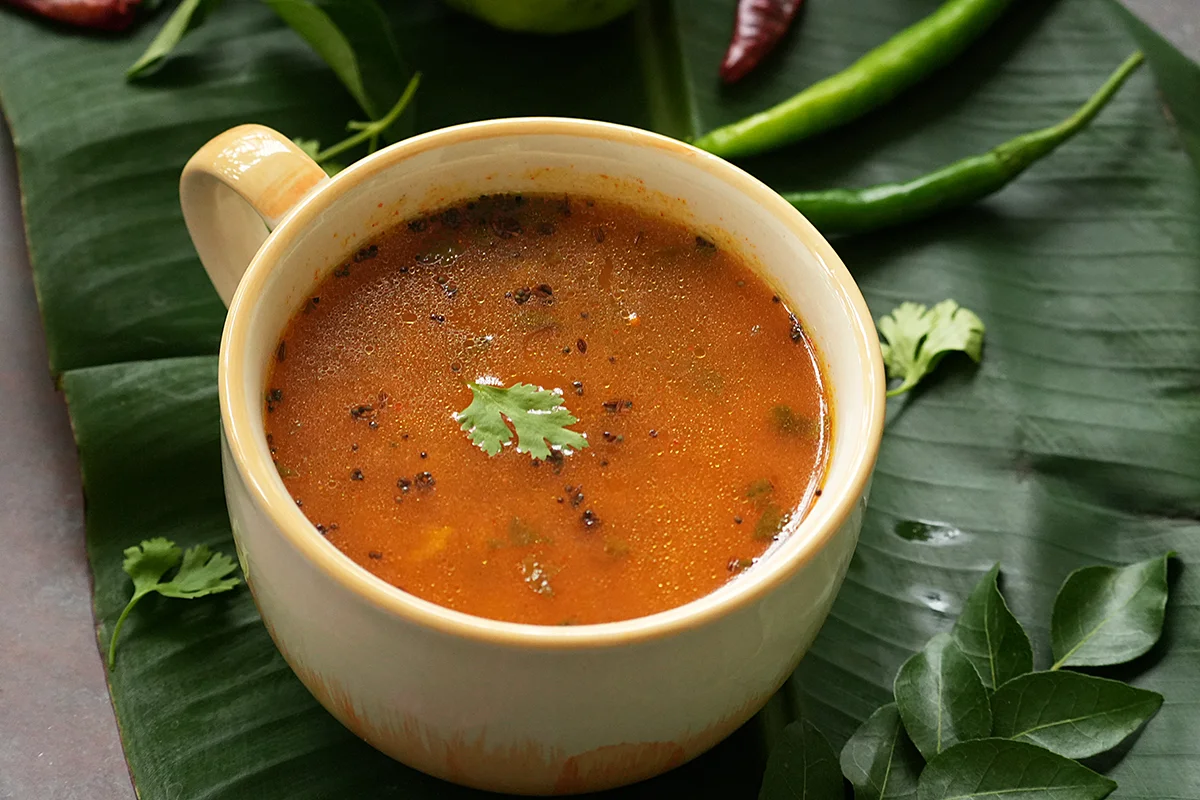
Raw mango rasam is a South Indian soup with a bright, tangy flavour balanced by jaggery, spices and a fragrant tempering. Make it in about 20 minutes and serve it with hot steamed rice for a simple, comforting meal.
Ingredients
- 150 g (1 cup)raw mango cubes (from 1 medium green mango)
- 2.5 ml (½ teaspoon)mustard seeds
- 2.5 ml (½ teaspoon)cumin seeds
- A pinchasafoetida (hing)
- 1–2 sprigscurry leaves
- 10 ml (2 teaspoons)rasam powder
- 15 g (1 tablespoon), or as neededjaggery
- 5 ml (1 teaspoon)oil
- 1.25 ml (¼ teaspoon)turmeric powder
- 1green chilli
- 720–960 ml (3–4 cups)water
- About 8 g (2 tablespoons)fresh coriander, chopped
- To tastesalt
Instructions
- 1
Cook the mango
Wash, peel and cut the mango into small cubes. Add just enough water to cover them, then cook covered until soft.
- 2
Mash the mango
Mash the cooked mango thoroughly with a potato masher, or blend it into a smooth pulp.
- 3
Season the pulp
Add 720–960 ml (3–4 cups) water, turmeric, salt, jaggery, rasam powder, the green chilli, coriander and curry leaves to the mango.
- 4
Bring to boil
Stir everything together and bring the rasam to a rolling boil.
- 5
Make the tempering
Heat the oil in a small or tadka pan. Add the cumin and mustard seeds and let them crackle, then stir in a pinch of asafoetida and take the pan off the heat.
- 6
Finish the rasam
Pour the tempering over the rasam and mix well.
- 7
Serve with rice
Serve the rasam with rice.
What is raw mango rasam?
Rasam is a South Indian broth, commonly served with rice or enjoyed on its own. This version gets its sharp, fruity tang from unripe green mango, with spices and herbs lending warmth and aroma.
Softening and mashing the mango gives the broth body, while jaggery balances its sourness. A final tempering of mustard, cumin and asafoetida brings a savoury finish.
Nutrition and macros by portion
The nutrition label shows one serving as written: 53 calories, 1g protein, 10g carbs, 1g fat.
| Portion | Adjustment | kcal | Protein | Carbs | Fat |
|---|---|---|---|---|---|
| Lighter | Use less jaggery | 37 kcal | 1g | 7g | 1g |
| This serving | As written | 53 kcal | 1g | 10g | 1g |
| Hungry | Serve with extra rice | 80 kcal | 2g | 15g | 2g |
The mango and jaggery provide most of the carbohydrates, while the small amount of oil contributes most of the fat. This recipe is low in protein, so serve it with a protein-rich accompaniment such as dal, or include one alongside the rice.
Choosing the mango
Green mango: Choose a firm, unripe fruit for the characteristic tart flavour. The amount of sourness can vary, so taste the broth before serving and adjust the jaggery if needed.
Small cubes: Cutting the peeled mango into small pieces helps it soften evenly in the short cooking time.
Getting the texture right
Cook until soft: The mango should yield easily when pressed before you mash it. If it is still firm, continue cooking until it softens.
Mash or blend: Mashing leaves some texture in the rasam; blending makes the mango pulp smoother. Either way, combine it thoroughly with the water and seasonings.
Balancing the flavour
Sour and sweet: Jaggery rounds out the mango’s tartness without taking away the rasam’s tang. Add it as directed, then adjust to taste if the mango is especially sharp.
Chilli and salt: The green chilli adds heat, while salt brings the flavours together. Keep the chilli whole for a gentler result, or cut it if you want more heat.
Why the tempering matters
Crackling seeds: Add the mustard and cumin to the hot oil and let them crackle before adding the asafoetida. This briefly fries the spices and releases their aroma.
Off the heat: Take the pan off the flame after adding the asafoetida, then pour the tempering into the rasam. This keeps the final seasoning fragrant.
Serving the rasam
With rice: Serve it hot alongside steamed rice, or pour it over rice for a simple bowl. Its tangy broth also works well as a light soup.
Fresh finish: Keep the chopped coriander in the pot as directed, and add a little extra at the table if you like a more pronounced herbal note.
Recipe notes & tips
- Taste the mango before cooking to get a sense of how tart the finished rasam may be.
- Cut the mango into evenly sized small cubes so they soften at a similar rate.
- Mash the mango while it is soft, before adding the remaining water and seasonings.
- Add the jaggery gradually if you prefer to adjust the sweetness to the mango.
- Wait for the seeds to crackle in the oil before adding the asafoetida.
- Serve soon after adding the tempering for its freshly released aroma.
Variations
- More heat: Slit the green chilli before adding it to the broth.
- Smoother broth: Blend the cooked mango pulp before mixing in the seasonings.
- Sweeter balance: Add a little more jaggery if your mango is particularly tart.
- Thicker rasam: Begin with 720 ml water and add more only if needed.
- Extra herbs: Finish with additional chopped coriander at the table.
Common mistakes to avoid
- Undercooked mango: Keep cooking until the cubes are soft enough to mash easily.
- Uneven chunks: Cut the mango into small, similar-sized cubes for even cooking.
- Too much water at first: Use only enough to cover the mango while it cooks, then add the measured water afterwards.
- Unbalanced sharpness: Taste the rasam and adjust the jaggery if the mango is very tart.
- Burnt tempering: Take the pan off the heat after adding the asafoetida.
- Skipping the final mix: Stir after pouring in the tempering so its flavours spread through the broth.
How to store
Refrigerate cooled leftovers in a covered container and use within 3 days. Reheat gently in a saucepan until hot, stirring before serving; add a splash of water if it has thickened.
Frequently asked questions
Can I make raw mango rasam ahead?
Yes. Cook the rasam ahead and refrigerate it, then reheat gently before serving. The tempering can be made just before serving for a fresh aroma.
Can I blend the mango instead of mashing it?
Yes. Blend the cooked mango into a smooth pulp, as in the method, then continue with the water and seasonings.
How can I adjust the sourness?
The sourness depends on the mango. Taste the broth and add jaggery as needed to balance it.
How much water should I use?
The recipe calls for 720–960 ml (3–4 cups). Use the lower amount for a fuller broth, or add more for a thinner consistency.
What should I serve with raw mango rasam?
Serve it with hot steamed rice. It can also be enjoyed on its own as a light soup.
Cook it from the original
This recipe comes from blendwithspices.com. Their page has the author’s own photos, notes and tips — the best place to cook it from.
Open the recipe on blendwithspices.com