
Nellikai Sadam Recipe
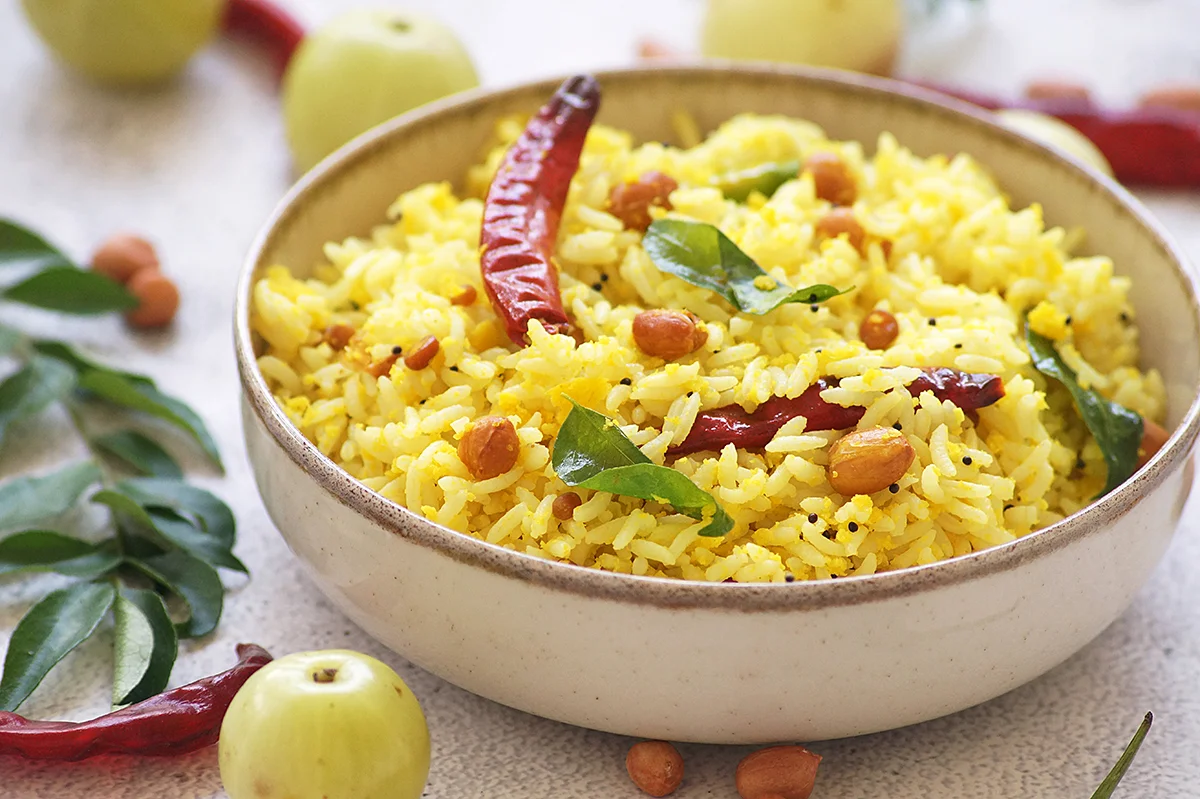
Nellikai sadam is South Indian rice tossed with a tangy paste of fresh amla and a fragrant tempering of spices, lentils and peanuts. It is a quick, flavourful way to make a satisfying meal from cooked rice.
Ingredients
- 200 g (1 cup)raw rice (makes 5 cups cooked rice)
- 30–45 ml (2–3 tablespoons)oil
- 8amla (Indian gooseberries)
- 2 tablespoonspeanuts
- 1 teaspoonmustard seeds
- 1 tablespoonchana dal
- 1 tablespoonurad dal
- 2 sprigscurry leaves
- 3green chillies
- 3dried red chillies
- ½ teaspoonturmeric powder
- ⅛ teaspoonhing (asafoetida)
- to tastesalt
Instructions
- 1
Prepare the amla
Wash the amla, chop it into pieces and discard the seeds.
- 2
Blend the fruit
Put the amla pieces in a blender or mixie jar and blend to a smooth or slightly coarse paste.
- 3
Set aside
Set the paste aside until you need it.
- 4
Toast the tempering
Heat the oil in a pan. Add the mustard seeds, chana dal, urad dal and peanuts, and sauté until light golden brown.
- 5
Add the chillies
Add the slit green chillies, dried red chillies, curry leaves and hing, then mix.
- 6
Add amla paste
Add the ground gooseberry paste and turmeric powder to the pan.
- 7
Cook the paste
Sauté for 1–2 minutes, then turn off the heat.
- 8
Add the rice
Add 5 cups of cooled cooked rice and the required salt to the pan.
- 9
Mix and serve
Gently mix until everything is combined, adjust the salt and serve.
What is nellikai sadam?
Nellikai sadam is a South Indian rice dish named for nellikai, or Indian gooseberry. It brings cooked rice together with the fruit’s tart flavour and a spiced tempering.
This version uses a freshly blended amla paste, with lentils and peanuts adding texture. Using already-cooked, cooled rice makes the final mixing quick.
Nutrition and macros by portion
The nutrition label shows one serving as written: 299 calories, 6g protein, 45g carbs, 10g fat.
| Portion | Adjustment | kcal | Protein | Carbs | Fat |
|---|---|---|---|---|---|
| Lighter | Use less oil | 209 kcal | 4g | 31g | 7g |
| This serving | As written | 299 kcal | 6g | 45g | 10g |
| Hungry | Serve a larger portion | 449 kcal | 9g | 68g | 15g |
The rice supplies most of the carbohydrates, while the oil and peanuts contribute much of the fat; the lentils, peanuts and rice provide some protein. Pair a serving with vegetables or a plain yoghurt accompaniment for a more rounded plate.
The amla paste
Seed the fruit: chop the amla and remove the hard seeds before blending. The paste can be smooth or a little coarse, as preferred in the method.
Build the tempering
Toast the lentils and peanuts: sauté them with the mustard seeds until they are light golden brown. This is the key visual cue in the method.
Add the aromatics: stir in the chillies, curry leaves and hing before adding the amla paste and turmeric. Keep the paste moving as it cooks for a minute or two.
Use cooled rice
Cooled cooked rice is specified for this recipe, so have it ready before starting the 10-minute preparation. Add it after turning off the heat.
Fold gently until the amla mixture coats the rice rather than pressing the grains together. Taste and adjust the salt before serving.
Balance the flavours
Amla supplies the defining tartness, while the green and dried red chillies bring heat. The recipe does not specify how hot the chillies are, so the result can vary with the chillies you use.
The crunchy peanuts and toasted dals contrast with the soft rice. Keep the tempering light golden, not deeply browned.
Serving ideas
Serve the rice on its own as a light meal or pair it with a simple vegetable side. A cooling accompaniment can offset the sharpness of the amla and the chilli heat.
Recipe notes & tips
- Have the 5 cups of cooked rice cooled and ready before you begin.
- Remove the amla seeds before blending the fruit.
- Blend the amla to the texture you prefer, from smooth to slightly coarse.
- Watch the lentils and peanuts and stop sautéing when they are light golden brown.
- Add the salt gradually, then taste the finished mixture before serving.
Variations
- Adjust the heat: use fewer green or dried red chillies for a milder result.
- Change the texture: blend the amla smooth or leave the paste slightly coarse.
- Add vegetables: serve with a cooked vegetable side for extra variety.
- Make it nut-free: omit the peanuts, keeping in mind that this changes the recipe's texture.
- Use fresh rice: cook the rice ahead and let it cool before following the method.
Common mistakes to avoid
- Leaving the amla seeds in: remove them before blending for a smooth paste.
- Using hot rice: the recipe calls for cooled cooked rice, so let it cool before adding.
- Over-browning the tempering: stop when the lentils and peanuts are light golden.
- Cooking the paste too long: sauté it for only a minute or two, then turn off the heat.
- Mashing the grains: mix gently so the rice stays as intact as possible.
How to store
Refrigerate leftovers in a covered container and use within 2–3 days. Reheat until piping hot, adding a small splash of water if the rice seems dry.
Frequently asked questions
Can I use leftover cooked rice?
Yes. The method calls for 5 cups of cooled cooked rice, so leftover rice is suitable if it has been stored safely.
How smooth should the amla paste be?
Either smooth or slightly coarse works; the method allows for both textures.
Do I need to cook the rice as part of this 10-minute recipe?
The method uses 5 cups of cooked rice, so cook it ahead of time and cool it before you start.
How can I make the dish less spicy?
Use fewer green or dried red chillies. The recipe's heat will also depend on the chillies themselves.
Can I make it without peanuts?
You can leave them out, though the dish will lose some of its crunchy texture.
Cook it from the original
This recipe comes from blendwithspices.com. Their page has the author’s own photos, notes and tips — the best place to cook it from.
Open the recipe on blendwithspices.com