
Coconut milk
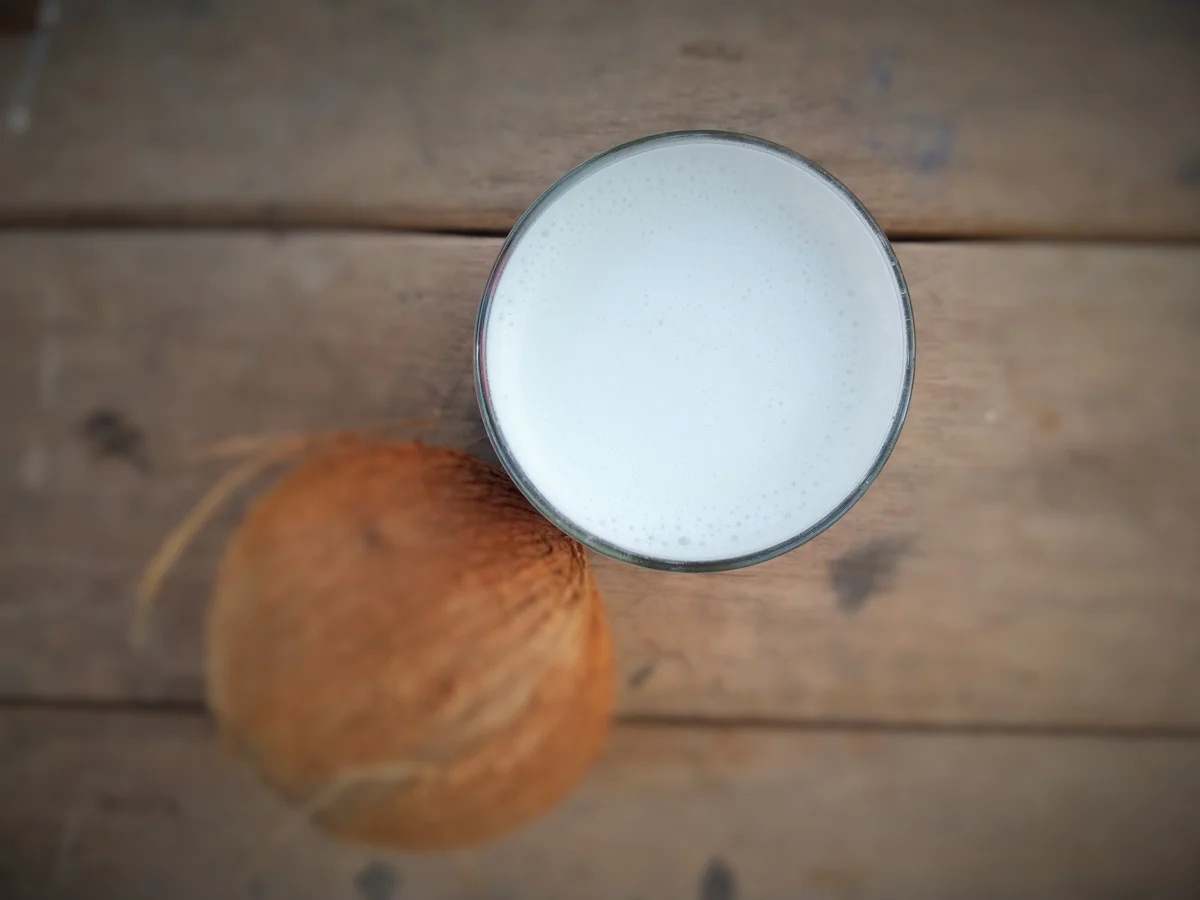
Homemade coconut milk is made by blending fresh coconut flesh with warm water and straining it. This recipe gives instructions for making both a full-cream version and a lighter second extraction from the same process.
Ingredients
- 250 ml (1 cup)warm water
- 1 mediumcoconut
- 500 ml (2 cups)warm water
- 1 mediumcoconut
Instructions
- 1
Prepare the coconut
For full-cream coconut milk, crack open a coconut and remove the flesh from the shell. Wash and grate the flesh.
- 2
Blend the mixture
Put the grated coconut in a blender and add water. Blend about three times, pausing between blends for 60 seconds.
- 3
Strain the milk
Pour the mixture through a double fine sieve to collect the coconut milk. For a very thin additional milk, add another 250–375 ml (1–1½ cups) water to the pulp and blend again; it will be thinner than the light coconut milk.
- 4
Make light milk
For light coconut milk, follow the same instructions as for full-cream coconut milk.
What is coconut milk?
Coconut milk is a creamy liquid made by blending grated coconut flesh with water, then straining out the solids. It is used in many tropical cuisines, though the recipe does not specify a particular regional style.
This version relies on fresh coconut and warm water rather than packaged coconut milk. The method also describes a further, thinner extraction from the leftover pulp.
Nutrition and macros by portion
The nutrition label shows one serving as written: 708 calories, 7g protein, 30g carbs, 66g fat.
| Portion | Adjustment | kcal | Protein | Carbs | Fat |
|---|---|---|---|---|---|
| Lighter | Use the thinner second extraction | 496 kcal | 5g | 21g | 46g |
| This serving | As written | 708 kcal | 7g | 30g | 66g |
| Hungry | Serve a larger portion | 1062 kcal | 10g | 45g | 99g |
Coconut flesh provides most of the estimated calories and fat, along with some carbohydrate, fibre and a small amount of protein; the water contributes very little. Straining removes some of the flesh, so the nutrition can vary considerably. Pair a serving with vegetables and a protein-rich food to make a more balanced meal.
Choosing the coconut
Fresh flesh: use a coconut with firm, clean-smelling flesh and remove all shell fragments before grating. The recipe calls for medium coconuts but does not state their weight or yield.
Warm water: warm rather than boiling water is specified. Measure it carefully, as the amount affects how concentrated the strained milk will be.
Blending and straining
Blend in rounds: the instruction says to blend about three times, pausing for 60 seconds between blends. It does not give a blending duration, so stop when the grated coconut is finely broken down and well mixed with the water.
Fine sieve: a double fine sieve helps separate the liquid from the grated flesh. Pressing the pulp gently can help collect the milk, though the recipe does not specify whether to press it.
Full-cream and lighter milk
Full-cream milk: strain the first blend to collect the richer liquid. The recipe does not give a separate quantity of water for each coconut, so follow the listed quantities as written.
Second extraction: adding another 250–375 ml water to the pulp makes a much thinner milk. The instructions for light coconut milk repeat the full-cream method without specifying a different water ratio.
Texture and timing
The finished milk should be liquid, with the coconut solids caught by the sieve. Its thickness depends on the amount of water used and how much liquid is extracted from the pulp.
The stated total time is 30 minutes, including cracking, grating, blending and straining. Allow extra time if opening or grating the coconut takes longer.
Ways to use it
Use the richer first extraction in curries, soups or sauces where a creamy texture is welcome. The thinner second extraction can work in broths or dishes where a lighter coconut flavour is preferable.
It can also be added to porridge or blended drinks. Taste the milk before using it, as the recipe contains no salt or sweetener.
Recipe notes & tips
- Crack the coconut over a bowl so you can catch and reserve any coconut water.
- Remove every piece of shell before washing and grating the flesh.
- Use warm water as specified rather than boiling water.
- Blend in batches if the grated coconut and water do not fit comfortably in your blender.
- Strain through a fine sieve to keep larger pieces of coconut out of the milk.
- Add water to the leftover pulp gradually if you want a thinner second extraction.
Variations
- Thinner extraction: add 250–375 ml water to the pulp and blend again as described.
- Richer milk: use less water for the first blend, noting that this changes the listed method.
- Coconut water: replace some of the warm water with reserved coconut water for a different flavour.
- Spiced milk: blend with a little cinnamon or cardamom when using the milk in drinks or porridge.
Common mistakes to avoid
- Leaving shell fragments: check the grated flesh carefully before blending.
- Using boiling water: stick to warm water to follow the recipe as written.
- Skipping the sieve: strain the blended mixture to separate the milk from the grated solids.
- Expecting a fixed yield: coconut size and straining affect the amount of milk collected.
- Confusing the extra extraction with light milk: the recipe describes it as thinner than light coconut milk.
How to store
Transfer the strained milk to a clean, covered container and refrigerate promptly; use within 3 days. Separation can occur, so stir or shake before using. The recipe does not give freezing instructions.
Frequently asked questions
How do I open a coconut?
The recipe only says to break it open and remove the flesh. Use a method and tool you are comfortable with, and take care to avoid shell fragments in the flesh.
How long should I blend the coconut?
The method says to blend about three times, pausing for 60 seconds between blends, but does not specify the duration of each blend. Stop when the mixture is well broken down.
Is the second extraction the light coconut milk?
The recipe calls the milk made by adding more water to the pulp a very thin milk and says it is thinner than light coconut milk. Its light coconut milk instructions otherwise repeat the full-cream method.
Can I use a different amount of water?
The method allows an additional 250–375 ml water for a very thin second extraction. Changing the initial water amount will also change the milk's thickness.
Why has the milk separated?
Separation can happen after chilling. Stir or shake the milk before using it.
Cook it from the original
This recipe comes from biscuitsandladles.com. Their page has the author’s own photos, notes and tips — the best place to cook it from.
Open the recipe on biscuitsandladles.com