
Swiss Roll
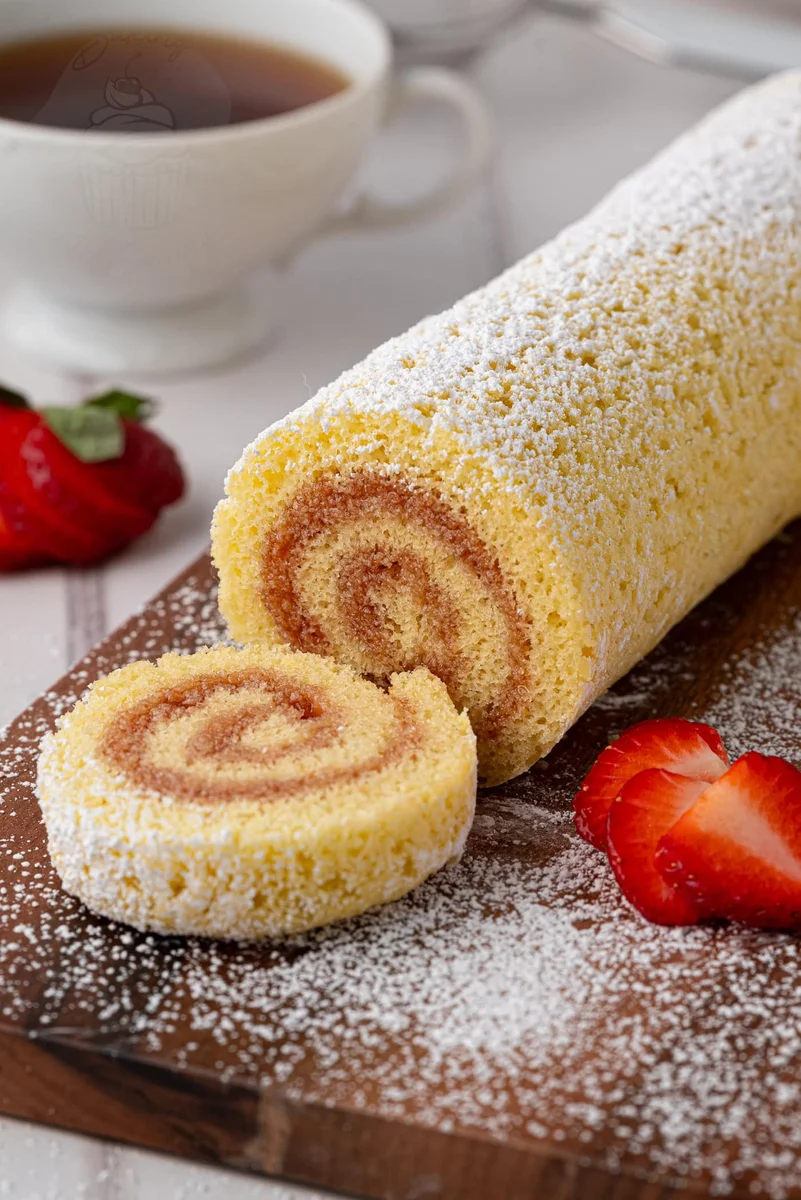
This classic British Swiss roll pairs a light sponge with a layer of strawberry jam, rolled into a neat spiral and finished with icing sugar. It is a simple bake for afternoon tea and is best enjoyed once the sponge has cooled.
Ingredients
- 2free-range eggs, at room temperature
- 85 g, plus extra for finishingcaster sugar
- 85 gself-raising flour
- 4 tbspseedless strawberry jam
Instructions
- 1
Prepare the tin
Heat the oven to 200°C (180°C fan, Gas Mark 6). Grease a 30 × 22 cm Swiss roll tin generously and line its base with greaseproof paper.
- 2
Whisk eggs
In a large bowl, whisk the eggs gently until the whites and yolks are combined. Add the caster sugar and whisk until the mixture is pale and thick.
- 3
Fold in flour
Sift the flour into the egg mixture and fold it in gently until you have a light batter, taking care not to overmix. Pour the batter into the prepared tin and spread it evenly into the corners.
- 4
Bake the sponge
Bake for 7–8 minutes, until lightly golden and dry to the touch. While it bakes, lay another sheet of greaseproof paper on a flat surface and dust it with a little caster sugar. Warm the jam in a microwave or over a bain-marie if you like, to make it easier to spread.
- 5
Turn out sponge
Remove the sponge from the oven and run a knife around the edges to loosen it. Carefully tip it onto the sugared paper, trim the edges and peel away the paper it baked on.
- 6
Spread the jam
Spread the jam over the sponge, reaching the sides but leaving a small gap at the shorter ends. Fold one short end over by about 1 cm to start the roll; mark the sponge gently with a knife first if needed.
- 7
Roll the sponge
Use the greaseproof paper to roll the sponge over itself, applying gentle pressure so there are no large gaps. Finish with the seam underneath, where the roll’s weight will help keep it closed.
- 8
Cool and finish
Dust with a little more sugar if desired and leave the Swiss roll to cool completely before slicing.
What is a Swiss roll?
A Swiss roll is a thin sponge cake spread with a filling and rolled into a spiral. Despite its name, this jam-filled version is a familiar British bake, often served with afternoon tea.
The method relies on a flexible, lightly baked sponge rather than a dense cake. Here, seedless strawberry jam gives the roll a smooth, sweet centre.
Nutrition and macros by portion
The nutrition label shows one serving as written: 123 calories, 4g protein, 26g carbs, 2g fat.
| Portion | Adjustment | kcal | Protein | Carbs | Fat |
|---|---|---|---|---|---|
| Lighter | Less jam, smaller slice | 86 kcal | 2g | 18g | 1g |
| This serving | As written | 123 kcal | 4g | 26g | 2g |
| Hungry | Larger slice | 185 kcal | 5g | 38g | 2g |
The flour and sugar provide most of the carbohydrates, while the eggs contribute protein and some fat. Jam adds further carbohydrate, and the small amount of fat comes mainly from the eggs; serve a slice with fresh fruit or yoghurt for a more rounded plate.
The sponge ingredients
Eggs: Room-temperature eggs whisk readily with the sugar and help give the sponge its light structure. Whisk until the mixture is pale and thick before adding the flour.
Flour: Self-raising flour keeps the ingredient list short and helps the thin sponge rise. Sift it in, then fold gently to retain as much air as possible.
Keep the batter light
Folding: Use a large spoon or spatula and turn the mixture over itself just until no dry flour remains. Vigorous stirring can knock out air and make the sponge less tender.
Spreading: Level the batter into the tin’s corners so it bakes to an even thickness. Uneven areas may bake at different rates and can make rolling trickier.
Watch the baking time
Colour: The sponge is ready when it is lightly golden and its surface looks dry, usually after 7–8 minutes. Keep an eye on it near the end, as a thin sponge can overbake quickly.
Flexibility: A sponge that stays soft is easier to roll without cracking. Leaving it in the oven until deeply browned can dry it out.
Set up for rolling
Sugared paper: Dust a fresh sheet of greaseproof paper with caster sugar before turning out the sponge. This gives you a surface to roll on and helps the cake release cleanly.
Warm jam: Warming the jam is optional, but it can make spreading easier. If you warm it, use only enough heat to loosen it and let it cool slightly before spreading.
Make a neat spiral
Starting edge: Fold about 1 cm of a short end over to begin the roll. A gentle score with a knife can guide the fold without cutting through the sponge.
Rolling: Use the paper to guide the cake forward and press gently as you go. A small gap at the short ends helps keep jam from squeezing out, and placing the seam underneath helps the roll stay closed.
Serving ideas
Serve slices on their own with tea or coffee, or add fresh strawberries and a spoonful of lightly whipped cream. The sponge is sweet and delicate, so simple accompaniments let the jam remain the focus.
Recipe notes & tips
- Bring the eggs to room temperature before whisking so they combine easily with the sugar.
- Sift the flour to break up lumps before folding it into the egg mixture.
- Prepare the sugared paper before the sponge comes out of the oven.
- Spread the batter evenly so the sponge cooks at a consistent rate.
- Leave a little space at the short ends when spreading the jam to limit spillover.
- Let the roll cool completely before slicing for cleaner pieces.
Variations
- Raspberry filling: Use seedless raspberry jam in place of the strawberry jam.
- Apricot filling: Spread with apricot jam for a mellow fruit flavour.
- Citrus note: Add a little finely grated lemon zest to the jam before spreading.
- Cream layer: Once the sponge is cool, add a thin layer of whipped cream alongside the jam and serve promptly.
- Icing finish: Dust the cooled roll with icing sugar instead of caster sugar.
Common mistakes to avoid
- Overwhisking after adding flour: Fold only until the flour disappears so the batter stays airy.
- Uneven batter: Spread it into the corners of the tin so the sponge bakes evenly.
- Overbaking: Take the sponge out when it is lightly golden and dry-looking to help prevent cracks.
- Skipping the sugared paper: Prepare it before baking so the hot sponge can be turned out straight away.
- Too much jam at the ends: Leave a small gap at the short edges to reduce filling squeezing out as you roll.
- Cutting while warm: Cool the roll completely first to help the slices hold their shape.
How to store
Store the cooled Swiss roll in an airtight container in the fridge for up to 3 days. Let slices come closer to room temperature before serving; reheating is not needed.
Frequently asked questions
Why did my Swiss roll crack?
The sponge may have baked too long and become dry, or it may have cooled before you rolled it. Watch the short baking time closely and start rolling while the sponge is still warm.
Do I need to warm the jam?
No, it is optional. Warming it gently can make it easier to spread in an even layer.
Can I use plain flour instead of self-raising flour?
The recipe specifies self-raising flour. Plain flour will not give the same lift unless you adjust it with a raising agent.
How do I know when the sponge is baked?
It should be lightly golden and look dry on top after about 7–8 minutes. Avoid waiting for a deep colour, as that can make it harder to roll.
Can I make the Swiss roll ahead?
Yes. Prepare it ahead and keep it covered in the fridge, then slice it when ready to serve. It keeps for up to 3 days.
Can I freeze it?
You can freeze the jam-filled roll, well wrapped, for up to a month for best quality. Defrost it in the fridge before serving; the texture may be a little softer after thawing.
Cook it from the original
This recipe comes from bakingwithgranny.co.uk. Their page has the author’s own photos, notes and tips — the best place to cook it from.
Open the recipe on bakingwithgranny.co.uk